stopthemaangamizi.com

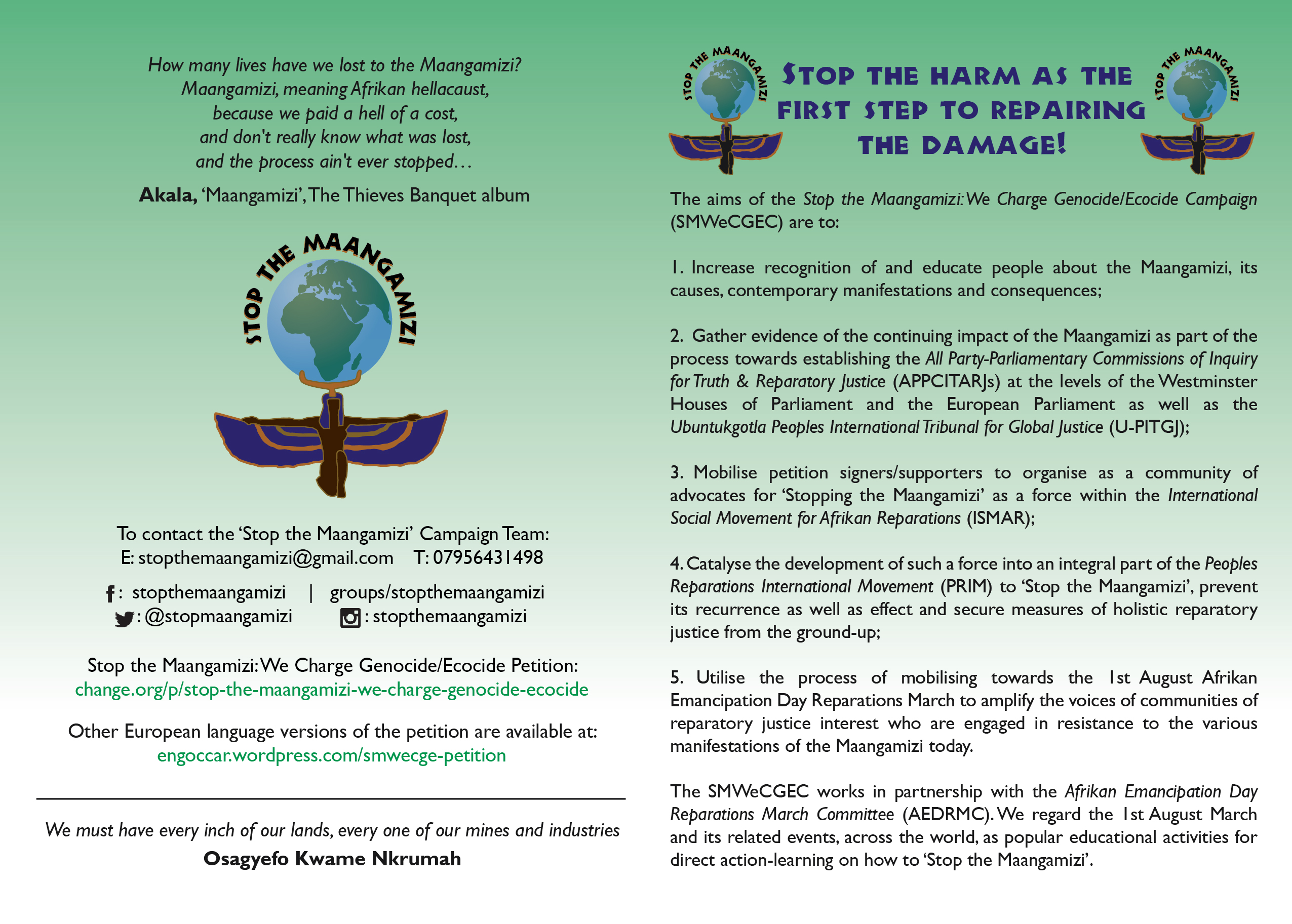
Stop the harm as the first step to repairing the damage!

Menu

Skip to content
  • Home
  • CONTACTS
  • GLOBAL MAJORITY VS
  • I AM WITNESS
  • MAANGAMIZI DESECRATORS & DENIERS
  • MAANGAMIZI EDUCATIONAL TRUST (M.E.T)
  • SMWeCGEC PETITION
  • TAKE ACTION
  • PAN-AFRIKAN REPARATIONS REBELLION GROUNDINGS

Category Archives: MAANGAMIZI RESISTANCE

VOICES OF CONTINENTAL AFRIKAN LEADERSHIP COUNTERACTING THE MAANGAMIZI WITH REMATRIATION STEPS OF PAN-AFRIKAN REPARATORY JUSTICE.

Posted on March 29, 2018 by STOP THE MAANGAMIZI

AFRICA DIASPORA


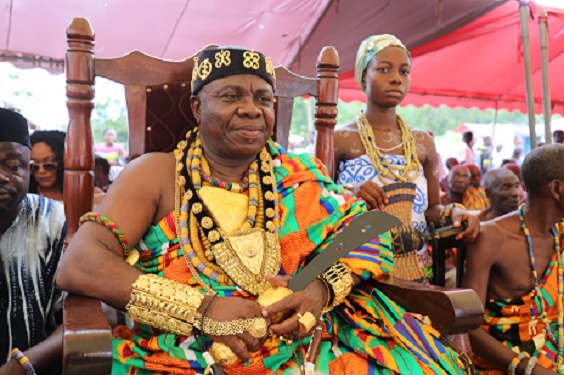
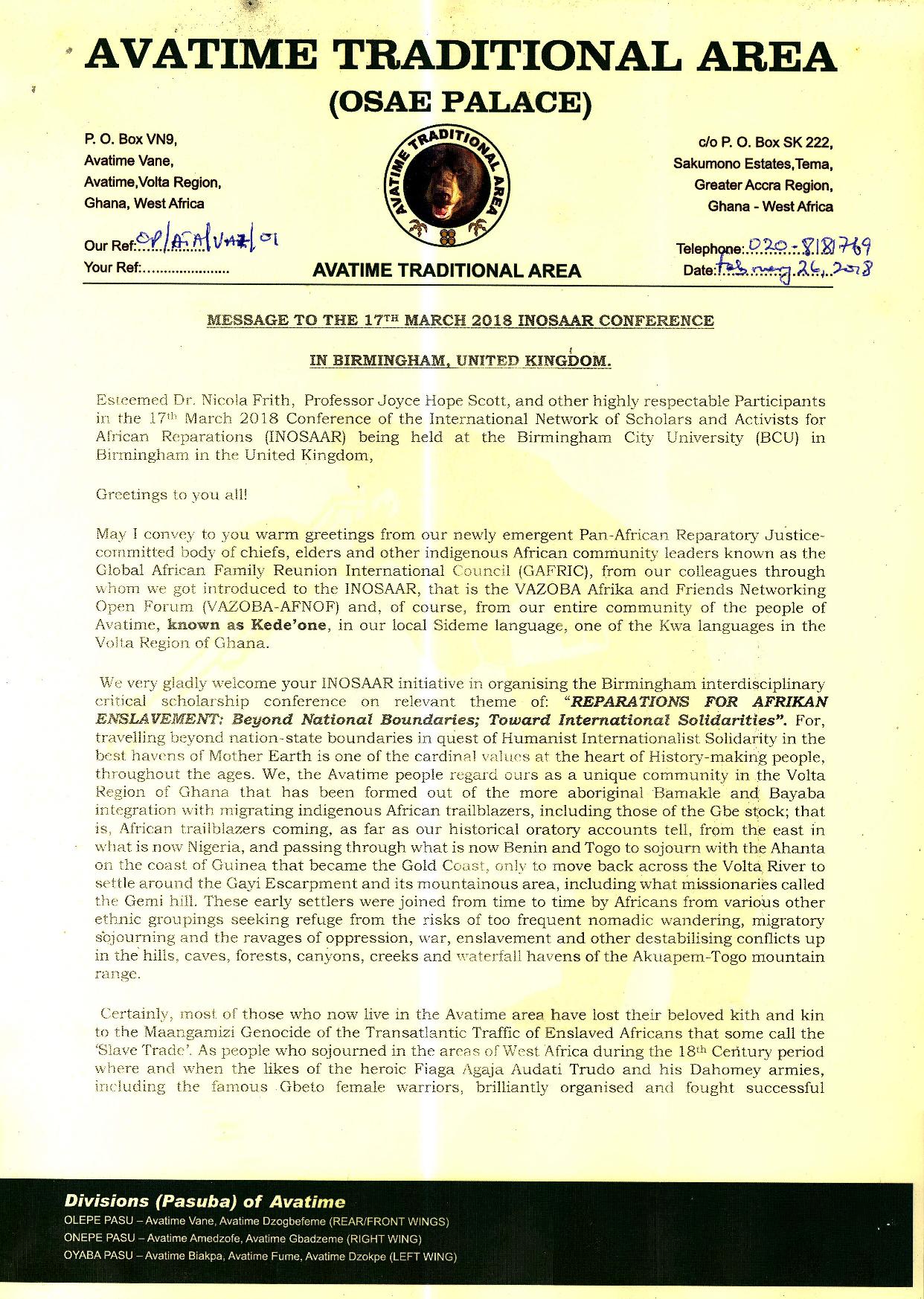
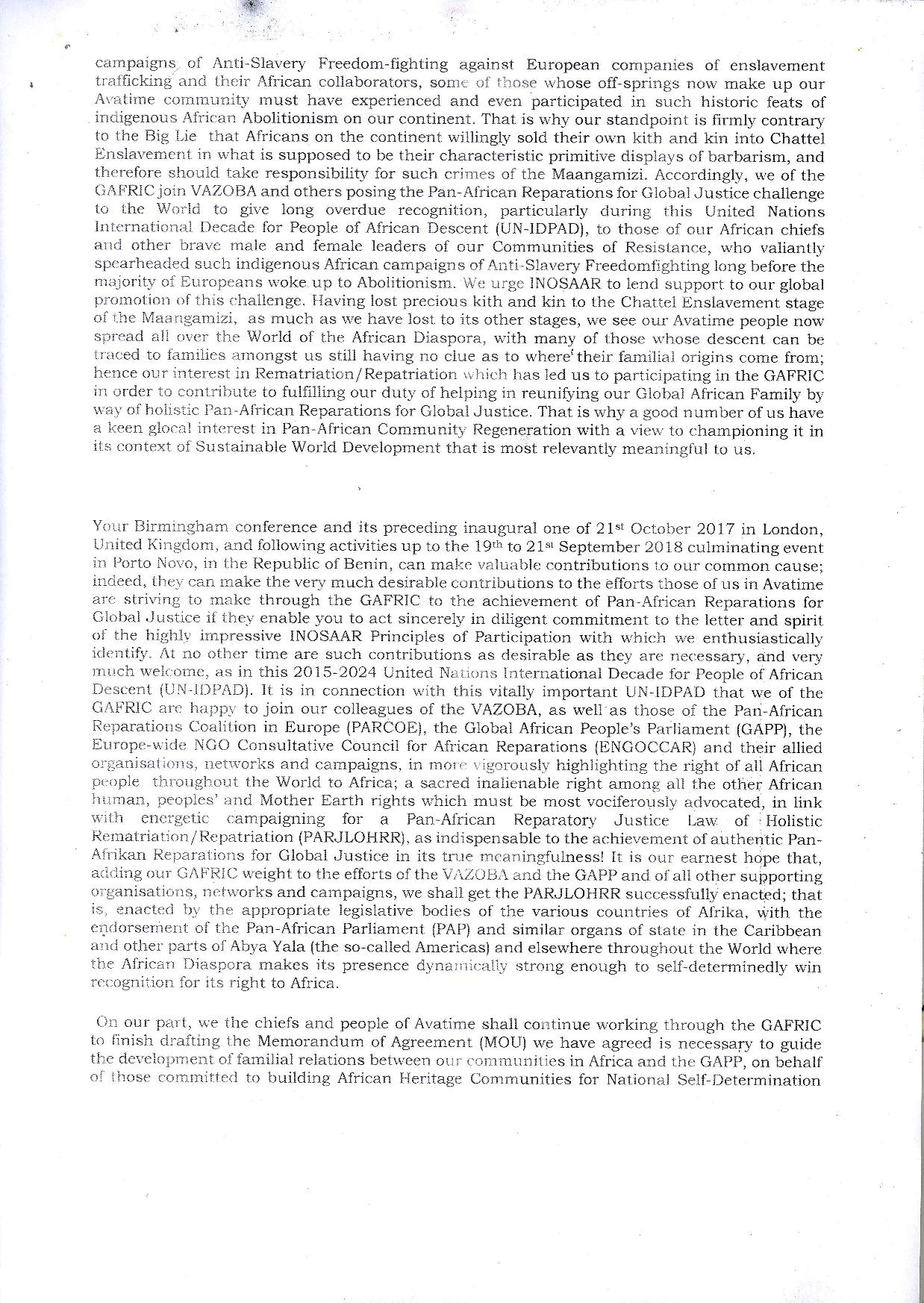
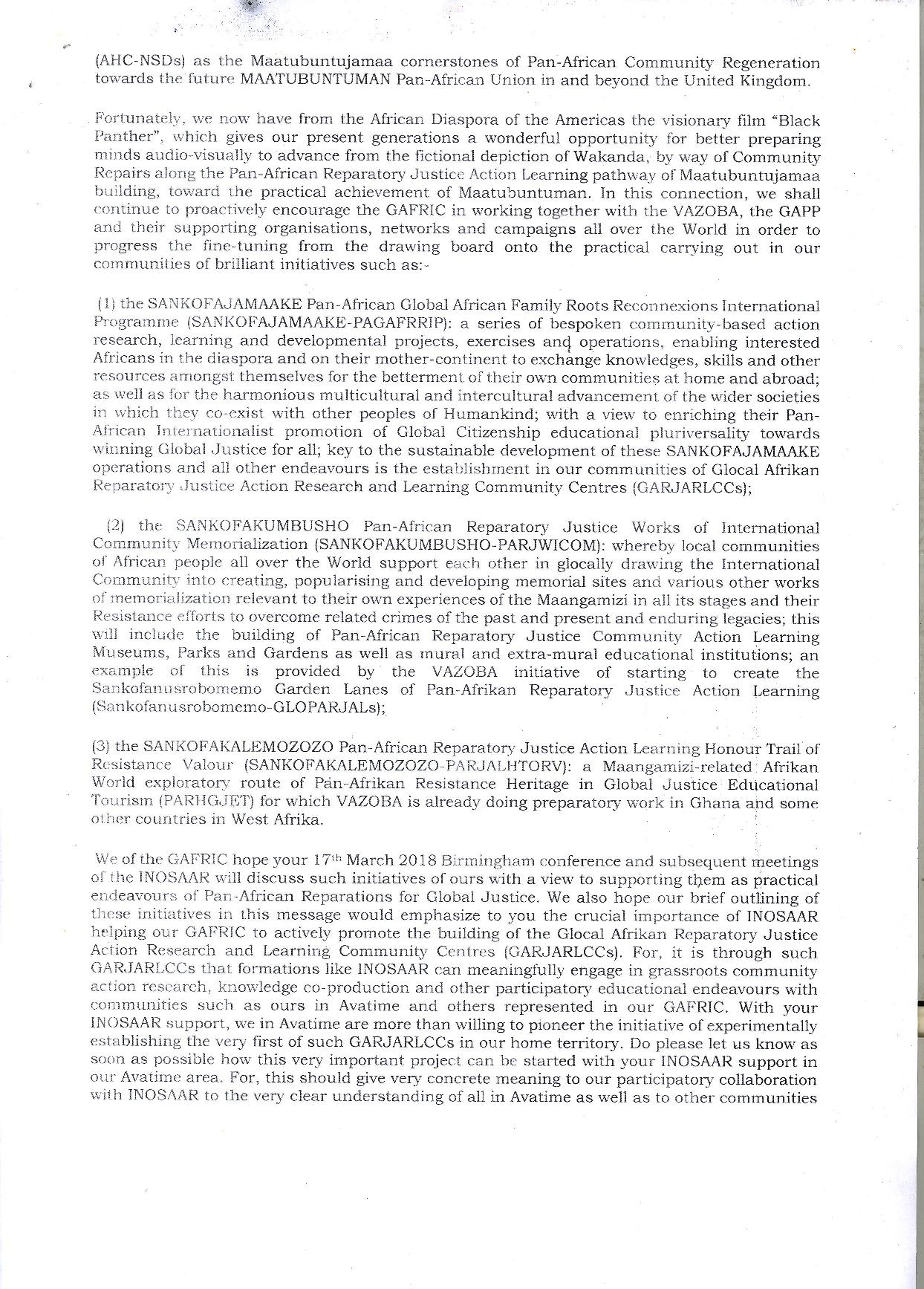
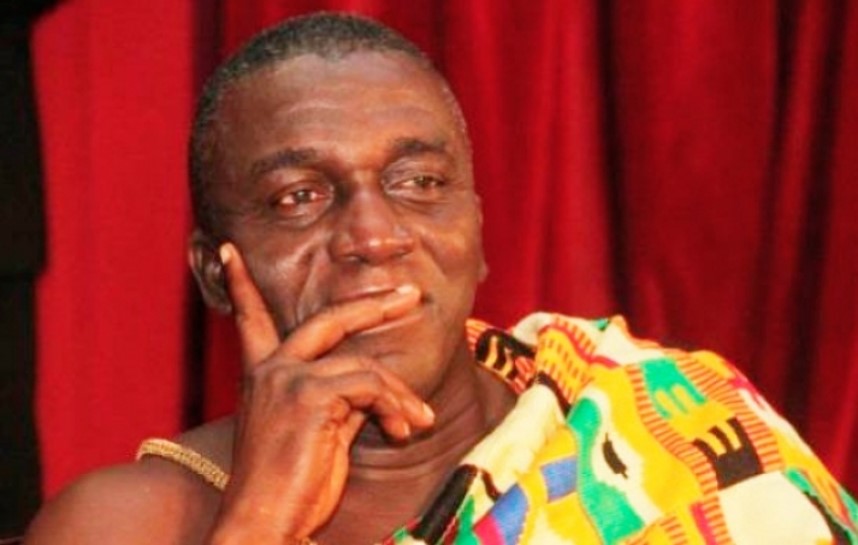
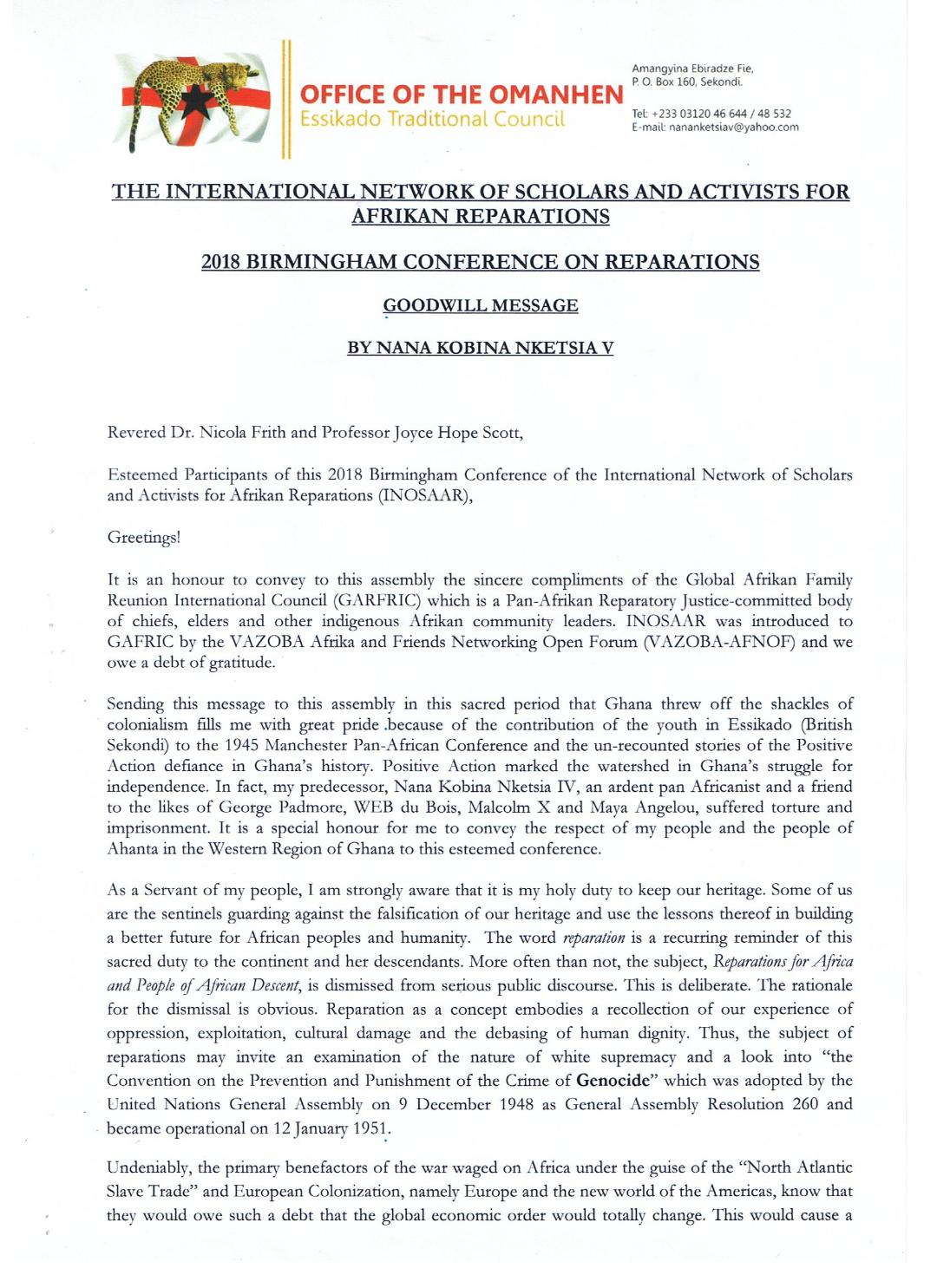
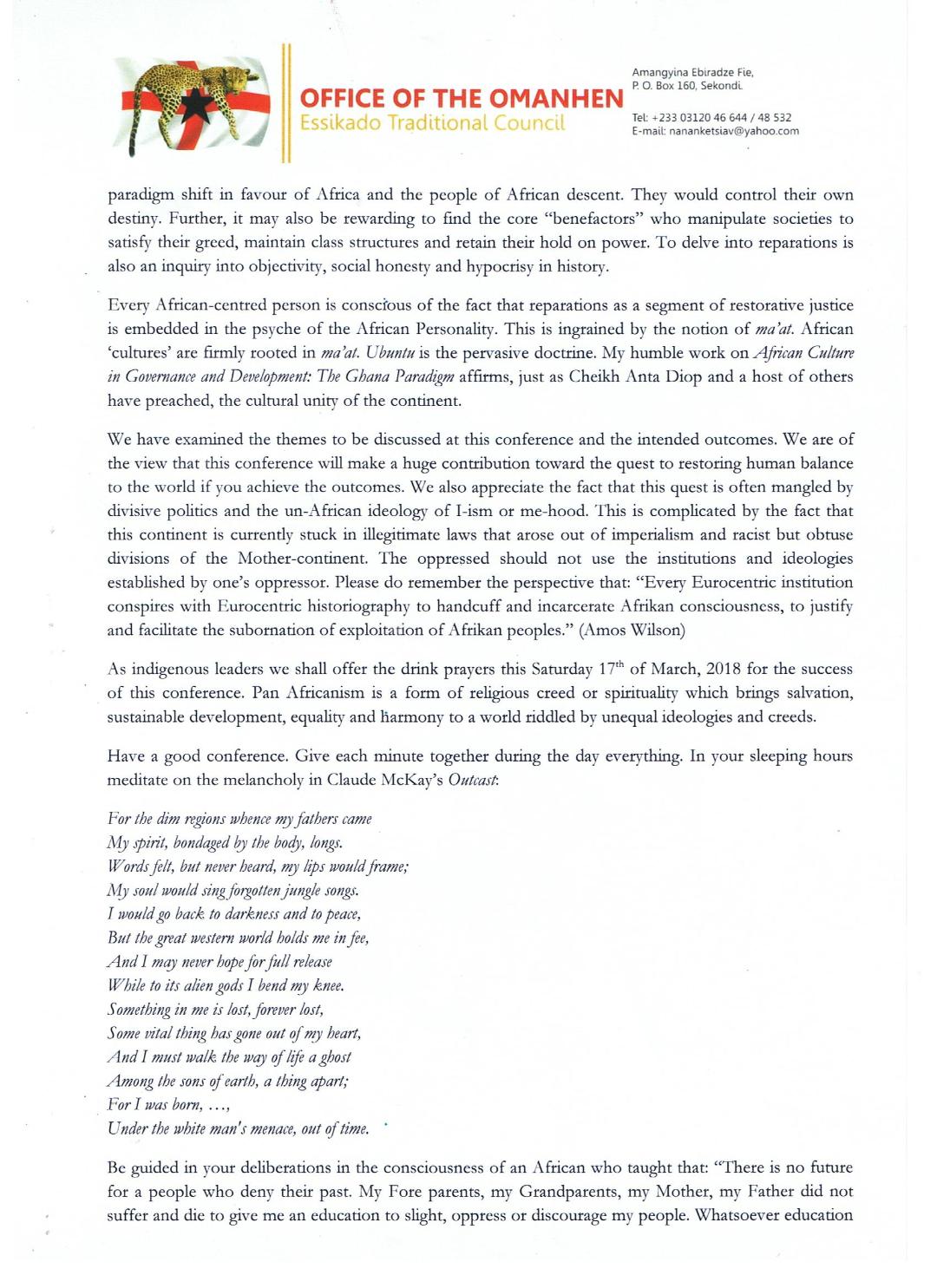
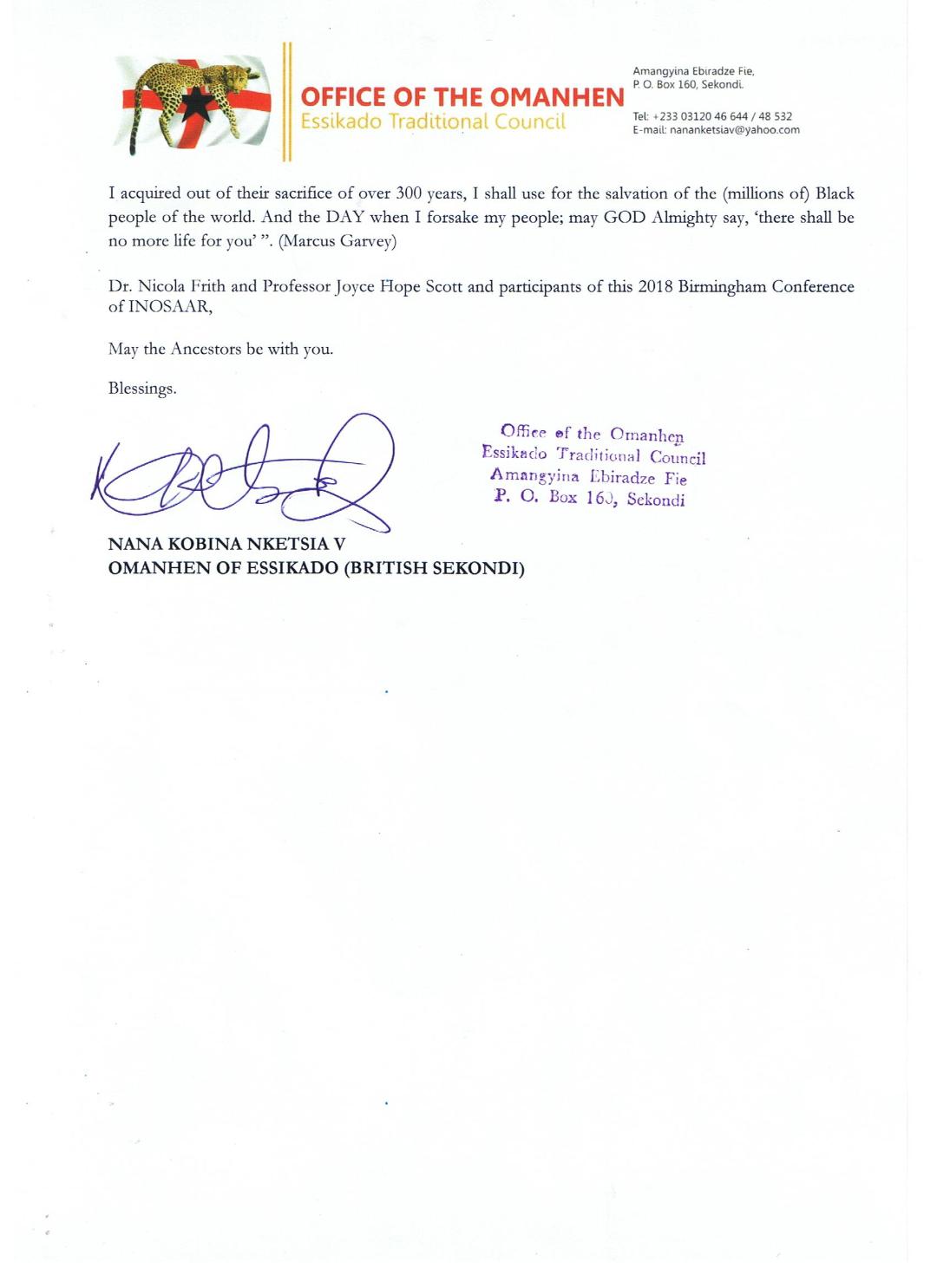
The following two statements from members of the Global Afrikan Family Reunion International Council (GAFRIC) in Ghana, express the reparatory justice perspectives of the leadership that exists for Afrikan communities of reparations interest battling the Maangamizi on the ground in Afrika. They were presented at the 17th March 2018 International Network of Scholars & Activists for Afrikan Reparations (INOSAAR) Conference in Birmingham. Most importantly, these statements from Paramount Chiefs, Togbe Adzatekpor VII and Nana Kobina Nketsia V highlight their recognition, as leading members of the GAFRIC, of the right of Afrikan people all over the world to the Continent of Afrika!

The ‘right to Afrika‘ incorporates the ‘right to return’ (repatriation) and ‘right to belong’ (rematriation) which is one process. One cannot happen without the other. It encompasses the Akan Sankofa principle of going back to fetch your Afrikan personality in material and spiritual terms all routed in the land of Afrika. The ‘Afrikan personality’, popularised by Osagyefo Kwame Nkrumah, refers to manifestations of cultural uniqueness among Afrikans as reflected in our behaviours, social norms, customs, values, beliefs, spiritual zeal, attitudes, explanations of the cosmos and the supernatural, as well as social and political systems. The right to Afrika includes the right to belong to the peoplehood of Afrika and benefit from the shared land, wealth and resources of Afrika, as well as share in her many development challenges. This does not mean that all Afrikans physically has to up and return to Afrika, but that one should be able to exercise the global citizenship rights and responsibilities of being an Afrikan.

Ultimately, it is about feeling the power of Afrika protecting us as Afrikans wherever we are in the world. However, for this to happen it is necessary to rebuild Afrika on the basis of our indigenous polities and delegitimise colonial state formations. This means rebuilding Afrika into a unified whole; integrating communities of Afrikan people from the Continent and Diaspora into a globally superpowerful polity (MAATUBUNTUMAN- Pan-Afrikan Union of Communities) based on the Continent that guarantees the collective strength, dignity and security of Afrikan people worldwide.

The statements from Togbe Adzatekpor VII and Nana Kobina Nketsia V also show the readiness of such community leaders, and their respective communities of reparatory justice interest, to contribute to repairing the disrepair of our Afrikan communities. They are doing what they can to counteract the divisive impact of the Maangamizi with policies, projects, programmes and other measures towards reunifying our Global Afrikan Family, in accordance with the imperatives of holistic Pan-Afrikan Reparations for Global Justice.


“Convinced that the pursuit of reparations by the African peoples in the continent and in the Diaspora will itself be a learning experience in self-discovery and in uniting experience politically and psychologically.”

The Abuja Proclamation: A declaration of the ‘first Abuja Pan-African Conference on Reparations For African Enslavement, Colonisation And Neo-Colonisation’, sponsored by The Organisation Of African Unity and its Reparations Commission April 27-29, 1993, Abuja, Nigeria


     Togbe Osie Adza Tekpor VII, Paramount Chief of the Avatime Traditional Area


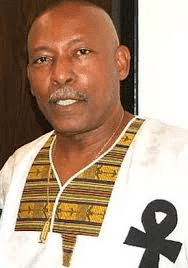
           Nana Kobina Nketsia V, Paramount Chief of the Essikado Traditional Area


“To love Afrika, to seek the cultural freedom of Afrika and to serve the cultural truth of Afrika is to ask for death”

Nana Kobina Nketsia V


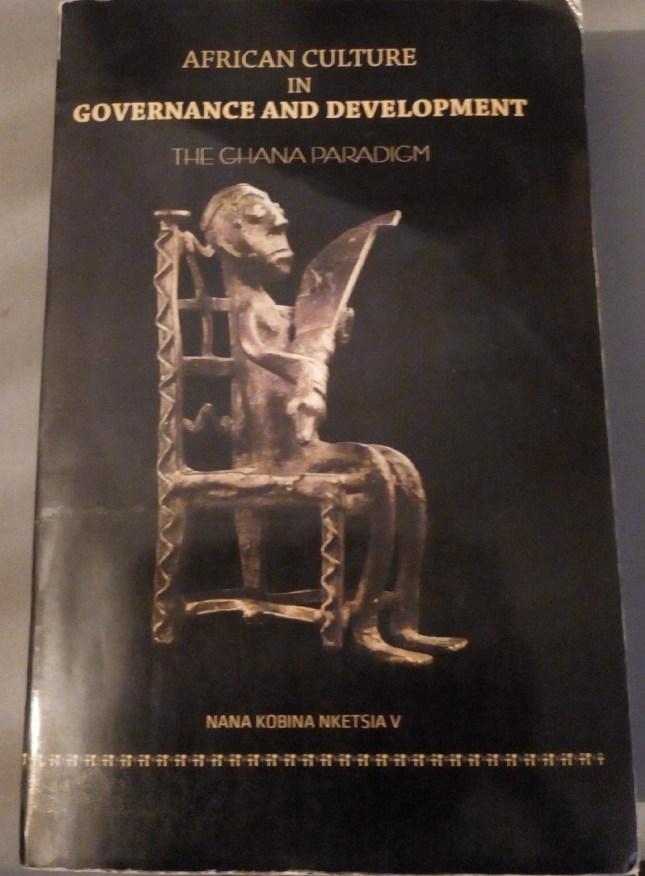
nana kobina book 2


Recommended reading, ‘African Culture in Governance and Development: The Ghana Paradigm’ by Nana Kobina Nketsia V, with an introduction by Professor James Small.

PROFESSOR jAMES SMALL


“When we look at Afrika and see whose culture we are practising, we realise how vulnerable we are to genocide because we are practising the culture of our enemies and not the culture of our ancestors. Nana Nketsia is making a case that I don’t think any opposing legal framework can defeat; a case for us to return to the ways of our Ancestors and abandon and turn our backs on the ways of the rapists, the plunderers and the murderers who have imposed on us, their culture, their history, their notion of reality and their religion; and we must make this u-turn to continue our journey, we want to go back to the womb of Mother Afrika and compose again, as her child, her dreams, her aspirations, her hopes and her future. This will allow us to have full control of the economics, politics and culture that affects lives on a daily basis. This process must include at its core, the restoration of complete confidence in us and a belief system that is based on the reality of our own experience and that of our Ancestors, which is a challenge that Nana’s work clearly identifies.

Nana is re-membering the Afrikan continent. Its members are scattered and Nana’s book is bringing them back together. That is the essence of the word ‘remember’; reconnecting the scattered members of a once collective whole to make it whole again. Nana is reminding us to bring back our Ancestors’ way of thinking that will allow us to reconstruct a dynamic path for the future.”

Taken from the introduction by Professor James Small


Posted in AFRIKAN HELLACAUST, AFRIKAN RESISTANCE, INTERNATIONAL SOCIAL MOVEMENT FOR AFRIKAN REPARATIONS, ISMAR, MAANGAMIZI RESISTANCE, MAANGAMIZI RESISTORS, PREFIGURATIVE POLITICS, REPARATIONS, Reparatory Justice, SMWeCGEC, STOP THE MAANGAMIZI CAMPAIGN, STOP THE MAANGAMIZI PETITION | Tagged Afrikan Heritage, Afrikan Heritage Community for National Self-Determination, Afrikan Liberation, Afrikan Sovereignty, AHD-NSD, Cognitive Justice, GAFRIC, Genocide, Global Afrikan People's Parliament, Hellacaust, International Social Movment for Afrikan Reparations, ISMAR, Land based reparations, Maangamizi, Maatubuntujamaas, MAATUBUNTUMAN, Movement-Building, Pan-Afrikan Revolution, Pan-Afrikanism, PARCOE, People Power, Rematriation, REPARATIONS, Reparatory Justice, Sankofahomes, Self-Repairs, Social Movement, Stop the Maangamizi | Leave a comment

‘STOP THE MAANGAMIZI!’ POSTCARD ADVOCACY CASE STUDY

Posted on March 8, 2018 by STOP THE MAANGAMIZI


Greetings Supporters of the ‘Stop the Maangamizi: We Charge Genocide/Ecocide!’ Campaign (SMWeCGEC)

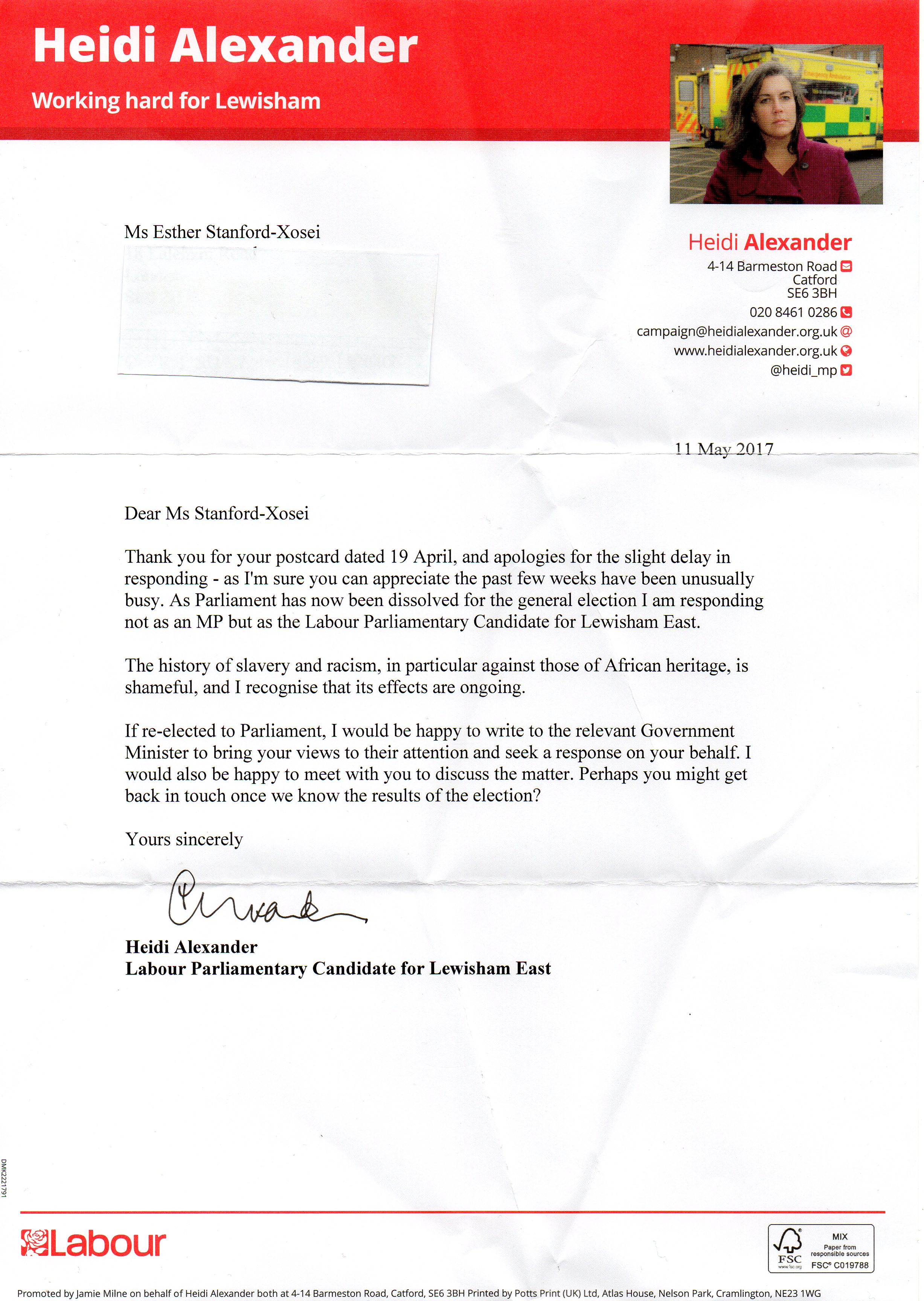
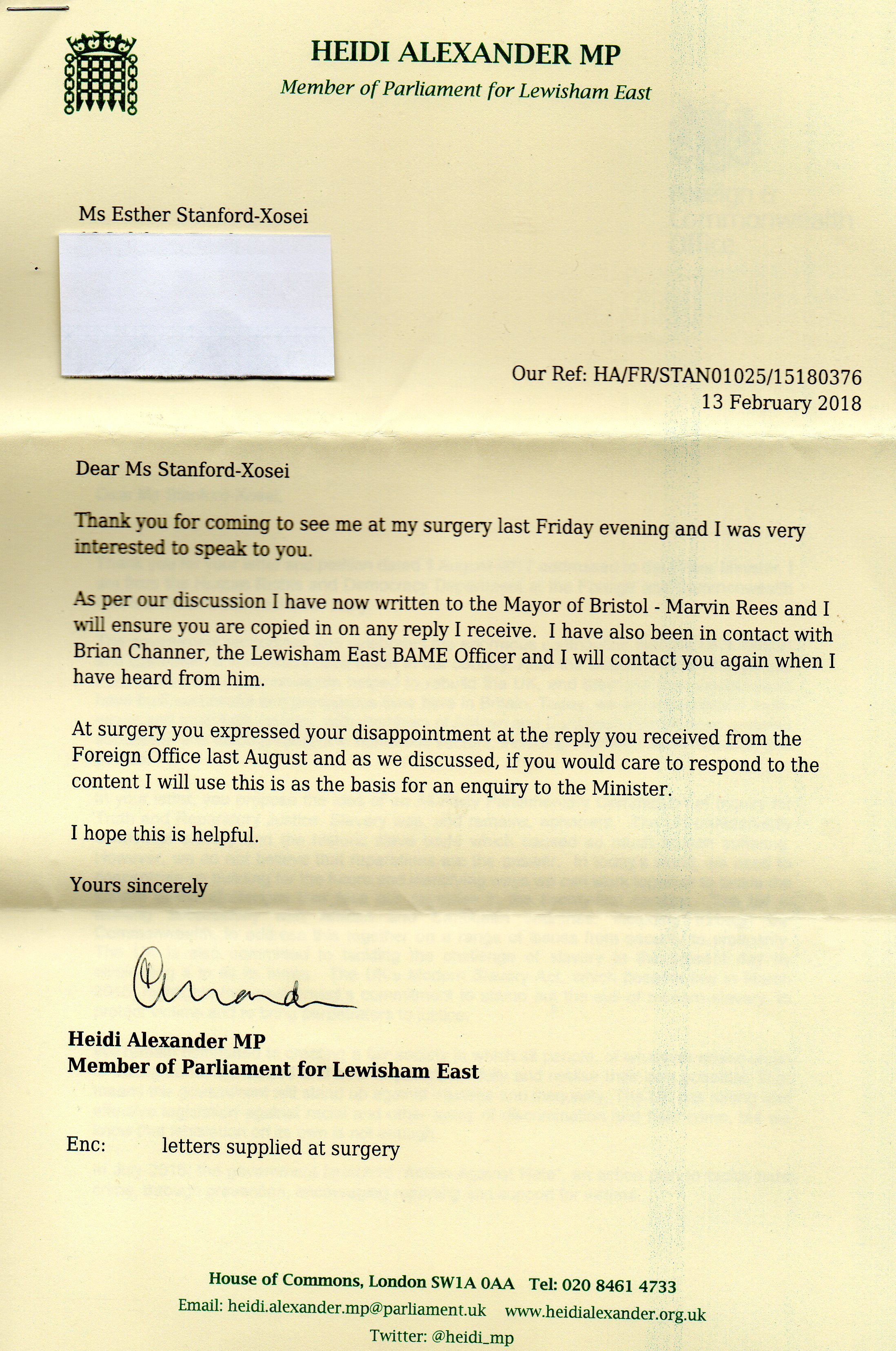
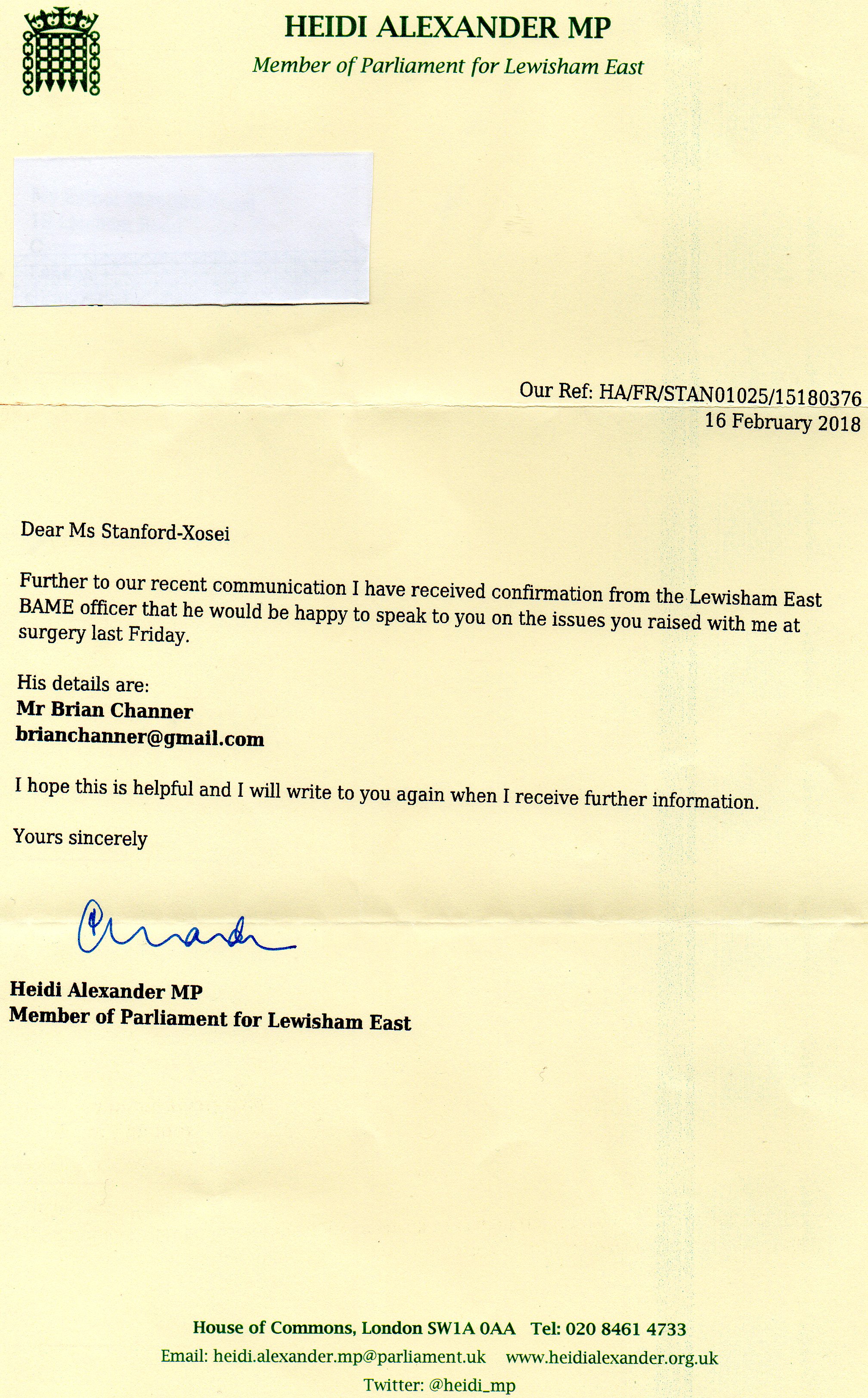
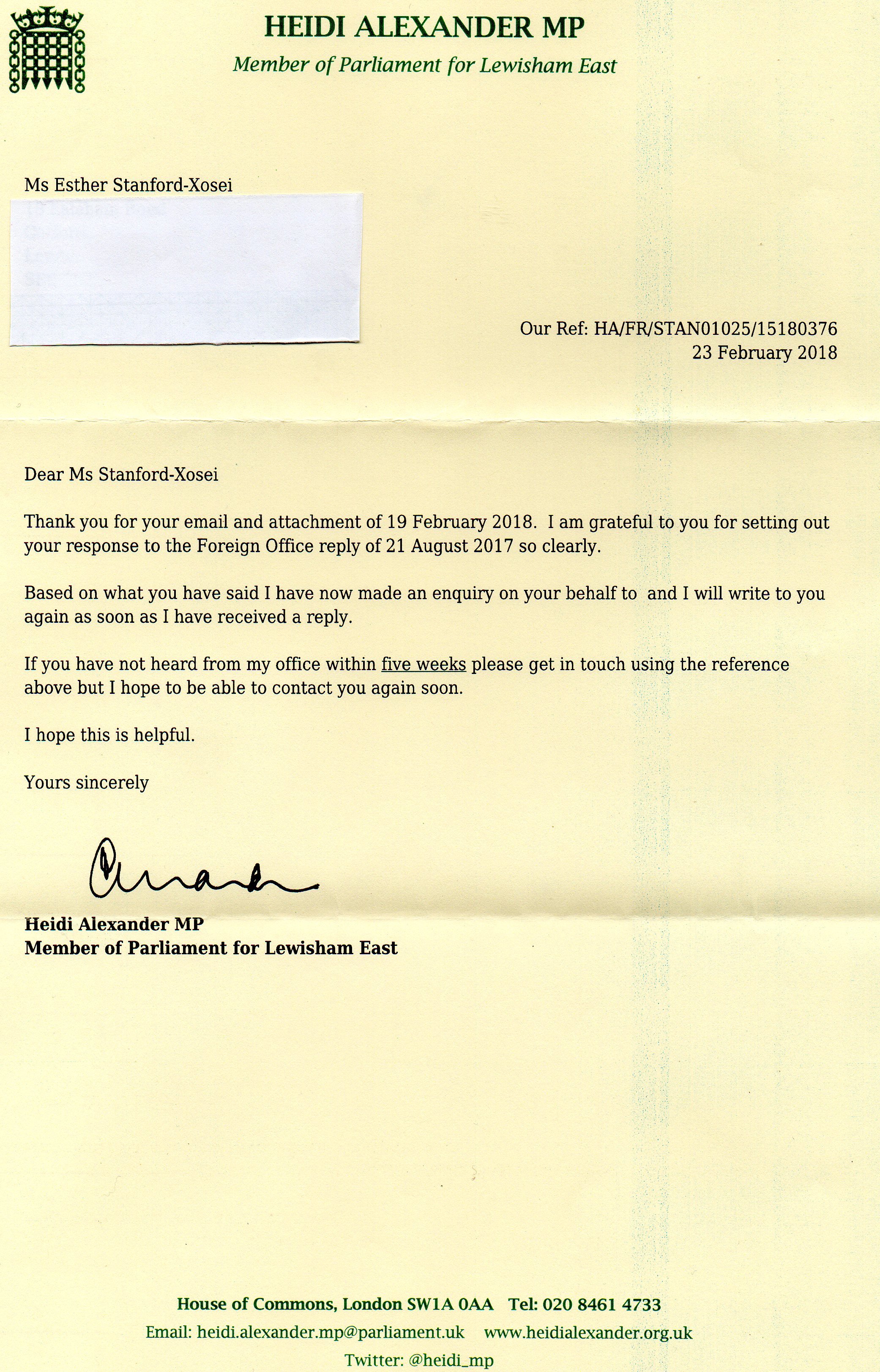
This is a report-back of a meeting and series of correspondence between ‘Stop the Maangamizi: We Charge Genocide/Ecocide!’ Campaign (SMWeCGEC) Advocate Esther Stanford-Xosei and Heidi Alexander, Member of Parliament for Lewisham East.


SM POSTCARD - Postcode fix-page-001


Follow-up letter to Heidi Alexander dated 20th January 2018 requesting her to take action on the ‘Stop the Maangamizi!’ Postcard

ESTHER STANFORD-XOSEI LETTER TO HEIDI ALEXANDER ON TAKING ACTION ON THE SMWeCGEC POSTCARD


On Friday 9th February 2018, Esther Stanford-Xosei went to see her MP Heidi Alexander regarding the demands in the ‘Stop the Maangamizi!’ Postcard campaign

Upon visiting Heidi at my local surgery, she was asked to explain the purpose of my visit and what I wanted which gave me some opportunity to explain the holistic meaning of reparations and why it is relevant to the local community development and campaigning efforts of Afrikan heritage community groups organising in the borough of Lewisham and working on Maangamizi legacy issues.  She explained that the simple notion of ‘pay us’ is not what holistic reparations are about (and tend to close off discussions) and rather the starting point in addressing reparations is to take action on instituting the APPCITARJ.

It was acknowledged that the most focus of elected officials would be looking at reparations policy-making in addressing to meeting community development needs in all areas of people activity where our people are working to address the impact of the Maangamizi by way of community self-repairs. Therefore, prioritisation should be given to hearing our perspectives on these issues and hearing from us about the impact of the Maangamizi locally, nationally and internationally and also finding out from Afrikan heritage communities what efforts we are taking to redress it ourselves, irrespective of government responsibility or action to do the same. This made sense to her in light of a similar approach which was initiated with former Home Office Minister for Race & Communities Fiona McTaggert, MP in 2004 by the Rendezvous of Victory (ROV) which Esther Stanford-Xosei and Kofi Mawuli Klu, leading members of the SMWeCGEC, were founder-members of, (see flier below ‘Commemorations 2004-7: Time to Resolve the Big Question of Reparations’ where a programme was launched acknowledging reparations from the approach I have highlighted above).


This approach is also in alignment with the approach we are encouraging in the SMWeCGEC and support organisations in relation to Afrikan heritage community self-repairs (Maatubuntujamaa /Afrikan Heritage Community for National Self-Determination – AHC-NSD building as a model of a community repairing itself, see ). It was agreed that this is seen as a more viable approach to addressing reparations which is most likely to get support from elected officials who will be concerned with redress via local and central government policy-making and is most likely to secure short-medium term reparations goals in terms of what is referred to as administrative reparations processes. Heidi Alexander acknowledged that no issue facing people of Afrikan heritage today whether it is Anti-Black racism and/or Afriphobia, school exclusions, gun and knife crime, gangs, racial profiling, homelessness, health challenges, unemployment etc. could be tackled without acknowledging the impact of the Maangamizi on Afrikan heritage communities. Esther Stanford-Xosei that it is Afrikan heritage community self-repairs initiatives which need to be better resourced and supported as at the community level, we as Afrikans also have the responsibility to be and become the change we wish to see.


Indeed, part of the repair is about Afrikan heritage communities developing our own community capacity and power-base as well as our own community rebuilding plan, which the SMWeCGEC recognise as ‘Pempamsie’ Afrikan Heritage Community Self-Repairs planning (Pempamsie is the Adinkra symbol for sewing together in readiness -preparatory actions for reparatory justice. building our future out of our principled operational unity despite our diversity). This planning is something that was championed in the Black Quest for Justice Campaign (BQJC) plan which was developed in 2003 as a result of the BQJC legal challenge to the UK government on Pan-Afrikan Reparations for Global Justice and also contributed to the development of the SMWeCGEC.

Afrikan Community Self-Repairs are the self-determined efforts that need to be made in building our own power, in such a way, that Afrikan heritage communities are able to identify and enhance ongoing work towards stopping the contemporary manifestations of the Maangamizi, which are putting the individuals, families and other social groups that make up our communities into a state of disrepair; as well as reasoning and consciously carrying out the alternative solutions for glocally rebuilding our power base as communities, in such a way that that they are eventually transformed, in accordance with the principles and programmatic demands of Pan-Afrikan Reparations for Global Justice.

Esther Stanford-Xosei was therefore able to put into the context the importance and practicalities of the All-Party Parliamentary Commission of Inquiry for Truth & Reparatory Justice (APPCITARJ) and the need for local data and hearings to assess the situation of people of Afrikan heritage locally. With the emphasis being on – recognise our people’s agency and self-determining community development initiatives which should be receiving greater support and resourcing. This includes initiatives in relation to implementation of the UN International Decade for People of African Descent (IDPAD).


The main points raised with Heidi Alexander were:

· Hear what Afrikan people are trying to do for themselves (Afrikan Heritage Community self-repairs) within and beyond the borough of Lewisham;

· The intergenerational work being done to address the Maangamizi on the part of Afrikan heritage communities which will be as aspect of the proposed hearings of the APPCITARJ and provide an opportunity to hear about work being done to address the Maangamizi which should be recognised, better supported and resourced. It is not about saying to officials come and do something about our situation which reinforces our people’s powerlessness and denies their agency whilst the state and local government has responsibilities to support our self-determined efforts as we know best what is working and what is not working for our people.

· Addressing the impact of the Maangamizi requires embarking on international conversations and actions galvanised by the IDPAD as even our communities own solutions are global and many activists involved in the SMWeCGEC work glocally. It follows that the UK government cannot adequately support Afrikan heritage communities locally or even regionally without recognising Afrikan people’s international legal personality as Afrikans who are connected to other people of Afrikan heritage within and beyond the UK which is part of our own re-empowerment process.


The three asks of Heidi Alexander were:

1. Heidi to support APPCITARJ Glocal Roundtables which are local hearings which hear Afrikan heritage community roundtables on the Maangamizi, efforts to address it and the IDPAD. It was suggested that in Lewisham we can use the model of the Peoples Commission of Inquiry on Saving Lewisham Hospital as a template.

2. Heidi to write to the related appropriate Minister in support of the main goals of the ‘Stop the Maangamizi!’ Petition.

3. Heidi to host or support, with other MPs, a meeting in Parliament on ‘The Academic Legitimacy for the Afrikan Reparations Case in British State Policy Making & Political Lobbying’ in association with the International Network of Scholars & Activists for Afrikan Reparations (INOSAAR), where the SMWeCGEC in association with the Afrikan Emancipation Day Reparations March Committee which facilitates the organisation of the annual 1st August Afrikan Emancipation Day Reparations March  and are engaged in UK reparations social movement-building actions which are contributing to knowledge-production through action-learning on reparations can be profiled. This is something which we are also encouraging other INOSAAR activists to do.


Outcome

Heidi Alexander wanted to know what was unsatisfactory about the response from the Foreign & Commonwealth Office (FCO) to the ‘Stop the Maangamizi!’ Petition and its accompanying letter presented to the office of the UK Prime Minister Theresa May on 1st August 2017.  She asked Esther Stanford-Xosei to email her to guide her follow-up enquiry to the relevant minister. Heidi Alexander stated that that she believed the issues Esther raised are very important for the Afrikan Heritage Community in Lewisham (46% so-called Black and other racialised and minoritized groups population of which about 32% is Afrikan heritage and local schools having 76% youth from Black and other racialised and minoritized groups !!!).

Regarding glocal APPCITARJ hearings and addressing the concerns locally, Heidi wanted to know what work is being done in other boroughs that Lewisham could learn from and she specifically asked which other MPs have expressed a willingness to support the ‘Stop the Maangamizi!’ postcard campaign objectives. She said that Esther should provide info about what is happening in other boroughs which was good practice that Lewisham could perhaps also pilot.

In relation to the meeting in Parliament, Heidi said that it was unlikely that she could host such a meeting as most of her parliamentary work is focused on Brexit and reforms of the NHS (which was an indication about how to also further present/frame aspects of the SMWeCGEC to gain local interest from MPs such as herself).

Heidi also stated that the local Labour Party ‘BAME representative’ is someone she wanted to connect me with as he would be very interested in the issues Esther raised.

Going forward, we in the SMWeCGEC cannot stress enough the importance of more of us making similar approaches to other MPs and elected officials.


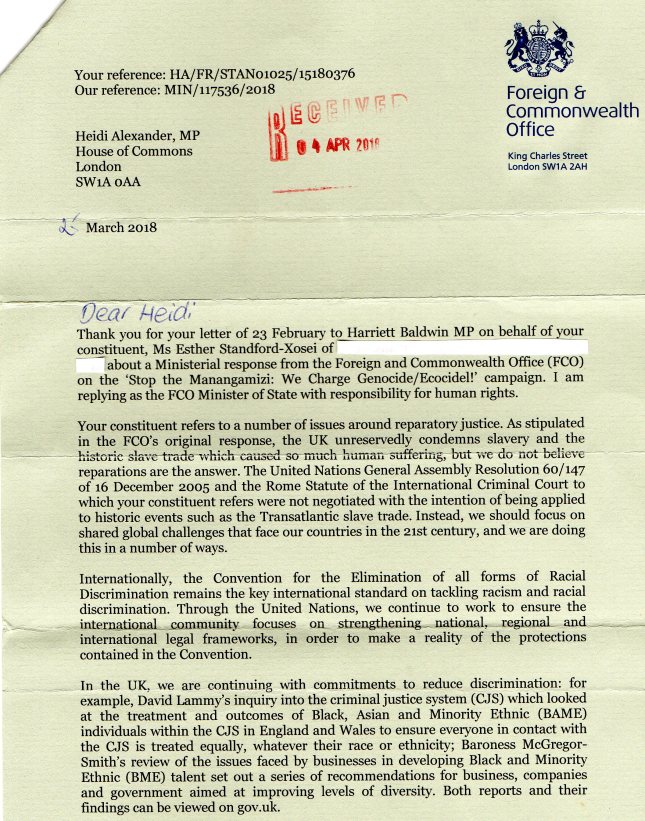
ESTHER STANFORD-XOSEI LETTER TO HEIDI ALEXANDER REGARDING THE FCO RESPONSE setting out what is wrong with the response received from the Foreign & Commonwealth Office to the 2017 ‘Stop the Maangamizi!’ Petition & its accompanying letter.


LORD AHMAD 1

LORD AHMAD 2

LORD AHMAD 3


This link includes the response sent to Heidi Alexander MP further to receiving the above response from Lord Ahmad.

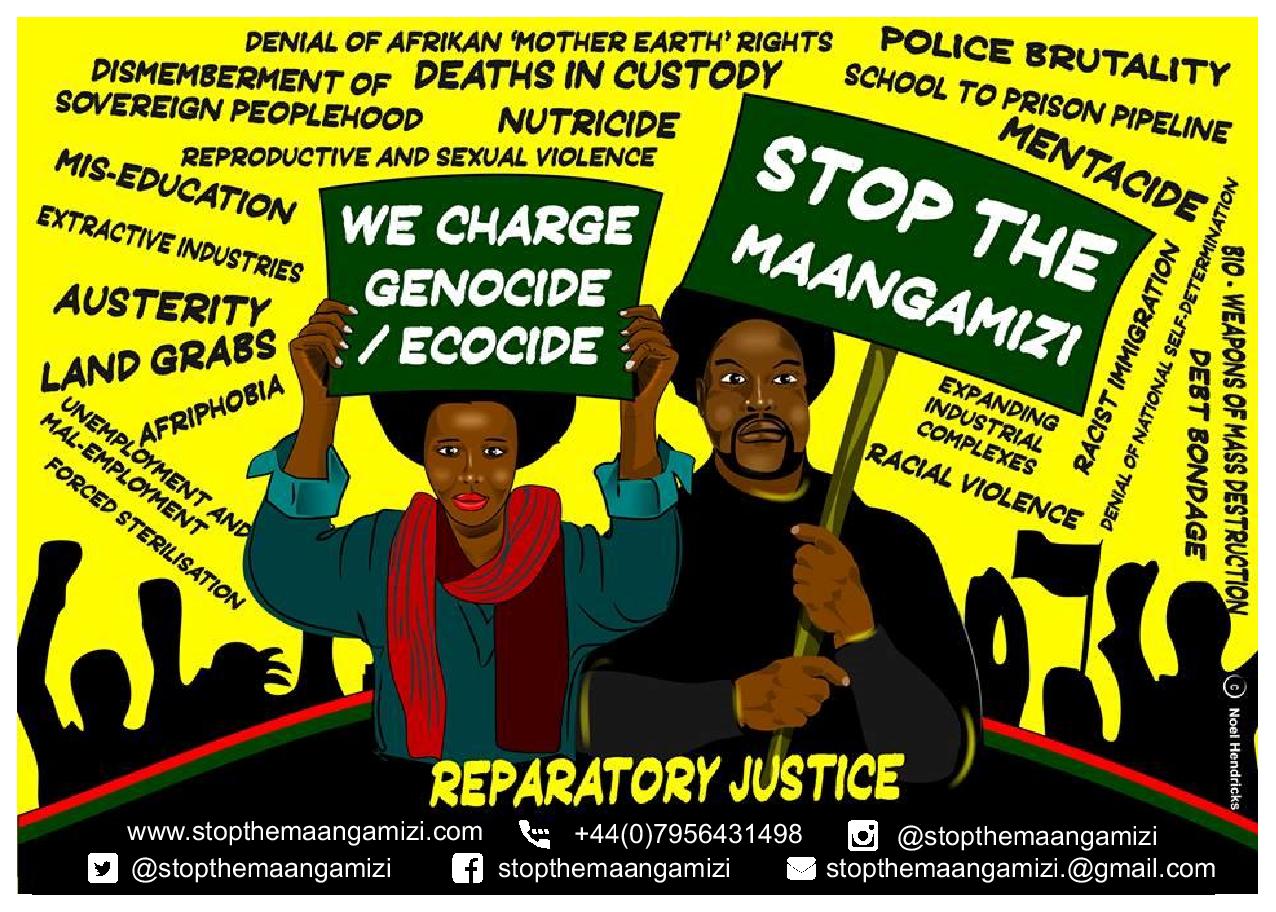
See here for the ‘Stop the Maangamizi!’ Postcard and template letter.

Check out this guidance on lobbying MPs and other elected officials.


In Service

Stop the Maangamizi: We Charge Genocide/Ecocide! Campaign International Steering Committee Spearhead Team (ISC-SMWeCGEC) 


Posted in AFRIKAN RESISTANCE, ALL PARTY PARLIAMENTARY COMMISSION OF INQUIRY (APPCITARJ), INTERNATIONAL SOCIAL MOVEMENT FOR AFRIKAN REPARATIONS, ISMAR, MAANGAMIZI RESISTANCE, MAANGAMIZI RESISTORS, REPARATIONS, Reparatory Justice, SMWeCGEC, STOP THE MAANGAMIZI CAMPAIGN, STOP THE MAANGAMIZI PETITION, Uncategorized | Tagged Afrikan Heritage, Afrikan Liberation, Afrikan lobby, APPCITARJ, British Colonialism, British Government, Commission of Inquiry, Ecocide, Genocide, Grassroots Leadership, Grassroots lobbying, Hellacaust, International Social Movment for Afrikan Reparations, ISMAR-Building, Maangamizi, Movement-Building, People Power, REPARATIONS, Reparatory Justice, Self-Repairs, Social Movement, Stop the Maangamizi | Leave a comment

HOW YOU CAN TAKE ACTION TO ADDRESS THE MAANGAMIZI

Posted on March 4, 2018 by STOP THE MAANGAMIZI


take action


Greetings Supporter/s of the ‘Stop the Maangamizi: We Charge Genocide/Ecocide! Campaign (SMWeCGEC)

Now that you have signed the ‘Stop the Maangamizi!’ Petition, do you want to take action to get redress for the Maangamizi (Afrikan ‘Hellacaust’ of chattel, colonial and neo-colonial forms of enslavement) as it affects you, your family and community?

Here is an example of how you can do so; please see the ‘Stop the Maangamizi!’ Postcard template below, which we urge you to send to your MP.  You can find out details about your MP here.

We also attach a template letter which has been revised to include reference to the issue of ‘compensation to enslavers tax fraud’ which is the subject of a separate but connected ‘Refund Our Taxes To Compensate Enslavers!’ petition. You can print off and sign the following letter here: SMWeCGEC Template Letter to MP- Elected Official. The letter is also drafted in such a way that you can send to any publicly elected official, not just MPs.


The postcard and letter are tools aimed at enabling you to better lobby and engage with establishment decision-makers about including Maangamizi impact issues as they affect you, your family and community in the constituency representational work and local, national and international policy-making they prioritise.

Please keep us updated in the SMWeCGEC about any progress you make as we are beginning to map which MPs are responding positively to the campaign aims, our contacts can be found here.  This is very important because the experience we have so far is that MPs want to know who else is being lobbied and taking action on the campaign demands contained in the postcard and/or letter. It is essential for us to have this data and info about which individuals and groups are making what approaches to which publicly elected officials and in which geographical areas across the UK.

Check out this guidance on lobbying MPs and other elected officials.

You can also read this ‘Stop the Maangamizi!’ Postcard advocacy case-study.

See here for other ways that you can take action.

We look forward to hearing from you about any progress you make or any barriers you may encounter! We are developing a page to identify Maangamizi desecrators and deniers so are interested to know if you encounter any public officials that can be characterised as such.


In Service

‘Stop the Maangamizi: We Charge Genocide/Ecocide! Campaign (SMWeCGEC) Spearhead Team


Posted in AFRIKAN HELLACAUST, AFRIKAN RESISTANCE, ALL PARTY PARLIAMENTARY COMMISSION OF INQUIRY (APPCITARJ), INTERNATIONAL SOCIAL MOVEMENT FOR AFRIKAN REPARATIONS, ISMAR, MAANGAMIZI RESISTANCE, MAANGAMIZI RESISTORS, REPARATIONS, Reparatory Justice, SMWeCGEC, STOP THE MAANGAMIZI CAMPAIGN, STOP THE MAANGAMIZI PETITION, THE 2017 AFRIKAN EMANCIPATION DAY REPARATIONS MARCH, THE 2018 AFRIKAN EMANCIPATION DAY REPARATIONS MARCH, UBUNTUKGOTLA/PITGJ | Tagged Afrikan Heritage, Afrikan Liberation, APPCITARJ, British Colonialism, British Government, Commission of Inquiry, Ecocide, Genocide, Grassroots Leadership, Hellacaust, International Social Movment for Afrikan Reparations, ISMAR, Maangamizi, Movement-Building, People Power, Reparations March, Reparatory Justice, Social Movement, Stop the Maangamizi, STOP THE MAANGAMIZI PETITION, Tax Fraud, U-PITGJ, We Charge Genocide/Ecocide! | Leave a comment

MAANGAMIZI DEBT TRAP MUST NOT SILENCE ISAAC ADONGO IN GHANA!

Posted on February 4, 2018 by STOP THE MAANGAMIZI

ISACC ADONGO
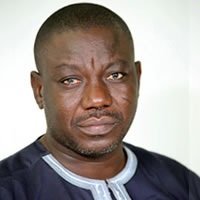
We of the ‘Stop the Maangamizi: We Charge Genocide/Ecocide!’ Campaign (SMWeCGEC), acting upon the initiative and prompting of the All-Afrikan Networking Community Link for International Development (AANCLID) and those working together with it in the Global Preparatory Committee for the All-Afrikan People’s Consultative Congress on Debt and Development (GPC-AAPCCODD), deem it necessary to add our voices of support, encouragement and dynamic push forward to our Afrikan Compatriot Isaac Adongo, the brilliantly outspoken Pro-Good Governance Bolgatanga Central Member of Parliament in Ghana today.

We stand together with all progressive forces in and beyond Ghana in resolving to stand unshakeably by Isaac Adongo against all reactionary detractors scheming to shove him off course in his highly impressive endeavours of genuinely patriotic defence of our Afrikan human, people’s and Mother Earth rights by championing in particular the fight for Economic and Social Justice as vital to advancing Afrika towards the real participatory democratic achievement of total emancipation.

As a Pan-Afrikan Reparatory Justice force campaigning against manifestations of the Maangamizi such as Debt Bondage, we of the SMWeCGEC urge that the sinister attempts to misuse the pernicious Debt Trap into which most innocent peoples all over the World are being enticed, humiliated and even enslaved by unscrupulously greedy banks and other criminally voracious financial corporate vampires and state agencies such as the notorious Bretton Woods institutions of Euro-Amerikkkan Imperialism to discredit, harass and deter genuine patriotic champions of Afrikan progress like Isaac Adongo must be thoroughly exposed, fiercely resisted and vigilantly counteracted without any fear or compromise whatsoever. For, only by so bravely doing can we effectively develop the kind of true Participatory Democracy that will enable us to properly educate, mobilise and rally the overwhelming masses of our Afrikan people at home and abroad to unify in stopping the Maangamizi by our own grassroots-driven People’s Power and secure the total emancipation that will deliver to us the Maatubuntuman vision of true Pan-Afrikan Reparations for Global Justice envisaged by the heroic likes of the Founder of modern Ghana Osagyefo Kwame Nkrumah!

Forward ever onward in Resistance against Debt Bondage to our Pan-Afrikan Rendezvous of Global Justice Victory!

SMWeCGEC International Steering Committee Spearhead Action Team
London, United Kingdom.

1st February 2018

Posted in AFRIKAN HELLACAUST, AFRIKAN RESISTANCE, INTERNATIONAL SOCIAL MOVEMENT FOR AFRIKAN REPARATIONS, ISMAR, MAANGAMIZI RESISTANCE, MAANGAMIZI RESISTORS, REPARATIONS, Reparatory Justice, SMWeCGEC, STOP THE MAANGAMIZI CAMPAIGN, STOP THE MAANGAMIZI PETITION, THE 2018 AFRIKAN EMANCIPATION DAY REPARATIONS MARCH, Uncategorized | Tagged Debt Bondage, Ghana, Global Apartheid, Movement-Building, Neocolonialism, Pan-Afrikanism, People Power, REPARATIONS, Repudiate the Debt!, Social Movement | Leave a comment

‘LIBYA SLAVE AUCTIONS’: UPDATING OUR ‘STOP THE MAANGAMIZI!’ RESPONSE

Posted on December 4, 2017 by STOP THE MAANGAMIZI

CLARKE NKRUMAH


“To be a slave was to be a human being under conditions in which that humanity was denied.
They were not slaves. They were [Afrikan] people.
Their condition was slavery.
They looked upon themselves and their servitude with the eyes and minds of human beings, conscious of all that went on around them”.
Julius Lester


“Most human behaviour is controlled by images. Image is a factor in how people look at themselves and what they use to reflect themselves. The control of images is a major factor in world power”
John Henrik Clarke


LIBYA COLLAGE


“Powerful people cannot afford to educate the people that they oppress, because once you are truly educated, you will not ask for power. You will take it.”
John Henrik Clarke


They say silence speaks louder than words; in what has been perceived to be our silence, we have also been speaking volumes. It is not that we have not been responding, it is simply that some are looking for us to respond in typical sorts of ways. We in the ‘Stop the Maangamizi: We Charge Genocide/Ecocide!’ Campaign (SMWeCGEC) do not pander to obscurantism, more so with misguiding populist decorations. Our priority focus is on educating, organising and mobilising people to ‘Stop the Maangamizi!’ through their own reparatory justice action-learning in order to build their own power to effect holistic reparatory justice. This is why we concur with Dr John Henrik Clarke as quoted above. What is happening in and around Libya is more than enslaved Afrikans being sold on auction blocks. Rather, this is one of the symptoms of an increasingly decadent, rotten and stinking neocolonialism as being perpetuated in Afrika by the Global Apartheid racist forces of Euro-Amerikkkan imperialism which is making our own homeland terribly more impossible to live in. If our own countries have not become hell on earth why wouldn’t Afrikans want to stay in Afrika?

Some people are making lots of noise and taking sporadically reactive actions about Afrikans being sold on auction blocks in Libya. It is not lost upon us that some of these noises and actions are being orchestrated and paid for from dodgy sources inimical to the best interests of Afrika. As justified in their spontaneity as some of such actions may appear, they raise lots more questions than answers. After these sorts of protests that we are seeing being organised in response largely to the imperialist corporate mouthpiece CNN reporting and dissemination of ‘controlling images’ of Afrikans being sold on auction-blocs, what do most of the participants who attend such protests, (including those who simply do so simply because they are paid bogus NGO bureaucrats and poverty-pimps, whose job it is to orchestrate and profit from such wild-goose chases), do as follow-up actions of every-day resistance to effect change in eradicating the root causes of such horrors? How long shall we continue to run helter-skelter in spontaneous protests actions, without taking effectively organised actions to prevent the killing of our freedom-fighting prophets and the violent destruction of the movements of resistance they have been trying to build? It would seem that there are some in our Afrikan Heritage Communities that seek to limit our activism to aimless protests, outside of the context of movement-building, with no clear goals or agreement on who should be the targets of our actions, the change we are seeking to bring about and no plan to build principled organizational unity or the capacity to facilitate such potentially change-making endeavours.

Why are those concerned not crying out and protesting louder about the mess being made of our Afrikan homeland by Euro-Amerikkkan imperialism through its neocolonial Afrikan and Arab elitist puppets; the stinking mess with all the brutalities of white-supremacy racist barbarism that is driving ordinary Afrikans away from their homes? Please be more critically aware, discerning and vigilant. Take the kind of well-planned ‘Stop the Maangamizi’ for Reparatory Justice! action/s that will prevent Afrikans from fleeing our own homeland in the first place and vacating it for more foreign setter-colonialists to move in, racially cleanse and occupy for nefarious geopolitical ends. It is high time that our people once again focused on the kinds of systematic actions that will effect systemic change and not simply respond in knee-jerk fashion to the various symptoms of the same system in such a way that these symptoms become the main focus of our protest actions.

A more useful starting point would be to target Euro-Amerikkkan imperialism and its agencies, institutions and quislings, including their Black puppets of neocolonialism, that are masterminding such horrific crimes of the Maangamizi; particularly with a view to shutting down the Maangamizi Crime Scenes that you can find anywhere near you or close to communities you can be engaged constructively with. For people in Afrika ‘Stop the Maangamizi!’ is not just a slogan, it is a life and death matter, hence why we initiated the SMWeCGEC with specific aims and objectives towards stopping the Maangamzi which manifests itself in the current system of neocolonialism with symptoms including variations of ‘modern-day slavery’, such as is becoming more highlighted currently in Libya. In our justified outrage about this form of modern-day enslavement of Afrikans, we must be mindful of who is pushing and profiting from this particular narrative and proliferation of ‘slave-auction controlling images’ and whose agenda is our people’s very predictable-spontaneous reactions to such narratives serving? It is indeed the same forces today as was the case yesteryear. After all, those that are most pushing the ‘modern day-slavery’ agenda and ‘it is Afrikans that are at it again‘ agenda are those actually responsible for creating, fuelling and perpetuating those conditions which continue to make it possible, including violently killing those freedom-fighters of ours who organise and build movements so stop such manifestations of the Maangamizi.

How comes this was not occurring under a Colonel Gaddafi led-Libya? Modern-day enslavement of Afrikans in Libya, in this aggravated form, is happening because NATO forces deliberately have chosen to make it happen in order to lend credence to their governments propaganda about us forgetting our intergenerational reparatory justice demands and rather begging them to clean up the Euro-Amerikkkan ‘mess’ they have created in Libya; and save us from horrors they contrive all the time in different ways and means. After all, isn’t Libya and its current neocolonial puppet-government a territory that is absolutely controlled in military and all other forms by the same forces of Euro-Amerikkkan imperialism and their creation of reactionary counterinsurgency terrorist forces like Al-Qaeda and Islamic State?

We must not allow ourselves to fall into the Hegelian Dialectic i.e. Roman Emperor Diocletian’s age-old problem-reaction-solution method for securing geopolitical interests. This highlighting of the modern-enslavement of Afrikans in Libya, divorced from the context and continuum of the Maangamizi, is an attempt by the Euro-Amerikkkan imperialist Establishment to assert its geopolitical interests in Afrika and to shift and misdirect the masses attention away from the task of every-day resistance movement building for Pan-Afrikan Power through effecting Pan-Afrikan Reparations for Global Justice by our own People’s Power.

Directing our protests at forces which right now have no interests in stopping the trafficking, incarceration and enslavement of Afrikans in Libya is the classic way we give up our own change-making power by thinking that ‘WE THE AFRIKAN PEOPLE’ do not have the power to set our own agenda and organise to achieve it. Our time, and difficult to harness resources, are better utilised in self-determinedly organising according to our own Pan-Afrikan Liberation agenda to put a full-stop to the Maangamizi in the process of effecting holistic reparatory justice by our own people’s power; a global force those of us in the Diaspora have the responsibility first and foremost, to develop through building Afrikan Heritage Communities for National Self-Determination (AHC’s NSDs/Maatubuntujamaas) to organically generate the MAATUBUNTUMANDLA Pan-Afrikan Government of Peoples Power Abroad which in our contemporary times will be the most effective way to uphold, defend and promote the best collective geo-political interests of Afrikan people throughout the World.

What is happening now in Libya and the disgraceful inability of governments and other state officials throughout the Continent and Diaspora of Afrika to do anything effective in addressing the situation makes it more imperative for Afrikans, outside of the Continent of Afrika, to prioritise the building of such MAATUBUNTUMANDLA as a step towards achieving MAATUBUNTUMAN (Pan-Afrikan Union of Communities at Home & Abroad); so that we are able to not only ‘substantively’ represent’ ourselves in positive action to make our Afrikan Lives actually matter in deed; but also amplify the voices of our Communities of Resistance on the Continent and support them in freedom-fighting actions that will enable them to stop such crimes of the Maangamizi upon their own initiatives. This is how best we in our time can fulfil our ‘mission’ and not betray it, as others have and are still doing, so as to win and guarantee our collective security and thereby provide a brighter future for us and our progeny on Planet Earth.

‘Stop the Maangamizi: We Charge Genocide/Ecocide!’ Campaign International Steering Committee (ISC-SMWeCGEC)

04/12/17 revised from original statement of Kofi Mawuli Klu on 28/11/17

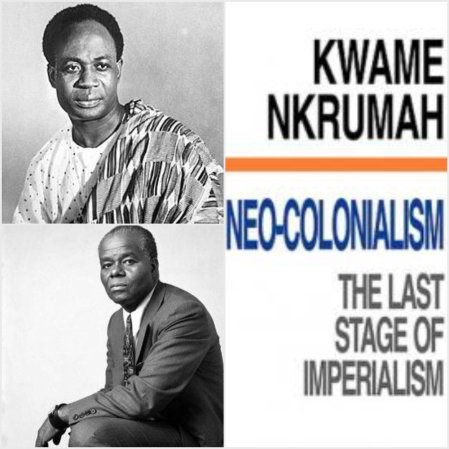
“The neo-colonialism of today represents imperialism in its final and perhaps its most dangerous stage. In the past it was possible to convert a country upon which a neo-colonial regime had been imposed — Egypt in the nineteenth century is an example — into a colonial territory. Today this process is no longer feasible. Old-fashioned colonialism is by no means entirely abolished. It still constitutes an African problem, but it is everywhere on the retreat. Once a territory has become nominally independent it is no longer possible, as it was in the last century, to reverse the process. Existing colonies may linger on, but no new colonies will be created. In place of colonialism as the main instrument of imperialism we have today neo-colonialism. The essence of neo-colonialism is that the State which is subject to it is, in theory, independent and has all the outward trappings of international sovereignty. In reality its economic system and thus its political policy is directed from outside.”
Osagyefo Dr Kwame Nkrumah, ‘Neocolonialism: The Last Stage of Imperialism’


“Those who do not learn from history are condemned to repeat it”
George Santayana


STM LOGO - RGB-blk-02

Posted in AFRIKAN HELLACAUST, AFRIKAN RESISTANCE, ALL PARTY PARLIAMENTARY COMMISSION OF INQUIRY (APPCITARJ), INTERNATIONAL SOCIAL MOVEMENT FOR AFRIKAN REPARATIONS, ISMAR, MAANGAMIZI RESISTANCE, MAANGAMIZI RESISTORS, PREFIGURATIVE POLITICS, PRIM, REPARATIONS, Reparatory Justice, SMWeCGEC, STOP THE MAANGAMIZI CAMPAIGN, STOP THE MAANGAMIZI PETITION, UBUNTUKGOTLA/PITGJ, Uncategorized | Tagged Afrikan Liberation, Afrikan Sovereignty, APPCITARJ, British Colonialism, British Government, French Colonialism, French Imperialism, Genocide, Grassroots Leadership, Holocaust, International Social Movment for Afrikan Reparations, ISMAR, Maangamizi, Marching, Modern Day Slavery, Movement-Building, Pan-Afrikan Revolution, Pan-Afrikanism, People Power, Problem-Reaction-Solution, REPARATIONS, Reparatory Justice, Self-Repairs, Social Movement, Stop the Maangamizi, U-PITGJ | Leave a comment

A CALL FOR REPARATORY JUSTICE ETHICS

Posted on November 27, 2017 by STOP THE MAANGAMIZI


LETTER TO ‘THE VOICE’ NEWSPAPER

Dated 24th November 2017


London: A delegation hands in 'Stop The Maangamizi' Petition at Prime Minister's Office, 10 Downing Street on 1st August to counter Afrikan Holocaust (Maangamizi) denial and demand holistic reparatory justice for the Afrikan Holocaust.
London: A delegation hands in ‘Stop The Maangamizi’ Petition at Prime Minister’s Office, 10 Downing Street on 1st August to counter Afrikan Holocaust (Maangamizi) denial and demand holistic reparatory justice for the Afrikan Holocaust.

Dear George Ruddock, Editor & Leah Sinclair, Online Editor of The Voice Newspaper

I was interested to read ‘The Voice’ online article published on 19th November 2017: ‘Parliament urged to examine reparations’ and the report back on the Global Afrikan Congress UK lobby written by Vic Motune.

It would be good if your journalists researched to verify the sources of ideas and initiatives that they report on. You ought to have known that the concepts and its practical translation into campaigning for the All-Party Parliamentary Commission of Inquiry for Truth & Reparatory Justice (APPCITARJ) originated from, and have been publicly pursued by, the ‘Stop the Maangamizi!’ Campaign.

The ‘Stop the Maangamizi’ Campaign is the official campaign partner to the Afrikan Emancipation Day Reparation March Committee (AEDRMC) which organises the annual Afrikan Emancipation Day Reparations March on the 1st August each year. This is one of the main demands we have recurrently been putting before the entire British state in our annual 1st August reparations marches. Even a cursory reader of the letters that accompany the ‘Stop the Maangamizi’ Petition, which is presented each year to the UK Prime Minister at No 10 Downing Street as one of the activities of the reparations march, would know this.

GACuk, which has always participated in these marches over the years, is therefore being dishonest in not acknowledging the originators of the APPCITARJ as is the ethical requirement for borrowing other people’s ideas.

We hope your diligent research and professional media following of the activities of the International Social Movement for Afrikans (ISMAR) in the UK, which include the co-organsers and supporters of the annual reparations march and its demands, which include embracing the APPCITARJ, will be more accurately reported on in your future coverage of these matters.

We recommend that you study and possibly do a write up on the report of the recent international dialogue with UK reparations activists and representatives from the National Council on Reparation in Jamaica which took place on 14th November 2017.

It would be good if one of your journalists wrote about some of the recent updates in the ISMAR in the UK, or I could help by writing one; even doing so jointly with one of your journalists.

We in the ‘Stop the Maangamizi!’ Campaign are very much interested in the ‘Voice’ maintaining its reputation as a credible media institution and ‘Britain’s top Black Newspaper’ and would like to contribute to making it remain so.

Sincerely

Esther Stanford-Xosei

Coordinator-General, ‘Stop the Maangamizi: We Charge Genocide/Ecocide!’ Campaign

Spokesperson, Afrikan Emancipation Day Reparations March Committee (AEDRMC)

Posted in AEDRMC, AFRIKAN HELLACAUST, AFRIKAN RESISTANCE, ALL PARTY PARLIAMENTARY COMMISSION OF INQUIRY (APPCITARJ), INTERNATIONAL SOCIAL MOVEMENT FOR AFRIKAN REPARATIONS, ISMAR, MAANGAMIZI RESISTANCE, REPARATIONS, Reparatory Justice, SMWeCGEC, STOP THE MAANGAMIZI CAMPAIGN, STOP THE MAANGAMIZI PETITION, THE 2017 AFRIKAN EMANCIPATION DAY REPARATIONS MARCH, UBUNTUKGOTLA/PITGJ, Uncategorized | Tagged 1st August, Afrikan Liberation, British Government, Commission of Inquiry, Emancipation Day, Genocide, Holocaust, Marching, Movement-Building, Pan-Afrikanism, People Power, REPARATIONS, Reparations Ethics, Reparations March, Reparatory Justice, Reparatory Justice Ethics, Self-Repairs, Social Movement | Leave a comment

BLACK RAGE: FUEL OF OUR BLACK POWER FOR SHUTTING DOWN MAANGAMIZI CRIME SCENES!

Posted on September 13, 2017 by STOP THE MAANGAMIZI

A SMWeCGEC Comment on the Documentary Film ‘FUCK WHITE TEARS!’

by Annelie Boros (Germany 2016)


https://www.youtube.com/watch?v=zbI0IGZwMCc


“Fuck White Tears!” is an eye-opening  film all must watch! It is a must watch because, among many other reasons for doing so, it very clearly shows Black Rage as the abundant fuel of the Black Power with which the masses of our Black people throughout the continent and diaspora of Afrika can shut down the many crime scenes of the Genocide/Ecocide that the continuum of the Maangamizi from the past into the present is perpetrating against us all over the World! That is why it is a must watch, particularly for all those who doubt our SMWeCGEC viewpoint that the principled unity of the masses of our most exploited, impoverished and underprivileged Black people throughout the continent and diaspora of Afrika, interconnected glocally in the coordinated Positive Action carrying out of their own independent self-organisation, self-conscientization and self-emancipation with their own unifying Black Power, is the most potent force for self-determinedly effecting holistic Pan-Afrikan Reparations to definitively win Global Justice.

This is a must watch film for officials of the British Government and other apparatchiks of Euro-Amerikkkan Imperialism and their corruptly depraved puppet quislings of the Black-Skin-White-Masked Elite who retort to our correspondence in our ongoing dialogue with the United Kingdom State with remarks about their deliberately fabricated Mandela-Zuma-Ramaphosa-type of fake ‘African’ successful role models we are supposed to be sheepishly happy in gullibly looking up to. Such is the contemptuous White Supremacist racism of the Afriphobia with which they still look down upon, underestimate and grossly disrespect us! The rejection of such questionable role models of “Blacks as eternal kaffirs” by not only the incorruptible old stalwarts but also the new generations of our Black Power Freedomfighters in and beyond Azania/South Africa must sound the Abeng of the new phase of our rekindling Pan-Afrikan Liberation Struggle that is now better focused upon achieving holistic Reparatory Justice in accordance with the updated agenda of the reinvigorating International Social Movement for Afrikan Reparations (ISMAR); that is, the ISMAR which is glocally rebuilding itself as an autonomous bastion of the Peoples’ Reparations International Movement (PRIM). For you can fool all the people some of the time; and fool some of the people all the time; but you cannot fool all the people all the time! So the ‘Big Lie of the sophisticatedly deceptive White Power fabricated “Mandela Project” of Global Apartheid Racism has now collapsed in the eyes of the rebellious Youthguards of the New Breed of Black Power Freedomfighters of the Pan-Afrikan Revolution even inside Azania/South Africa! So shall fail the Big Hoax of Black Lives Matter, similarly fabricated, ‘fucked up’ and funded by the ilk of George Soros, Bill & Melinda Gates Foundation, Ford Foundation etc. as a COINTELPRO-type of Counterinsurgency Subterfuge to be spread around the World in order, as happened in the so-called Arab Spring, to sow confusion, distortion and subversion under the false flags of Counterfeit Radicalism and Counter-Revolution within our resurgent Black Power forces; they will fail as their carefully trained, camouflaged and surreptitiously infiltrated agents get effectively exposed, confronted and expunged from our Communities of Resistance by uncompromisingly vigilant Black Power Activists of our Pan-Afrikan Revolution for Global Justice who are very highly conscientised with all the necessary rigorous Guerrilla Intellectual clarity, skilfulness and integrity about their authentically Afrikan Reparatory Justice politico-ideological bearings of Positive Action throughout the continent and diaspora of Afrika!

Above all, “Fuck White Tears” reinforces our faith in our own uncompromisingly militant revolutionary Black Power as our most potent force for our own Afrikan self-emancipation throughout the World! It shows the source of the fuel for generating such Black Power: the justified Black Rage of the masses of our Afrikan ‘Wretched of the Earth’! Fortunately, Black Rage is abundant and growing more and more self-conscious, self-organised and self-empowering throughout the continent and diaspora of Afrika. We of the SMWeCGEC and its supporting organisations, networks and campaigns in and beyond the UK are amplifying from Europe the Black Rage in the voices of Black Power Resistance for Pan-Afrikan Reparatory Justice such as those of our ISMAR/PRIM Combatants in the various contingents of the Old Guards and New Guards of Freedomfighters in Azania/South Africa; such as those of Kémi Séba, President of ‘Urgences Panafricanistes’ and the Anti-CFA movement rocking so-called Francophone Afrika; the Ablodeduko Flag-bearers of the Gbetowo in their Ewe-Fon-Adza Communities of Resistance against the 1884-1885 Berlin Conference border divisions of the European colonial partition in and beyond West Afrika; those voicing their disgust at the deceptive promises and other Big Lies of the Politricks of Pseudo-Democracy with which the Eurocentric hype of the West is being obscurantly used by buffoonish quislings, under the guise of promoting multi-party democratic “good governance”, to impose the neoliberal capitalist Neocolonialism of Euro-Amerikkkan Imperialism upon Ghana, Nigeria, Libya, Tanzania, Mozambique, Botswana, Rwanda and other parts of the continent and diaspora of Afrika; as well as those of the Maroon Community strongholds of Cockpit Country in Jamaica, Haiti and Suriname, of the Quilombos in Brazil, of the Palenques in Colombia, etc; in addition to those of our Black Liberation Army and other Black Power political prisoners and escaped combatants in and outside the White Supremacy racist military-industrial-prison complexes of Euro-Amerikkkan Imperialism in and outside the USA! With all of these and more of such Black Rage voices of Black Power Resistance growing louder throughout the World, an overstanding of the real message in the “Fuck White Tears” film should reinforce confidence in our unifying Pan-Afrikan revolutionary self-determining capacity to very well answer the arrogance of White Power nonsensical responses to our Reparatory Justice dialogue overtures to the British Government and other state apparatchiks of Euro-Amerikkkan Imperialism with the successful glocally coordinated shutting down of the Global Apartheid racist Genocide/Ecocide crime scenes of the continuing Maangamizi throughout the continent and diaspora of Afrika!


Amandla Ngawethu!

Izwe lethu I Afrika!

Ubuntuhurushindi!


SMWeCGEC-ISC Spearhead Team

Stop the Maangamizi: We Charge Genocide/Ecocide Campaign International Steering Committee


A higher resolution version of ‘Fuck White Tears!’ can be found here.

Posted in AFRIKAN HELLACAUST, AFRIKAN RESISTANCE, INTERNATIONAL SOCIAL MOVEMENT FOR AFRIKAN REPARATIONS, ISMAR, MAANGAMIZI RESISTANCE, MAANGAMIZI RESISTORS, PRIM, REPARATIONS, Reparatory Justice, SMWeCGEC, STOP THE MAANGAMIZI CAMPAIGN, Uncategorized | Tagged Afrikan Liberation, Afrikan Sovereignty, British Colonialism, Ecocide, French Imperialism, Grassroots Leadership, Hellacaust, Movement-Building, Pan-Afrikanism, Social Movement | Leave a comment

UBUNTUKGOTLA – PEOPLES INTERNATIONAL TRIBUNAL FOR GLOBAL JUSTICE (Ubuntukgotla-PITGJ)

Posted on January 31, 2016 by STOP THE MAANGAMIZI

This article was revised on 29/06/18
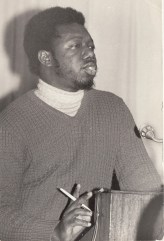

Kofi Mawuli Klu 2222 (2)

vintage-calligraphic-elements-1nyoWZ-clipart

“The use of law as one of the most important instruments of our Afrikan struggle for reparations, indeed the need to locate our claim to restitution for the damages caused by gross violations of Afrikan sovereignty must raise immediately for us the essential questions of whose Framework, whose Law and whose Justice“

Kofi Mawuli Klu ‘Charting an Afrikan self-Determined Path of Legal Struggle for Reparations’, A draft paper for presentation to the 11th December 1993 Birmingham Working Conference of the Africa Reparations Movement, UK, 1993

vintage-calligraphic-elements-1nyoWZ-clipart

In the above paper, presented at the African Reparations Movement conference launch in the early 1990’s as a contribution to reparations-movement-building and movement-lawyering, jurisconsult Kofi Mawuli Klu advocates the need for Afrikan people to chart our own self-determined path of legal struggle to enforce and secure reparations. However, this requires decolonisation and repair of the law, legal system and processes. Ahead of his time, Klu asserted the self-rehabilitation and healing in a Fanonian sense that comes about through Afrikans exercising agency in the shaping, making and implementation of international law. This model has subsequently been referred to as international law from below by various legal scholars. Klu affirms seven principles which should be followed in charting an Afrikan self-determined path of legal struggle for reparations. These include:

  1. Demystification of the law.
  2. Developing legal creativity and creativity in applying what has been referred to as the ‘legal imagination‘.
  3. Afrikan popular democratic involvement in the law-making process.
  4. Recognition of the criminal injustice of enslavement, colonisation and neo-colonisation from the perspective of the legal consciousness of Afrikan people.*
  5. Judging the crimes and wrongs of enslavement in accordance with Afrikan law.
  6. Promoting mass adjudication of the Afrikan and other indigenous peoples cases for reparations through grassroots benches of an International Peoples Tribunal on Crimes Against Humanity.
  7. Developing international legal strategies on the formulation and prosecution of the Afrikan case for reparations.

vintage-calligraphic-elements-1nyoWZ-clipart

*Legal Consciousness is the sum of views and ideas expressing the attitude of a group or people toward law, legality, and justice and their concept of what is lawful and unlawful. Legal Consciousness therefore traces the ways in which law is experienced and interpreted by specific individuals and groups as they engage, avoid, or resist the law and legal meanings. Legal consciousness also entails the process by which a group or people concretize their political goals and demands and the means by which they try to give them universal force in the form of laws and policy. It follows that legal consciousness is a form of social consciousness and closely related to political consciousness.

vintage-calligraphic-elements-1nyoWZ-clipart

Building on this unrivaled foresight, the ‘Stop the Maangamizi: We Charge Genocide/Ecocide‘ Petition concludes by stating that it “will also galvanise grassroots work towards establishing glocal sittings of the Ubuntukgotla -Peoples International Tribunal for Global Justice (Ubuntukgotla-PITGJ) as part of a series of actions which will put a full stop, by way of holistic and transformative reparations, to all acts of Genocide/Ecocide against Afrikan people.”

What is an International Peoples’ Tribunal?

An international peoples tribunal is a process initiated by communities and/or civil society groupings which seeks to establish whether a state, international organisation, corporation, or less frequently specified individuals have committed breaches of international law or of another body of law or norms, (such as national law, Afrikan law, indigenous law of peoples’ law); which involves the presentation of evidence and arguments to a body of  people deemed competent to adjudicate on relevant issues in the best interests of the communities themselves, nations or humanity as whole. In light of documentary  and other forms of evidence presented to  tribunal members in formal proceedings, it presents a reasoned set of findings based on an evaluation of such evidence and they can also pass judgements. There is however considerable variation in  in the emphasis and practice of such tribunals which are also described in various terms such as a people’s tribunal, people’s hearing, or  tribunal of conscience.

Seizing back Afrikan people’s power to define, make, shape and advocate for legal strategies and processes in our own best interests and in accordance with Afrikan forms of law and jurisprudence, the term Ubuntukgotla has been chosen to give culturally competent expression to the increasingly popular notion of an international people’s tribunal.

The Ubuntukgotla–PITGJ is a court of peoples humanity interconnectedness. The term is comprised of the Afrikan terms ubuntu and kgotla. A Kgotla is a Tswana traditional institution of participatory democracy, i.e. peoples assembly or court in Botswana which has a number of functions including:

(1) enabling public debate and consultation on policy and legislation;

(2) being a judicial institution in which cases are heard providing access to justice;

(3) soliciting views from the community on government actions and decisions or those of any other interest group; and

(4) facilitating the means to come to an agreement or key issues pertaining to the health and well-being of the community.

The term ubuntu which translates as: “I am because of who we are” is a concept from the Southern Afrikan region which means literally “human-ness”, and is often understood to mean”humanity towards others”. It is also considered, in a more philosophical sense, to mean “the belief in a universal bond of sharing that connects all humanity. In Southern Afrika, ubuntu has come to be used as a term for a kind of humanist philosophy, ethic or ideology, also known as Ubuntuism or Hunhuism propagated in the re-Afrikanisation process of these countries during the 1980s and 1990s.

The Ubuntukgotla–PITGJ is being developed as a site of an activist ‘doing of law’ which also includes knowledge-production and praxis on making, enforcing and implementing just law. Although like other peoples tribunals, it may be perceived as a deviant or even illegitimate ‘institution’ within the institutional landscape of dominant forms of law.
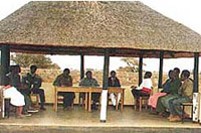
UBUNTUKGOTLA

Civil society (peoples’) tribunals initiated by citizens of conscience and oppressed groups have emerged to fill the normative vacuum created by the gap between the ideals, of justice and access to justice.  In this regard, people’s tribunals are seen as more effectively responding to the failures, exclusions and mendacity of existing domestic and international state and state sponsored institutions apparatuses to provide effective redress for human, peoples and Mother Earth right violations and atrocities committed, despite having formal power and jurisdiction to do so. They do so by: asserting the rights of peoples (and people) to articulate law that is not dependent on endorsements by states for its legitimacy; as well as utilising, interpreting and developing international and other forms of law.

People’s tribunals can critique the content of existing international law where such law perpetuates oppressive power relations. Oftentimes, peoples’ tribunals have resulted in a greater democratisation of international law-making from below and provided additional accountability mechanisms for the exercise of and abuses/misuse of power by states and international organisations. They have been used by many different peoples and special interest groups.

For example, in 1993 the indigenous people of Hawaii developed the Ka Ho‘okolokolonui Kānaka Maoli-Peoples’ International Tribunal Hawai‘i in which the United States and the state of Hawai‘i were put on trial for crimes against the original people of Hawai‘i, the Kānaka Maoli. A video has been made of this tribunal which we recommend you view. It can be found here.

The Ka Ho‘okolokolonui Kānaka Maoli Tribunal features a panel of international judges that was convened to hear the charges, which included genocide, ethnocide, the taking of their sovereign government and the destruction of their environment. The Tribunal judges and prosecutor/advocates came from Japan, Aotearoa (New Zealand), Jordan, Korea, Afrika, the U.S., Puerto Rico and the Cree, Cherokee, Shawnee and Creek nations. It traveled to five islands to see and hear firsthand the words and personal experiences of witnesses, many of whom faced arrest and eviction from native lands. At the end of ten days, the Tribunal called upon the United States and the world to recognise the fact that Hawaian sovereignty has never been extinguished. It also called for the restoration and return of all lands to which Kānaka Maoli have a claim.

Peoples’ tribunals are formed to take up a variety of cases that may fall under the following, sometimes overlapping, categories:

  • Violations by the state of the rights of citizens or residents of that state, including violations of the rights of peoples within that state;
  • Claims of the denial of the right to self-determination;
  • The treatment by regions or groups of states of particular groups of people;
  • Historical injustices such as conquest, enslavement, colonisation and other thematic issues;
  • The role of international organisations, especially international financial institutions, in the regulation of the international and national economic and social systems;
  • The interaction between state law and the violations of the rights of persons by ‘private’ individuals (including corporations) and the responsibility of business, especially transnational corporations, in the violations of human rights.

In most cases, peoples’ tribunals arraign individual states, international organisations, corporations or  combination of these. In some cases peoples’ tribunals ‘put on trial’ named individuals.

See ‘Peoples International Tribunals and International Law‘, edited by Andrew Byrnes, and Gabrielle Simm, Cambridge University Press, (2018) pp. 16-17 for more info.

How will the Ubuntukgotla-PITGJ operate?

As a people’s tribunal, the Ubuntukgotla-PITGJ derives its power from the voices of Afrikan heritage community victims and survivors, and also those of national and international civil societies with relevant knowledge and expertise to establishing and providing evidence on the concrete manifestations of the Maangamizi including the genocide of Afrikan heritage communities. The Ubuntukgotla-PITGJ will have the format of a formal human rights court,however, it is not a criminal court in the sense that individual persons are indicted. In the first instance, the prosecutors will indict the state and institutions of the UK, based on the proofs presented of responsibility for the widespread and systematic crimes against humanity committed in the current phase of the Maangamizi. It is expected that, as support for and the influence of the U-PITGJ grows, it will be also be able to build the capacity to address other instances of genocidal crimes that have been perpetrated on other peoples who have experienced European settler colonialism, conquest and invasion. This is why it is important to recognise the interconnections between the International Social Movement for Afrikan Reparations (ISMAR) and the Peoples Reparations International Movement (PRIM).

The proof presented will consist of documents, audiovisual materials, statements of witnesses and other recognised legal means. The power of the Ubuntukgotla-PITGJ will be to examine the evidence, develop an accurate historical and scientific record and apply principles of international law to the facts as found. It is expected that the chosen judges will produce a verdict based on the material presented and call upon the Government of the UK to realise that so far they have failed to take legal and moral responsibility for the victims. This verdict can also be used as a basis for an United Nations resolution and other actions on these crimes.

How can the Ubuntukgotla-PITGJ contribute to Afrikan people’s empowerment and healing?

  1. By taking as its primary source the voices, experiences, aspirations, demands and visions for reparatory social change of the peoples’ and communities of the violated themselves, from which all other specialist support groups – lawyers, the media, politicians, institutionalised academics, economists, and others – may build upon by utilising their specialist languages for resistance in diverse sites of public judgement.
  2. Through establishing informal but public and ‘judicial’ processes to deal with atrocities committed by States resulting in the moral power and authority of informal quasi judicial processes.
  3. Through giving effect to Afrikan peoples’ voices of judgement, developing and disseminating the often silenced articulations of Afrikan people’s legality as part of a legal strategy of resistance whose contribution is to advance, through the specific language of law, the broader struggles against the violence of the Maangamizi today.

Volunteer researchers required to contribute to a people’s history-making process of securing reparatory justice!

black-female-lawyer-pf-378x334

If you are a law or politics student or have other relevant skills and experience and you are interested in using your knowledge and skills to support Afrikan people’s struggle for holistic redress and secure Afrikan Reparatory Justice, you can become a volunteer researcher. We are looking for volunteer researchers who would like to join the SMWeCGEC research team in preparations for establishing the APPCITARJ and the Ubuntukgotla-PITGJ.

If you would like to get involved, please contact: Afrikan Reparations Transnational Community of Practice (ARTCoP) on artcop.edu@gmail.com or PARCOE on info@parcoe.com or 07751143043.

Support from movement lawyers is also welcome!

If you are a social justice advocate, legal practitioner or cause lawyer and would like to offer pro-bono advice or support to this community-led initiative; are willing to build equitable relationships with people and organisations challenging historical and contemporary injustice; and are prepared to respect the approach of social justice/community lawyering,*please also get in touch as above.

*Community lawyering has many variants: collaborative lawyering, community, lay lawyering, cause lawyering, social justice lawyering, political lawyering, critical lawyering, rebellious lawyering, movement-lawyering etc. The common thread among them is that the clients, not the lawyers, play a central role in resolving the issues that have an impact on their opportunities to succeed. It is: lawyering that is community-located, community-collaborative, community-directed and based on the collaboration of lawyers, clients and communities in which they live; and transforming law and lawyering to address the inequalities experienced by subordinated and underserved groups. The legal system in the UK and other Westernised countries is very individualistic. It tends to atomise and depoliticise disputes, which work against a community organising model. Furthermore, the facilitation of individual rights has not benefited the long-term needs of communities, especially impoverished communities, especially where such impoverishment is as a result of intergenerational injustice. The Sargent Shriver National Centre on Poverty Law (USA) defines “community lawyering” as a “process through which advocates contribute their legal knowledge and skills to support initiatives that are identified by the community and enhance the community’s power.”

Similar to the different schools of thought in community organising, community lawyering has many different strains. However, what sets lawyers who adopt community lawyering apart from each other boils down to their answers to the following three questions: Who do you work with? What do you do for them? And how do you work together? Similar to community organising, the answers to these questions vary depending on the political orientation of the lawyer and the theory of social change they ascribe to. By combining legal recourse and community organising, it is possible to utilise “community lawyering” as a social change strategy.” This approach engages lawyers who are prepared to de-emphasise litigation as the primary tool for advancing social justice. Instead, community lawyering encourages such lawyers, in collaboration with communities, their groups, activists and organisers, to critically and creatively examine non-traditional forms of advocacy such as facilitative leadership, institution-building, community organising, collective action and other grassroots actions including strategic litigation, media events, community education workshops and public demonstrations. This is done as a way of addressing the legal and non-legal problems of their clients.

Community lawyering can also be described as a more participatory process that fosters collaboration between lawyers and their community (group) clients, rather than fostering—if not perpetuating—the dependency that most clients have on their lawyers to solve their legal problems in a conventional lawyer-client relationship. 
The role of a “community lawyer” entails working in partnership with one’s community clients and utilises multiple forms of advocacy, to address their individual as well as systemic problems. Community lawyering practitioners recognise that their clients are partners—not just in name—but in leadership, control and decision-making. Through collaboration, lawyers can support Afrikan Heritage Community groups in building their own resources and community capacities to advance their own interests in effecting and securing reparatory justice in a self-determined and self-directed manner.

Another critical component of community lawyering is creating race-conscious cultural competence—a set of beliefs, values, and skills built into a structure that enables one to negotiate cross-cultural situations in a manner that does not force one to assimilate to the other. The goal of race-conscious community lawyering is to support lasting structural and systemic changes that will bring about holistic reparatory justice for racialised groups.

Movement-lawyering is a specific form of community lawyering but the lawyers work in collaboration with grassroots movements. This lawyering recognises that community members and organisers have expertise that should be valued. In fact, movement lawyers should also be engaged in a process of political study and growth collectively with movement-organisers that are aligned with particular community struggles. Here are some tips for lawyers that are aligned with movements and are particularly relevant to how lawyers can best support communities, their activists and organisers who are engaged in reparatory justice struggles as part of the ISMAR.
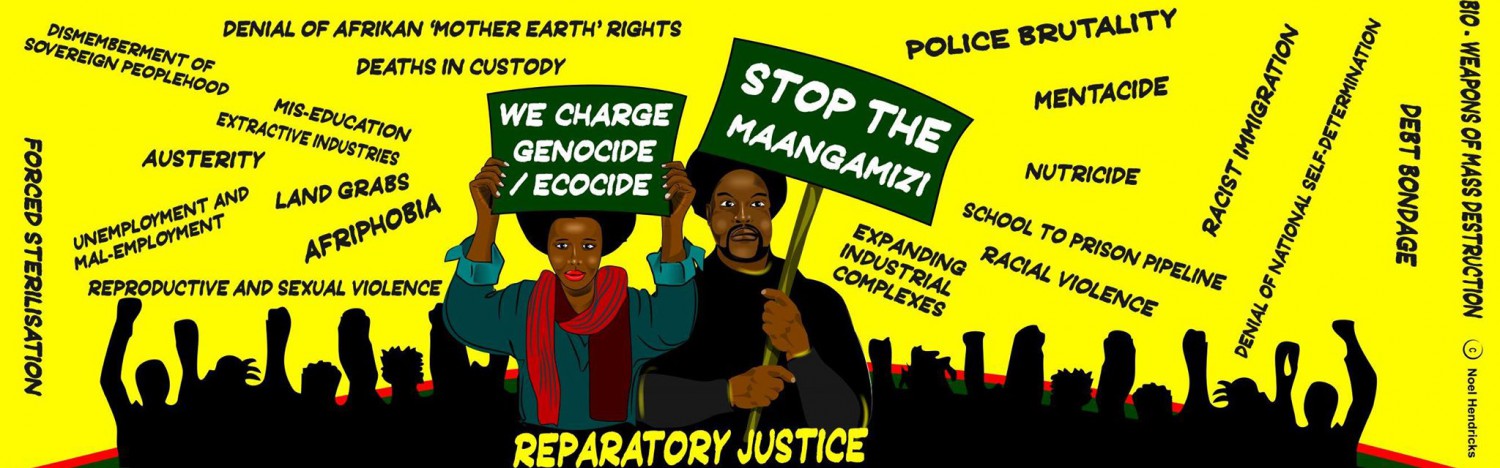
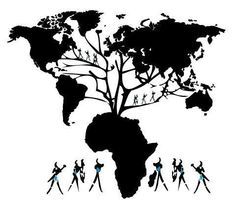
Posted in AFRIKAN HELLACAUST, INTERNATIONAL SOCIAL MOVEMENT FOR AFRIKAN REPARATIONS, ISMAR, MAANGAMIZI RESISTANCE, PREFIGURATIVE POLITICS, PRIM, REPARATIONS, STOP THE MAANGAMIZI CAMPAIGN, STOP THE MAANGAMIZI PETITION, THE 2018 AFRIKAN EMANCIPATION DAY REPARATIONS MARCH, UBUNTUKGOTLA/PITGJ | Tagged Afrika, Afrikan law, Apartheid, British Empire, Cause Lawyering, Ecocide, Epistemic Justice, Extra-Legal Activism, Genocide, Geopolitics, Global Justice, Ho‘okolokolonui Kānaka Maoli, International Law, International Law From Below, ISMAR, Kgotla, Law & Power, Law From Below, Legal Consciousness, Legal Imagination, Modern Day Slavery, Movement Intellectuals, Movement Lawyering, Neocolonialism, Pan-Afrikan Reparations 4 Global Justice, People Power, Peoples Law, Peoples Tribunal, Repairing the Law, REPARATIONS, Reparatory Justice, Resisting Unjust Law, Social Justice Lawyering | Leave a comment

Post navigation

Newer posts →

Recent Posts

  • SMWeCGEC MP Letter Template Guidance
  • MET brokers partnerships in Belize to advance reparations education & campaigning initiatives
  • Statement Issued by the Afrikan Emancipation Day Reparations March Committee & The Stop The Maangamizi: We Charge Genocide/Ecocide Campaign regarding Co-Organising the 1st Mosiah 2024
  • Theme for the PARRG 2023
  • SMWeCGEC & AEDRMC Key Achievements in ISMAR & PRIM-building

Recent Comments

Kitchen Kara's avatarKitchen Kara on METRO NEWSPAPER ADVERT 21, 25…
Enita Barrett's avatarEnita Barrett on MET brokers partnerships in Be…
Adé Olaiya, M.A.'s avatarAdé Olaiya, M.A. on Ourstory continues to be made:…
Morgan Moss, JR's avatarMorgan Moss, JR on Ourstory continues to be made:…
Morgan Moss, JR's avatarMorgan Moss, JR on Response to 2nd written questi…

Archives

  • March 2025
  • August 2024
  • June 2024
  • July 2023
  • June 2022
  • February 2022
  • December 2021
  • November 2021
  • October 2021
  • September 2021
  • June 2021
  • May 2021
  • March 2021
  • February 2021
  • January 2021
  • December 2020
  • November 2020
  • October 2020
  • September 2020
  • August 2020
  • July 2020
  • June 2020
  • December 2019
  • November 2019
  • August 2019
  • June 2019
  • May 2019
  • March 2019
  • February 2019
  • January 2019
  • December 2018
  • November 2018
  • October 2018
  • August 2018
  • July 2018
  • April 2018
  • March 2018
  • February 2018
  • December 2017
  • November 2017
  • October 2017
  • September 2017
  • August 2017
  • July 2017
  • June 2017
  • May 2017
  • March 2017
  • February 2017
  • December 2016
  • November 2016
  • September 2016
  • August 2016
  • July 2016
  • May 2016
  • April 2016
  • March 2016
  • January 2016
  • October 2015

Categories

  • 2019 AFRIKAN EMANCIPATION DAY REPARATIONS MARCH
  • AEDRMC
  • AFRIKAN HELLACAUST
  • AFRIKAN RESISTANCE
  • ALL PARTY PARLIAMENTARY COMMISSION OF INQUIRY (APPCITARJ)
  • APPGAR
  • Ecocide
  • EVENTS/TRAINING
  • Extinction Rebellion
  • I AM WITNESS
  • INTERNATIONAL SOCIAL MOVEMENT FOR AFRIKAN REPARATIONS
  • ISMAR
  • Jerry Amokwandoh
  • MAANGAMIZI RESISTANCE
  • MAANGAMIZI RESISTERS
  • MAANGAMIZI RESISTORS
  • PALM
  • Pan-Afrikan Liberation Movement
  • PARRG 2022
  • PARRG 2023
  • POPSAR
  • PREFIGURATIVE POLITICS
  • PRIM
  • REPARATIONS
  • Reparations Rebellion
  • REPARATIONS REBELLION 2020
  • REPARATIONS REBELLION GROUNDINGS
  • Reparatory Justice
  • SMWeCGEC
  • SMWeCGEC CAMPAIGNING TOOLS
  • STOP ECOCIDE
  • STOP THE MAANGAMIZI CAMPAIGN
  • STOP THE MAANGAMIZI PETITION
  • THE 2016 1ST AUGUST AFRIKAN EMANCIPATION DAY REPARATIONS MARCH
  • THE 2017 AFRIKAN EMANCIPATION DAY REPARATIONS MARCH
  • THE 2018 AFRIKAN EMANCIPATION DAY REPARATIONS MARCH
  • UBUNTUKGOTLA/PITGJ
  • Uncategorized
  • YOUNG PEOPLE/ GLOBAL MAJORITY V UK GOV

Meta

  • Create account
  • Log in
  • Entries feed
  • Comments feed
  • WordPress.com
Blog at WordPress.com.
  • Subscribe Subscribed
    • stopthemaangamizi.com
    • Join 49 other subscribers
    • Already have a WordPress.com account? Log in now.
    • stopthemaangamizi.com
    • Subscribe Subscribed
    • Sign up
    • Log in
    • Report this content
    • View site in Reader
    • Manage subscriptions
    • Collapse this bar
 

Loading Comments...