
See here for the PARCOE Position Statement on the Need for Transparency in Universities Decision-Making Process on Reparative Justice Programmes.
See here for the PARCOE Position Statement on the Need for Transparency in Universities Decision-Making Process on Reparative Justice Programmes.


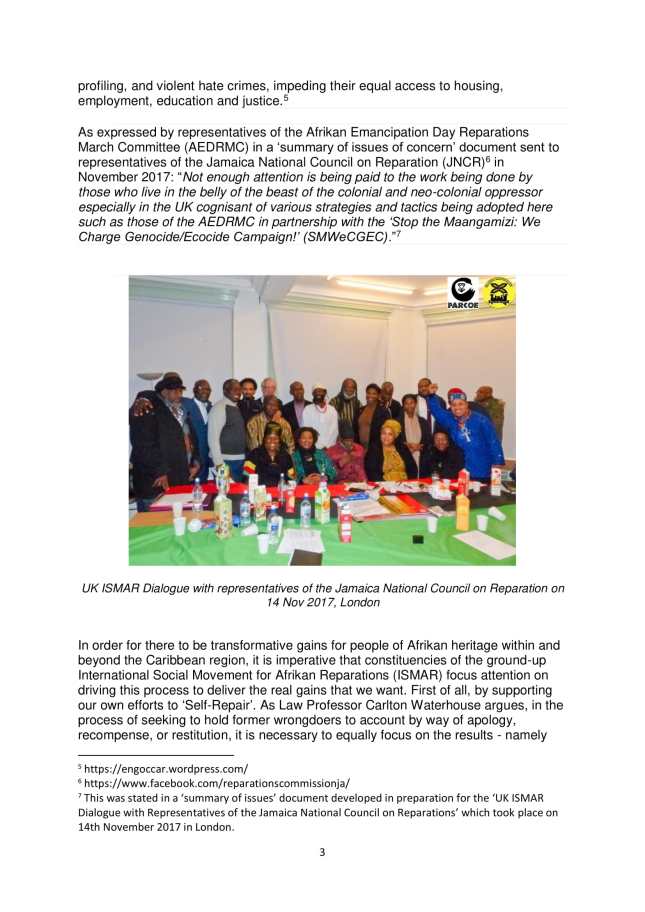






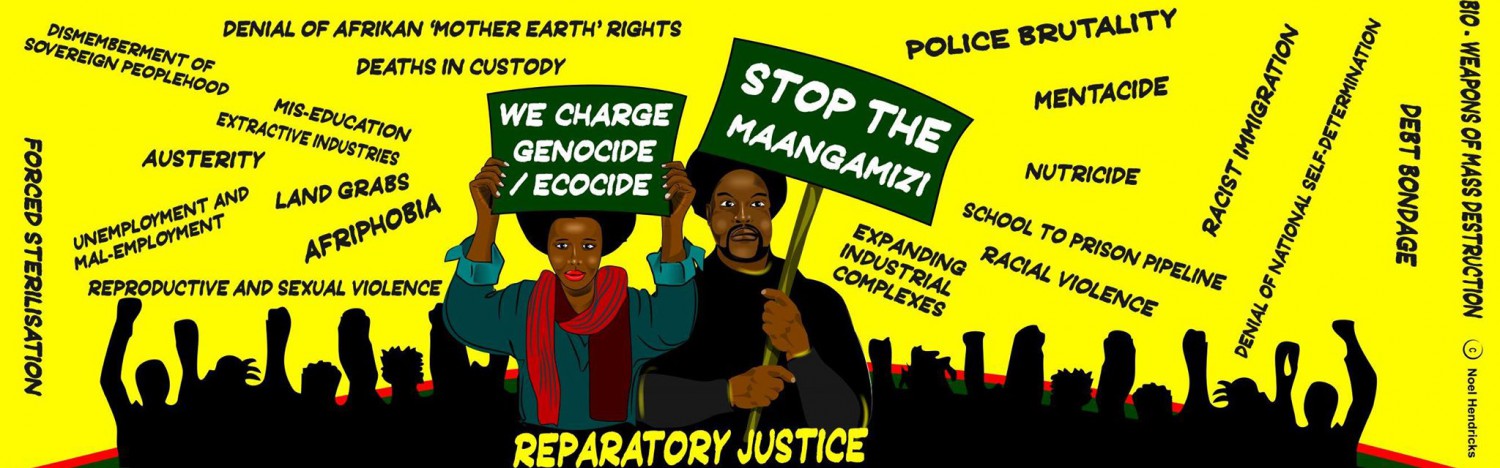
Greetings Supporter of the ‘Stop the Maangamizi: We Charge Genocide/Ecocide!’ Campaign (SMWeCGEC)
This is the response from Dr David Duncan, Chief Operating Officer and University Secretary to the SMWeCGEC open letter sent to the University of Glasgow History of Slavery Steering Committee.

Until next time!
‘Stop the Maangamizi: We Charge Genocide/Ecocide! Campaign International Steering Committee Spearhead Team (ISC-SMWeCGEC)
#StopTheMaangamizi!
#Educational Repairs!
#Institutional Repairs!
#Decolonise!
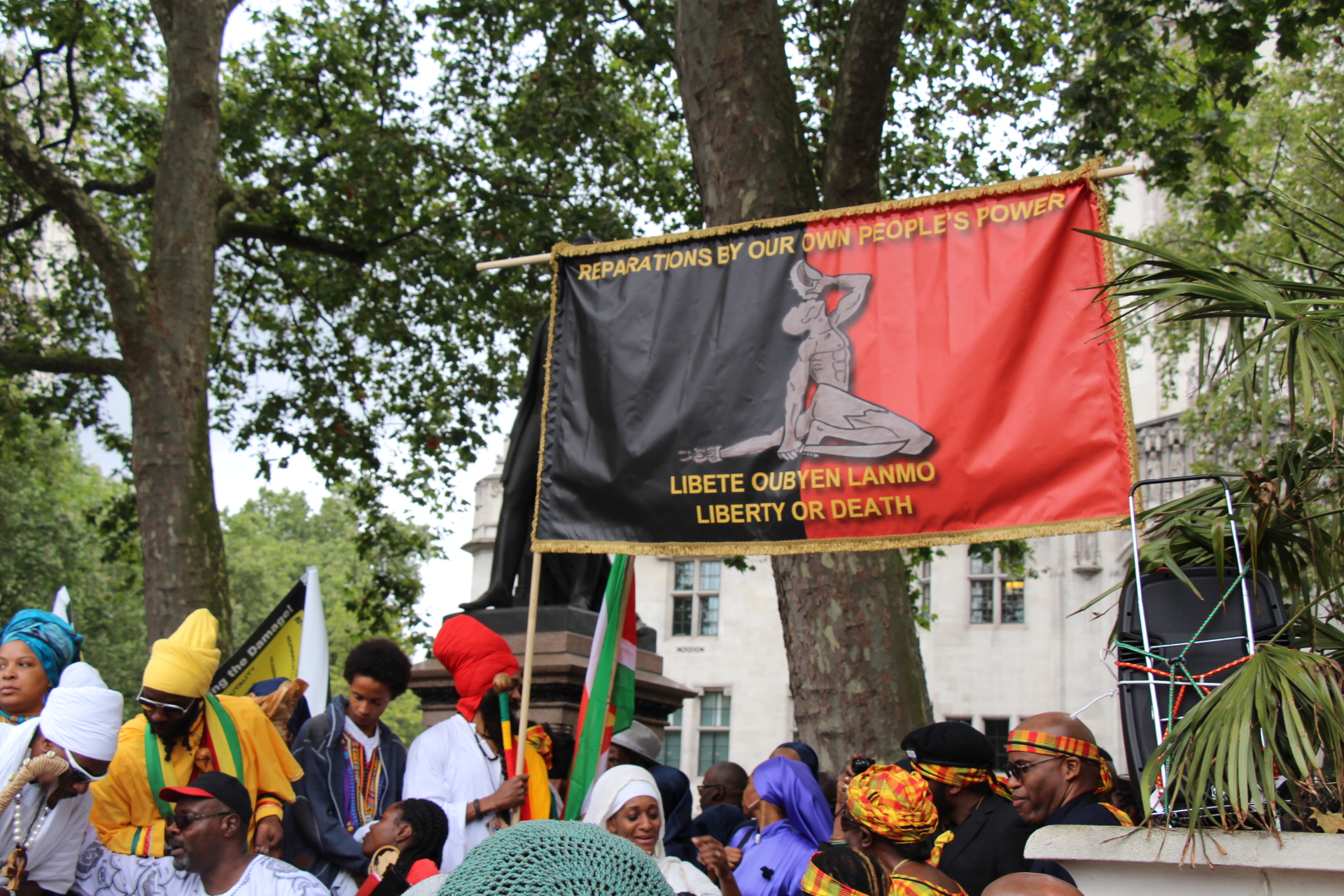
“Pan-Afrika, and not Eurafrica, should be our watchword, and the guide to our policies.”
– OSAGYEFO KWAME NKRUMAH, ‘Africa Must Unite’, 1963.
“It will be gross self-delusive wishful thinking to believe that those wielding the reins of White racist supremacy are going to pay any serious heed to the Afrikan demand for Reparations, unless their hold on the machinery of global power is effectively challenged by the well-organised, upsurgent and self-empowering masses of Afrikan people, and their allied progressive forces throughout the World.”
Kofi Mawuli Klu ‘Charting an Afrikan Self-Determined Path of Legal Struggle for Reparations’: A Draft Paper for Presentation to the 11th December 1993 Birmingham Working Conference of the African Reparations Movement, UK, 1993.
“At this juncture in our history, there is no way forward in addressing the problems that Afrikans and people of Afrikan descent and all other Black peoples face without seriously grasping the truth of the necessity for holistic reparatory justice. This includes restoring self-determination and sovereignty, implementing measures of cessation of contemporary violations, restitution.”
Esther Stanford-Xosei, 2016
This workshop will explore the meaning of the theme for the 5th annual Afrikan Emancipation Day Reparations March on 1st August 2018: ‘Nothing About Us Without Us: Actualizing the Reparatory Justice Change We Envisage.’ The main question we will discuss is: What kinds of tackling of problems and injustices that Afrikan people encounter can be deemed as the everyday repairs starting point of reparatory justice work? In this regard, we will highlight the outreach and other mobilizational work of the Afrikan Emancipation Day Reparations March Committee (AEDRMC), in association with the ‘Stop the Maangamizi: We Charge Genocide/Ecocide!’ Campaign (SMWeCGEC) with a view to making people see themselves as the actual ‘makers’ and ‘drivers’ of reparatory justice rather than being passive recipients of the benevolence of government and other state actors. This kind of thinking in views expressed by the likes of CARICOM Reparations Commission, Chairperson, Professor Sir Hilary Beckles when he reportedly stated in a recent interview published in the Barbados Advocate (12/07/18):“…reparations is ultimately a government to government conversation. It is about how governments talk to each other. How governments sit down and work out strategies to resolve issues of this nature.”.
In this connection, this workshop will also further explain the revolutionary substance of the rationale for the Reparations March given in the following video.
The difficulty of grasping reparations differently from what the white supremacist racist establishment defines it to be for us as Afrikan people, is largely as a result of miseducation and the coloniality of our mindsets in even how we are made to think about the cause, nature, consequences and solutions to the problems and injustices that we are encountering as a result of the Maangamizi (Afrikan Hellacaust). It is still largely the case that many who claim to be pro-reparations are inadvertently merely ‘supporters’ or reparations; waiting for the day when someone is going to say “here is your reparations,” or when they and/or Afrikan and Caribbean nation states receive some award of compensation from the British and other European Governments. The whole notion of exercising agency in conceptualising, effecting, securing and taking reparatory justice is completely absent for most of our people, across the world, who are sympathisers or adherents of the cause of reparatory justice.
Taking into account the criticism some establishment scholars make of Black reparations activism, in terms of not seeing its revolutionary tendencies, this workshop will therefore highlight those constituencies of the International Social Movement for Afrikan Reparations (ISMAR), like PARCOE and the Global Afrikan People’s Parliament (GAPP) that advance radical change-making perspectives. Examples of such perspectives are: the concept and methodology of Pan-Afrikan Reparations for Global Justice which embraces the world revolutionary transformational strategy of ‘Maatubuntusa’ (the art of Pan-Afrikan revolutionary freedom- fighting) for achieving MAATUBUNTUMAN. MAATUBUNTUMAN is the name being popularised for the envisaged future Pan-Afrikan Union of Communities, championed by PARCOE and GAPP and the Global Afrikan Family Reunion International Council (GAFRIC) in Ghana. Coined from the conjunction of “Maat” (the holistic Justice concept from Kemet, Ancient Egypt), with “Ubuntu” (the Bantu concept of the Communion of Humanity from Southern Afrika) and “Oman” (the Akan concept of egalitarian Polity from West Afrika). MAATUBUNTUMAN promotes the concept of a global Afrikan polity (“Oman”), which is an organic embodiment of “Maat” and therefore practices “Ubuntu” in relation to her own citizens and the entirety of Humanity, Mother Earth and the Universe.
PRESENTERS
Esther Stanford-Xosei is a jurisconsult, community advocate specialising in the critical legal praxis of ‘law as resistance’ and internationally acclaimed Reparationist. She is the official spokesperson for the Afrikan Emancipation Day Reparations March Committee (AEDRMC) which organises the annual 1st August Reparations March in London. In addition, Esther is the co-initiator of the ‘Stop the Maangamizi: We Charge Genocide/Ecocide!’ Petition and its wider campaign (SMWeCGEC). Esther also serves as the Co-Vice Chair of the Pan-Afrikan Reparations Coalition in Europe (PARCOE), co-founder of the Global Afrikan Peoples Parliament (GAPP), the Afrikan Reparations Transnational Community of Practice (ARTCoP) and the Europe-Wide NGO Consultative Council on Afrikan Reparations (ENGOCCAR). On behalf of PARCOE, Esther and other PARCOE members are involved as an activist partner in the building process of the International Network of Scholars & Activists for Afrikan Reparations (INOSAAR).
Oleye Gege is an emerging grassroots community scholar-activist, community radio broadcaster who promotes participatory approaches to effecting community self-repairs and addressing the intergenerational impacts of the psycho-social manifestations of the Maangamizi. He serves as the head of security and outreach facilitator on the Afrikan Emancipation Day Reparations March Committee and advocate of the ‘Stop the Maangamizi: We Charge Genocide Ecocide!’ Campaign (SMWeCGEC). He is also a member of Afrikan Reparations Transnational Community of Practice (ARTCoP) and the International Network of Scholars & Activists for Afrikan Reparations (INOSAAR).
Kofi Mawuli Klu is Chief Executive Commissioner of PANAFRIINDABA, a grassroots Pan-Afrikan Community Advocacy, Research and Think Tank based in London, UK and Accra, Ghana. He is also co-Vice Chair, Pan-Afrikan Reparation Coalition in Europe (PARCOE) in London and Joint Co-ordinator of the Global Justice Forum based in London and a founding member of the Global Afrikan People’s Parliament. Bro Kofi runs his own Law-Related Educational Services Agency, UEQUIPOISE. His scholarly activism has and continue to make a significant contribution within institutions of education in and outside of the UK [various courses, seminars, workshops, conferences and Groundings on Afrika and Pan-Afrikanism] and serves Afrikan students/communities as a conscientising tool for grassroots resistance and social change.
For further info about the Afrikan Emancipation Day Reparations March & the SMWeCGEC visit:
https://www.change.org/p/stop- the-maangamizi-we-charge- genocide-ecocide
Date: Friday 27th July 2018
Time: Prompt Start @ 7.00pm [Doors Open 6.30PM]
Venue: 336 Brixton Road, London SW9 7DA (over from Max Roach Park) DISABLED ACCESS
Donations Welcome
Please Spread The Word, Attend And Bring A Friend!
We look forward to welcoming you.
Bless,
Sis Maureen
On Behalf of PASCF (Pan Afrikan Society Community Forum
This is a video recording filmed by ‘joanjoan.london’ who attended the 2017 Afrikan Emancipation Day Reparations March on the 1st August. She recently released this edited version of the closing speech made at Parliament Square which is still relevant to the various aspects of the year-round mobilising and organising that the ‘Stop the Maangamizi: We Charge Genocide/Ecocide!’ Campaign (SMWeCGEC) engages in and advocates in association with the Afrikan Emancipation Day Reparations March Committee.
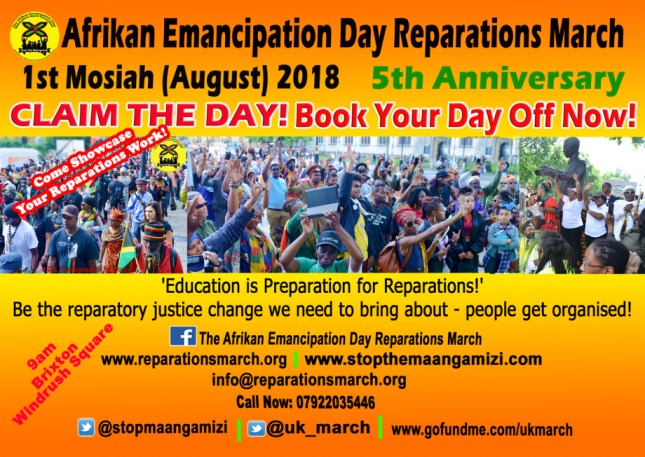
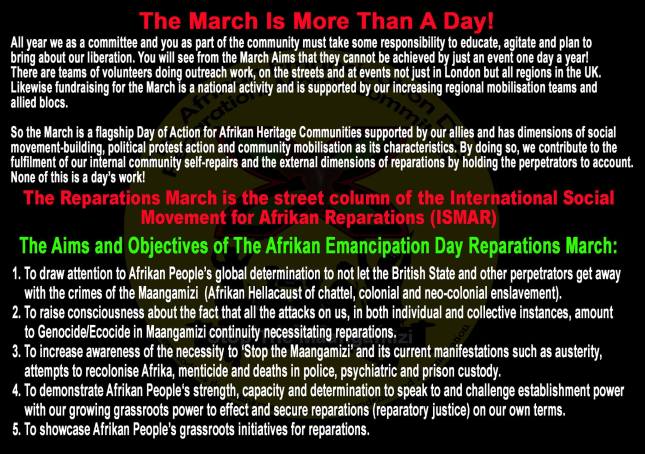
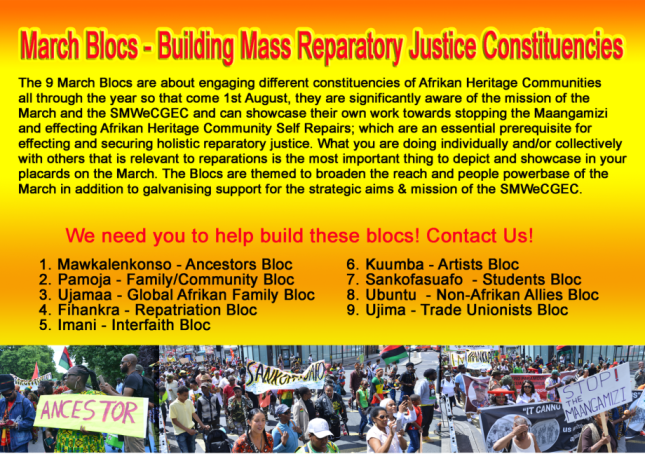
2018 PROMOTIONAL FLYER
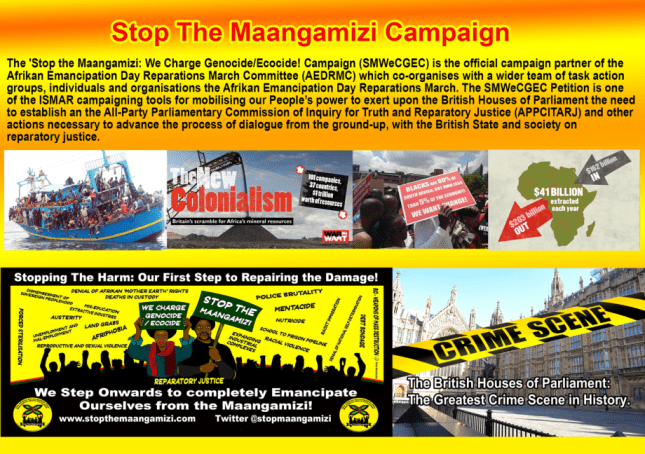
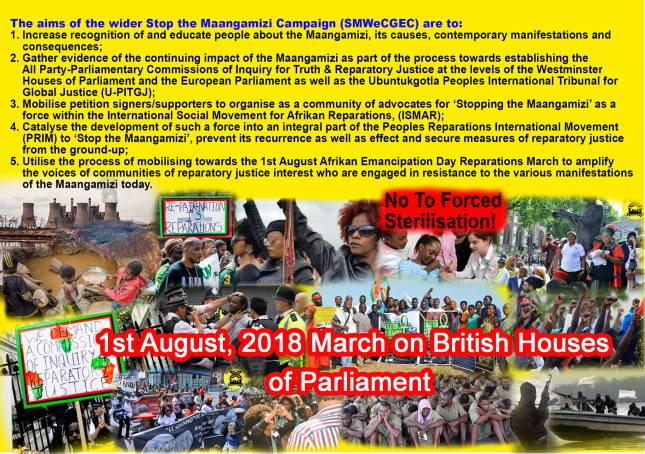
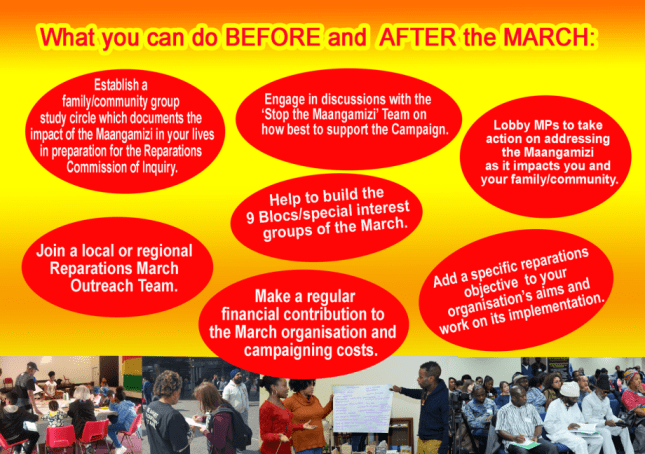
2018 PROMOTIONAL VIDEOS
Call to action video:
Rationale for why we march video
Link to jingles for radio
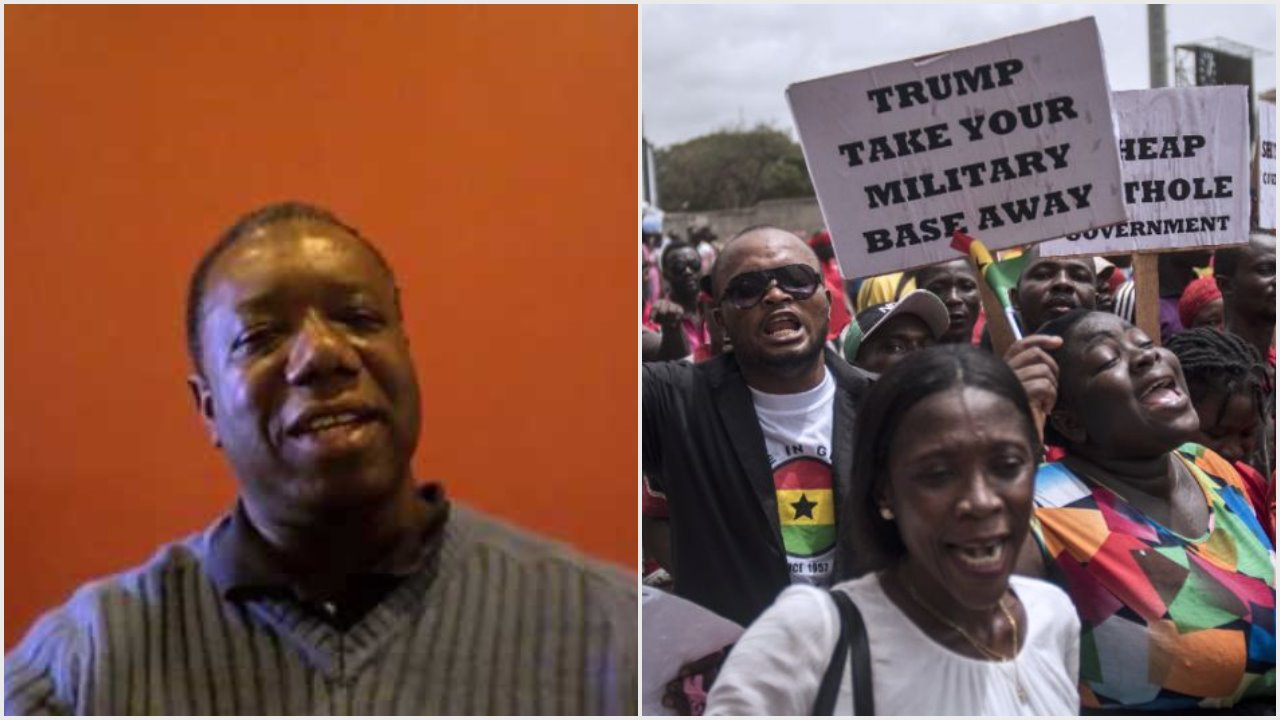
This is a recording from the Pan-Afrikan Society Community Forum (PASCF) workshop – USAFRICOM: GLOBALISING PAN-AFRIKAN RESISTANCE FROM GHANA TODAY” with Kofi Mawuli Klu, Co-Vice Chairperson of the ‘Stop the Maangamizi: We Charge Genocide/Ecocide!’ Campaign (SMWeCGEC) which took place on 13th April in London.
An outcome of this workshop was that a demonstration was organised by Ghana Action for Pan-Afrikan Resistance (GAPAR) to take place today, 21st April at the London School of Economics were President Nana Akufo-Addo of the Republic of Ghana is a keynote speaker at the 5th Annual ‘LSE Africa Summit’.
The synopsis for the workshop is as follows:
Osagyefo Kwame Nkrumah, Ghana’s first president, defined neocolonialism as “the last stage of imperialism” – understanding this as a violation of Afrikan sovereignty as Afrikan states are independent in name only and imperialism/white supremacy manipulates economic and political control, through globalization, capitalism and cultural expansionism. So, in effect foreign interests, are what dictate everything.
In ‘USAFRICOM: GLOBALISING PAN-AFRIKAN RESISTANCE FROM GHANA TODAY’ esteemed scholar-activist Kofi Mawuli Klu looks at the wider historical trajectory of neo-colonial relations between Ghana and the USA/white supremacy in view of their expanding and unrestricted access to a host of Ghanaian facilities, recently agreed by Ghana’s Cabinet.
The emphasis of Bro Kofi’s presentation is to facilitate public discussion on the 5th April 2018 joint statement issued by the Global Afrikan People’s Parliament (GAPP) and the Stop the Maangamizi: We Charge Genocide/Ecocide Campaign (SMWeCGEC) entitled “Opposing the USAFRICOM Base of Maangamizi in Ghana: Globalising Pan-Afrikan Resistance for Reparatory Justice is the Way to Victory”. Kofi explains the strategy and tactics being pursued by some of the Freedomfighting forces still upholding the teachings of Osagyefo Kwame Nkrumah in trying to steer the growing Resistance to the USA-Ghana Deal on Strengthening the Militarisation of Neocolonialism in West Afrika towards the goals of Pan-Afrikan Reparations for Global Justice.
He highlights the necessity of better meeting the challenge in and beyond Britain today of utilising Internationalist Solidarity mobilisation for such Resistance in Afrika for its best purpose of reclaiming authentic Pan-Afrikanism as an intellectually sharpening practical weapon for globally advancing emancipatory struggle towards what GAPP envisions as the Maatubuntuman achievement of the total liberation, unification and self-determined progress of Afrikan people all over the World.
PRESENTER: Bro Kofi Mawuli Klu is Chief Executive Commissioner of PANAFRIINDABA, a grassroots Pan-Afrikan Community Advocacy, Research and Think Tank based in London, UK and Accra, Ghana. He is also co-Vice Chair, Pan-Afrikan Reparation Coalition in Europe (PARCOE) in London and Joint Co-ordinator of the Global Justice Forum based in London as well as Co-Vice Chair of the ‘Stop the Maangamizi: We Charge Genocide/Ecocide’ Campaign (SMWeCGEC). Bro Kofi runs his own Law-Related Educational Services Agency, UEQUIPOISE. His scholarly activism has and continue to make a significant contribution within institutions of education in and outside of the United Kingdom [various courses, seminars, workshops, conferences and Groundings on Afrika and Pan-Afrikanism] and serves Afrikan students/communities as a conscientising tool for grassroots resistance and social change.
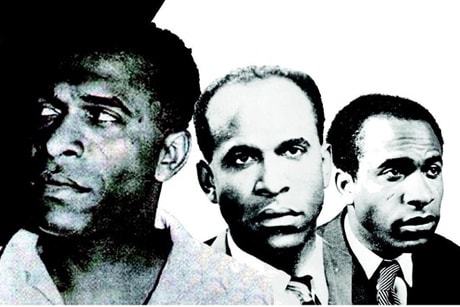
“The future will have no pity for those men and women who possess the exceptional privilege to speak the words of truth, instead have taken refuge in an attitude of cold complicity and mute indifference.“
Revised quote from Frantz Fanon, ‘Toward the African Revolution: Political Essays’, 1994
Greetings Supporters of the ‘Stop the Maangamizi: We Charge Genocide/Ecocide!’ Campaign (SMWeCGEC)
The letter below is the latest in the ongoing correspondence between Esther Stanford-Xosei and MP, Heidi Alexander, on issues to do with the SMWeCGEC and the campaign’s work for reparatory justice:
ESTHER STANFORD-XOSEI LETTER TO HEIDI ALEXANDER MP RE RESPONSE FROM FCO MINISTER LORD AHMAD
The letter from Esther Stanford-Xosei deals with the response from Foreign & Commonwealth Minister of State for the Commonwealth and the UN, Lord Ahmad to the 2017 ‘Stop the Maangamizi!’ Petition and its accompanying correspondence.
The exchanges so far show that as much as sections of the Labour Movement are becoming more interested in communications with certain constituencies of the International Social Movement for Afrikan Reparations (ISMAR), there is a greater need to ensure that the Labour Party is challenged to develop a correct way of dealing with the issues raised in the correspondence and our Afrikan Heritage Communities in consonance with the ethics of reparatory justice. This must also be done in such a way that recognises Afrikan people’s human and people’s right to Substantive Afrikan Heritage Community Representation.
What this means is that Labour Party is being challenged by SMWeCGEC and other Afrikan Reparations campaigners to engage in ‘institutional self-repairs’ in the ways it deals with Afrikan Heritage Communities and our autonomous community organisations as well as the issues that concern us. Only by doing so, will it become a worthy stakeholder with locus standi in Afrikan Heritage Community reparatory justice engagements.
In livicated Service!
Stop the Maangamizi: We Charge Genocide/Ecocide! Campaign International Steering Committee Spearhead Team (ISC-SMWeCGEC)
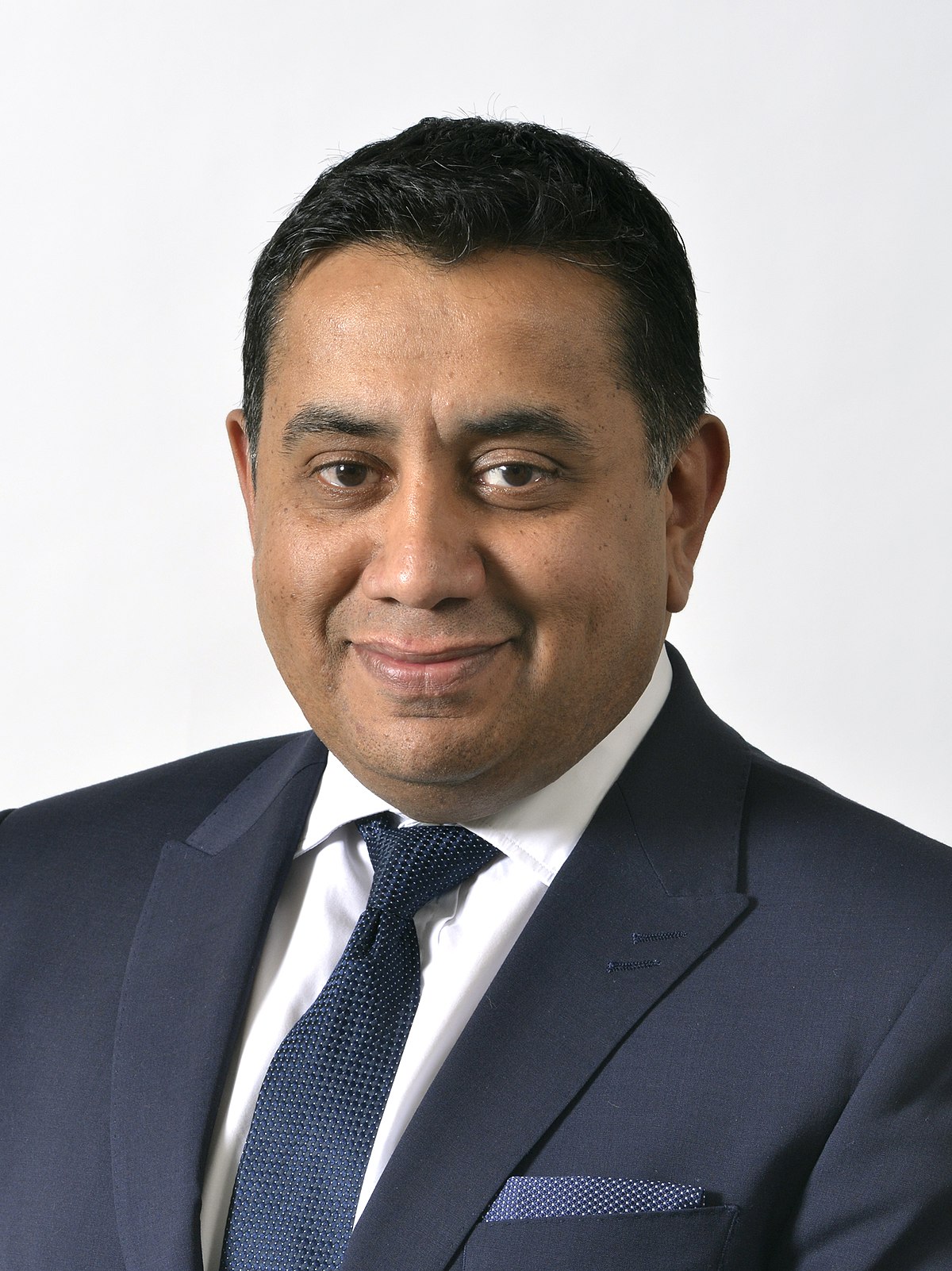
Tariq Ahmad, Baron Ahmad of Wimbledon
Greetings Supporter/s of the ‘Stop the Maangamizi: We Charge Genocide/Ecocide!’ Campaign (SMWeCGEC)
See the response below from Lord Ahmad of Wimbledon, Minister of State for the Commonwealth and the UN at the Foreign & Commonwealth Office (FCO) and Prime Minister Theresa May’s Special Representative for Preventing Sexual Violence in Conflict to the ‘Stop The Maangamizi: We Charge Genocide/Ecocide!’ Petition. This response was received after the intervention of Heidi Alexander MP for Lewisham East (London) who was lobbied to write to the FCO to seek a response from the relevant FCO Minister.
Previous correspondence can be found here:
https://stopthemaangamizi.com/2018/03/08/stop-the-maangamizi-postcard-advocacy-case-study/
The address of Esther Stanford-Xosei has been redacted

The address of Esther Stanford-Xosei has been redacted
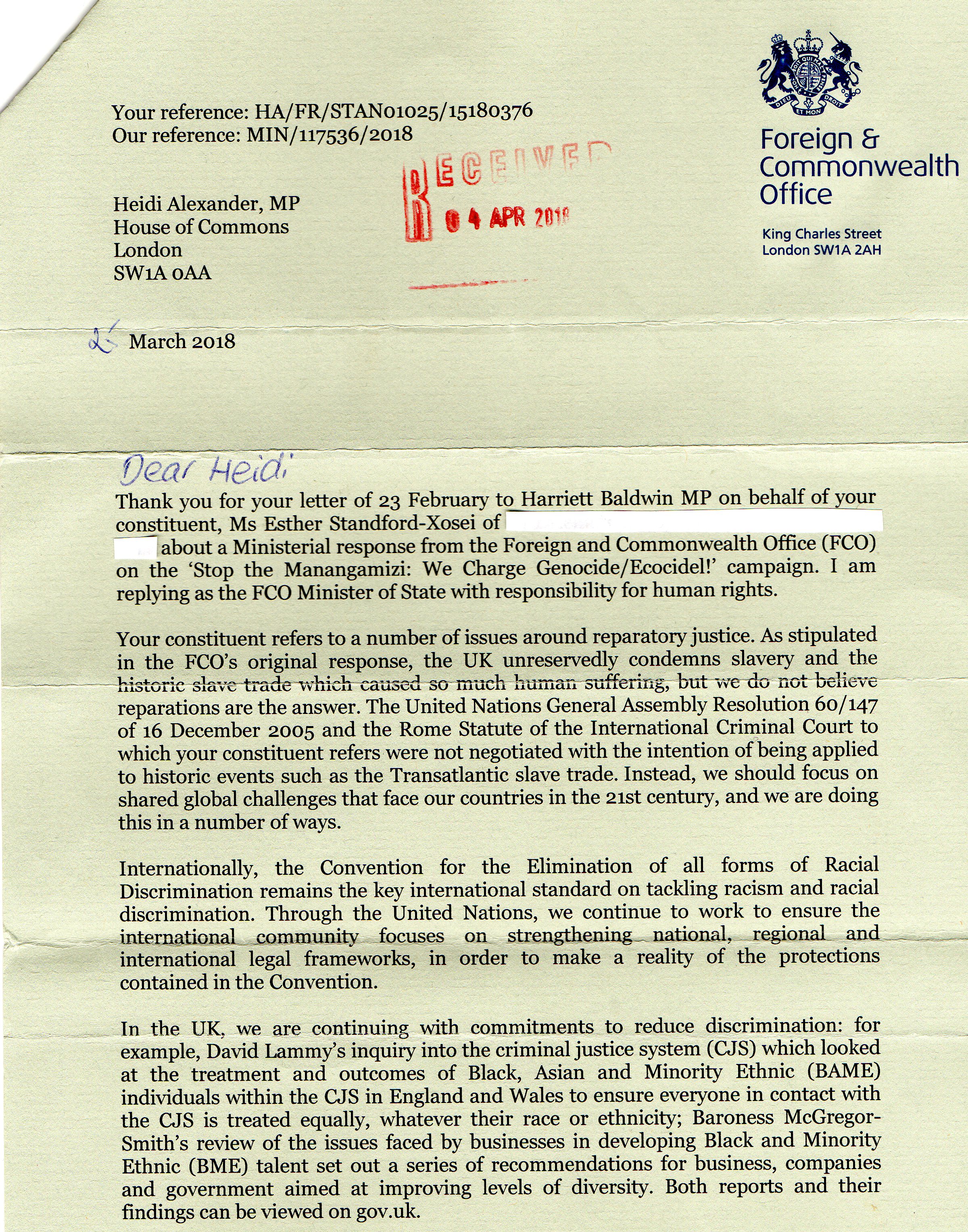

This link includes the response sent to Heidi Alexander MP further to receiving the above response from Lord Ahmad.
Stop the Maangamizi: We Charge Genocide/Ecocide! Campaign International Steering Committee Spearhead Team (ISC-SMWeCGEC)
The following two statements from members of the Global Afrikan Family Reunion International Council (GAFRIC) in Ghana, express the reparatory justice perspectives of the leadership that exists for Afrikan communities of reparations interest battling the Maangamizi on the ground in Afrika. They were presented at the 17th March 2018 International Network of Scholars & Activists for Afrikan Reparations (INOSAAR) Conference in Birmingham. Most importantly, these statements from Paramount Chiefs, Togbe Adzatekpor VII and Nana Kobina Nketsia V highlight their recognition, as leading members of the GAFRIC, of the right of Afrikan people all over the world to the Continent of Afrika!
The ‘right to Afrika‘ incorporates the ‘right to return’ (repatriation) and ‘right to belong’ (rematriation) which is one process. One cannot happen without the other. It encompasses the Akan Sankofa principle of going back to fetch your Afrikan personality in material and spiritual terms all routed in the land of Afrika. The ‘Afrikan personality’, popularised by Osagyefo Kwame Nkrumah, refers to manifestations of cultural uniqueness among Afrikans as reflected in our behaviours, social norms, customs, values, beliefs, spiritual zeal, attitudes, explanations of the cosmos and the supernatural, as well as social and political systems. The right to Afrika includes the right to belong to the peoplehood of Afrika and benefit from the shared land, wealth and resources of Afrika, as well as share in her many development challenges. This does not mean that all Afrikans physically has to up and return to Afrika, but that one should be able to exercise the global citizenship rights and responsibilities of being an Afrikan.
Ultimately, it is about feeling the power of Afrika protecting us as Afrikans wherever we are in the world. However, for this to happen it is necessary to rebuild Afrika on the basis of our indigenous polities and delegitimise colonial state formations. This means rebuilding Afrika into a unified whole; integrating communities of Afrikan people from the Continent and Diaspora into a globally superpowerful polity (MAATUBUNTUMAN- Pan-Afrikan Union of Communities) based on the Continent that guarantees the collective strength, dignity and security of Afrikan people worldwide.
The statements from Togbe Adzatekpor VII and Nana Kobina Nketsia V also show the readiness of such community leaders, and their respective communities of reparatory justice interest, to contribute to repairing the disrepair of our Afrikan communities. They are doing what they can to counteract the divisive impact of the Maangamizi with policies, projects, programmes and other measures towards reunifying our Global Afrikan Family, in accordance with the imperatives of holistic Pan-Afrikan Reparations for Global Justice.
“Convinced that the pursuit of reparations by the African peoples in the continent and in the Diaspora will itself be a learning experience in self-discovery and in uniting experience politically and psychologically.”
The Abuja Proclamation: A declaration of the ‘first Abuja Pan-African Conference on Reparations For African Enslavement, Colonisation And Neo-Colonisation’, sponsored by The Organisation Of African Unity and its Reparations Commission April 27-29, 1993, Abuja, Nigeria
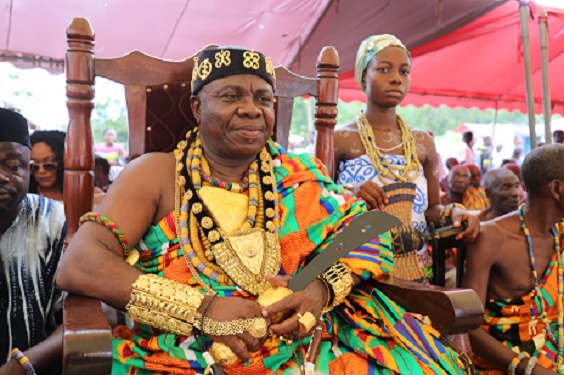
Togbe Osie Adza Tekpor VII, Paramount Chief of the Avatime Traditional Area
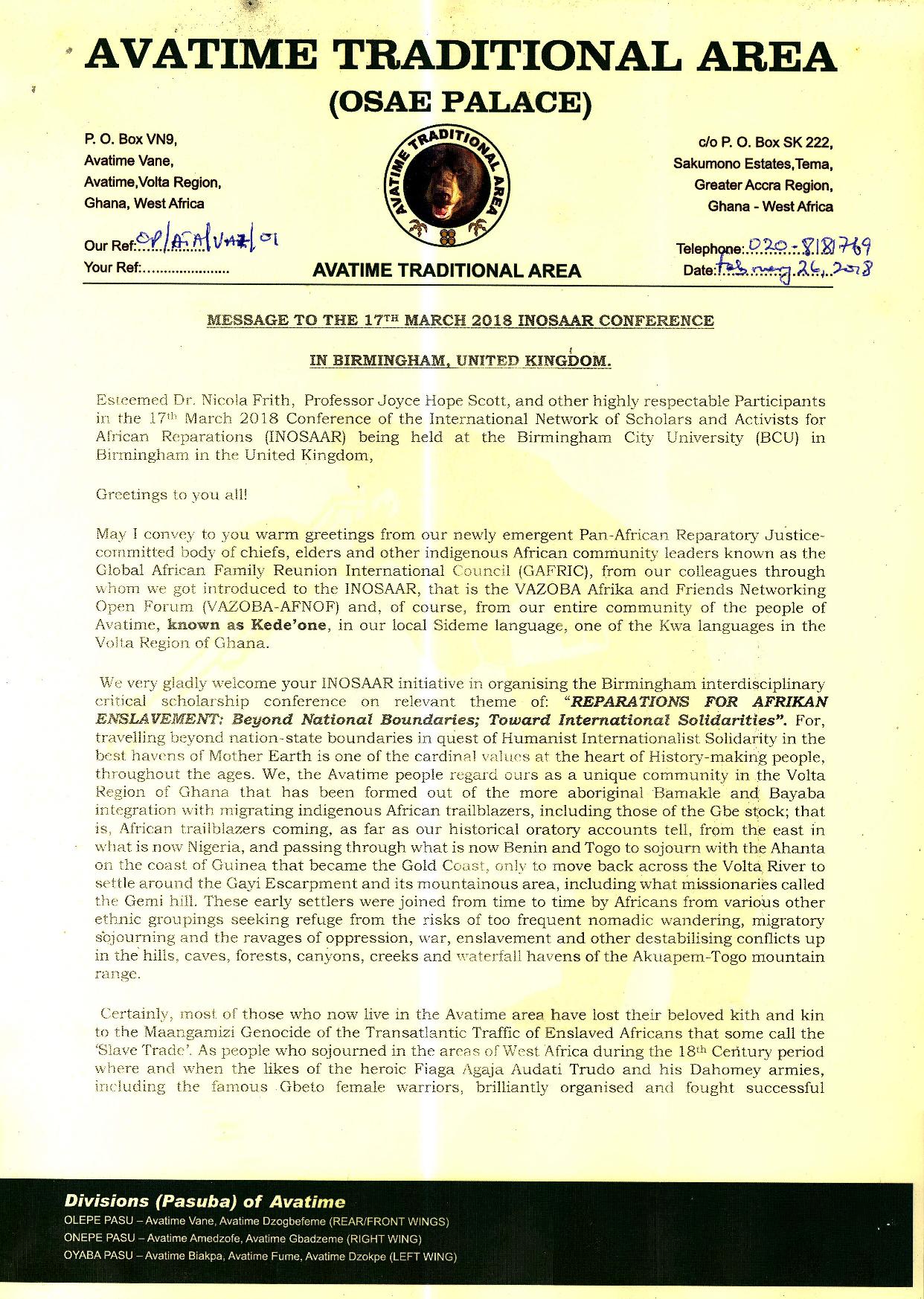
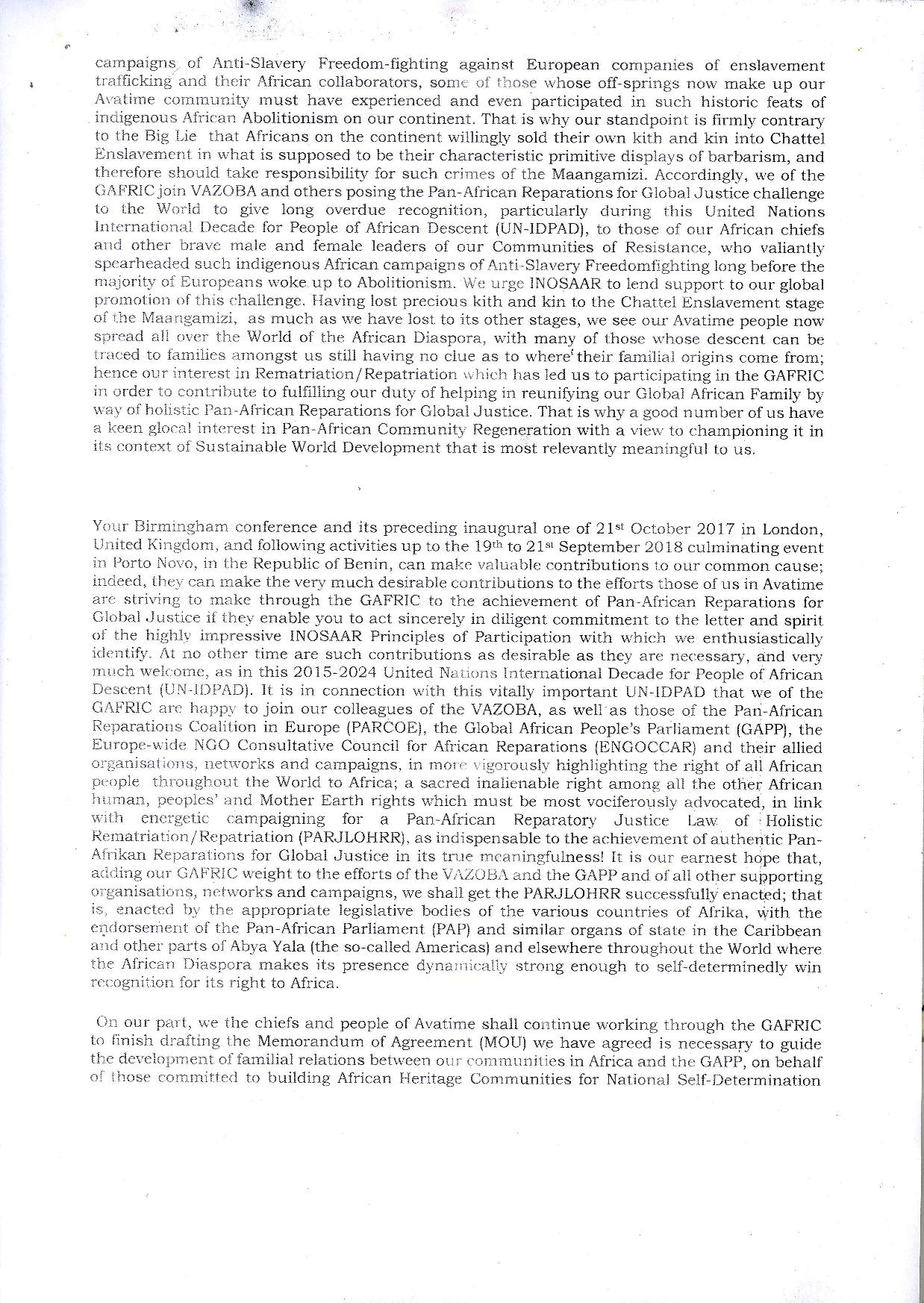
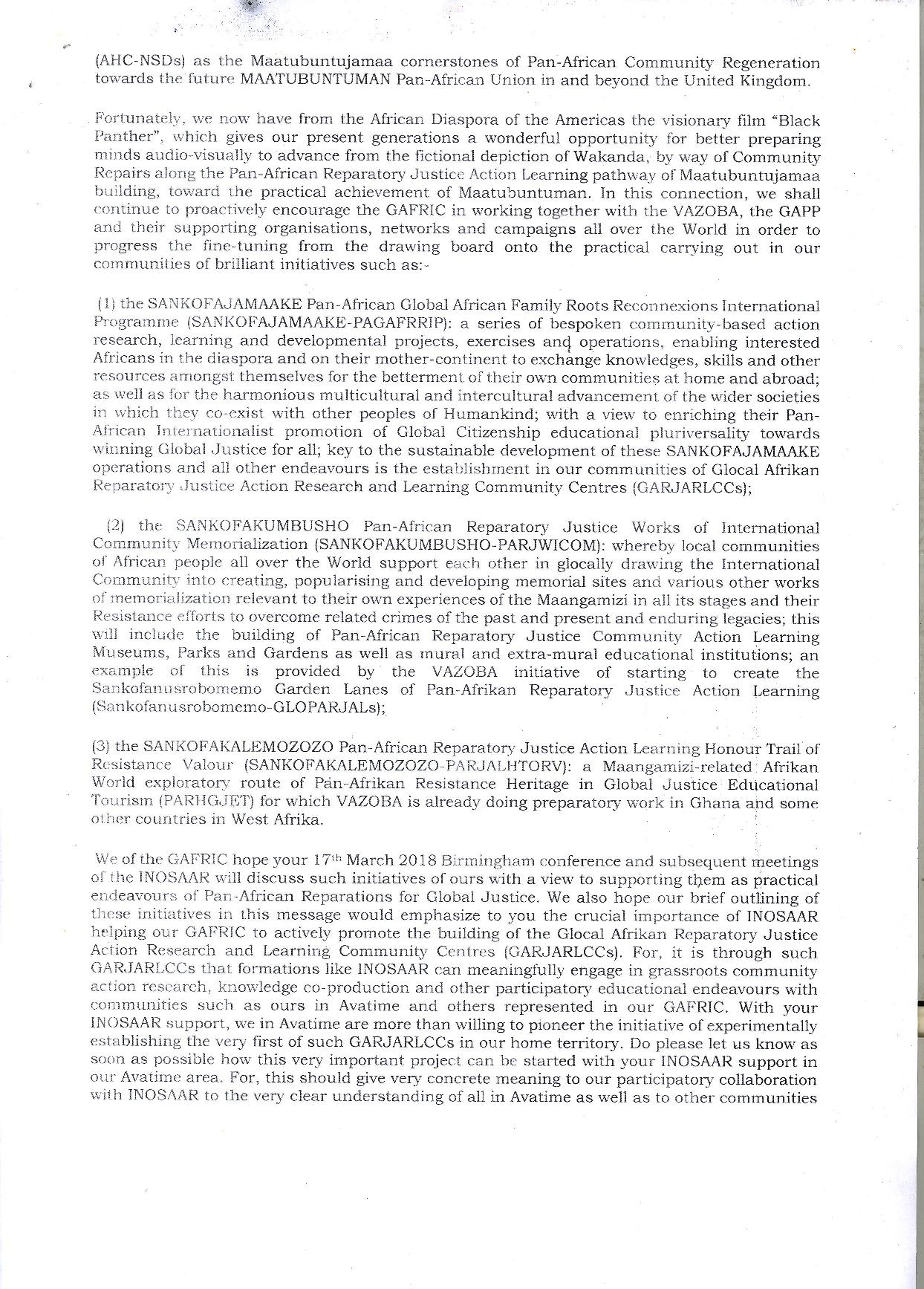

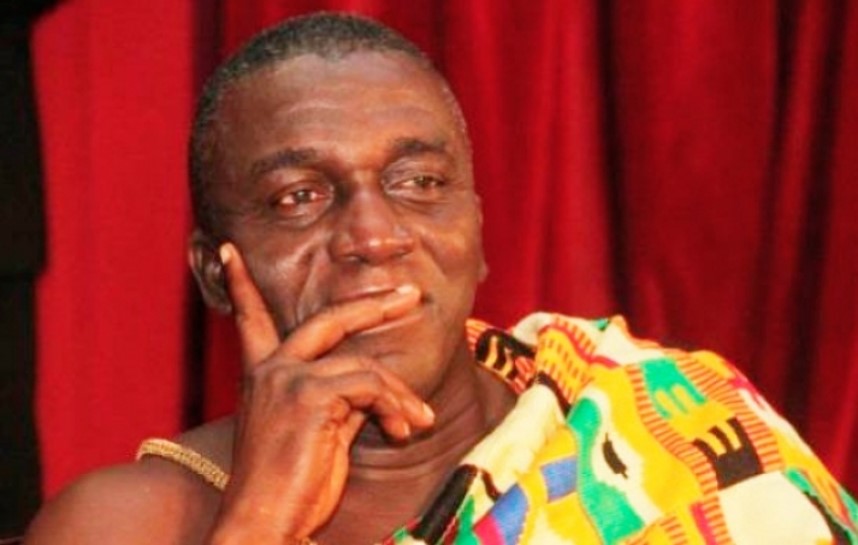
Nana Kobina Nketsia V, Paramount Chief of the Essikado Traditional Area
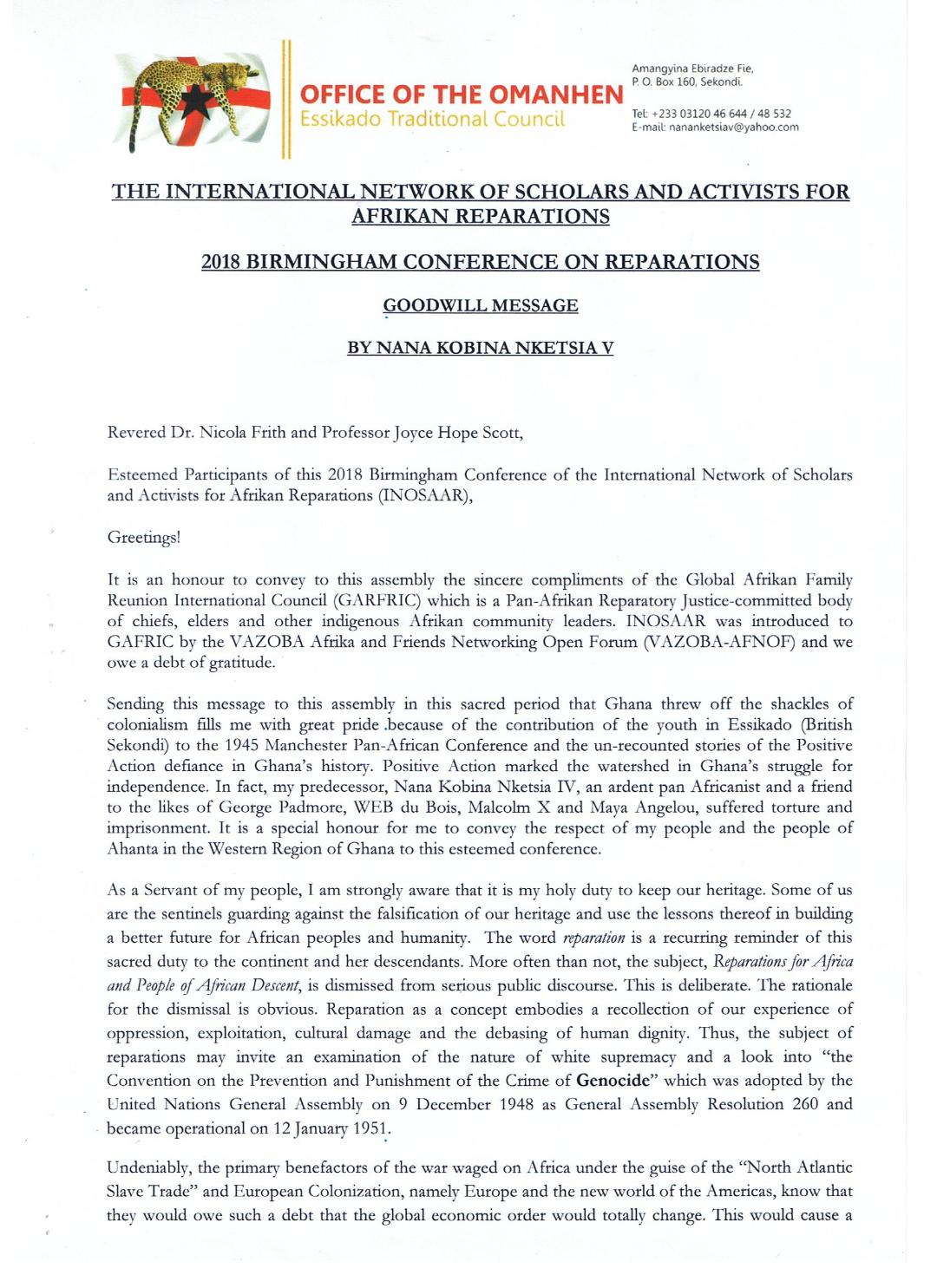
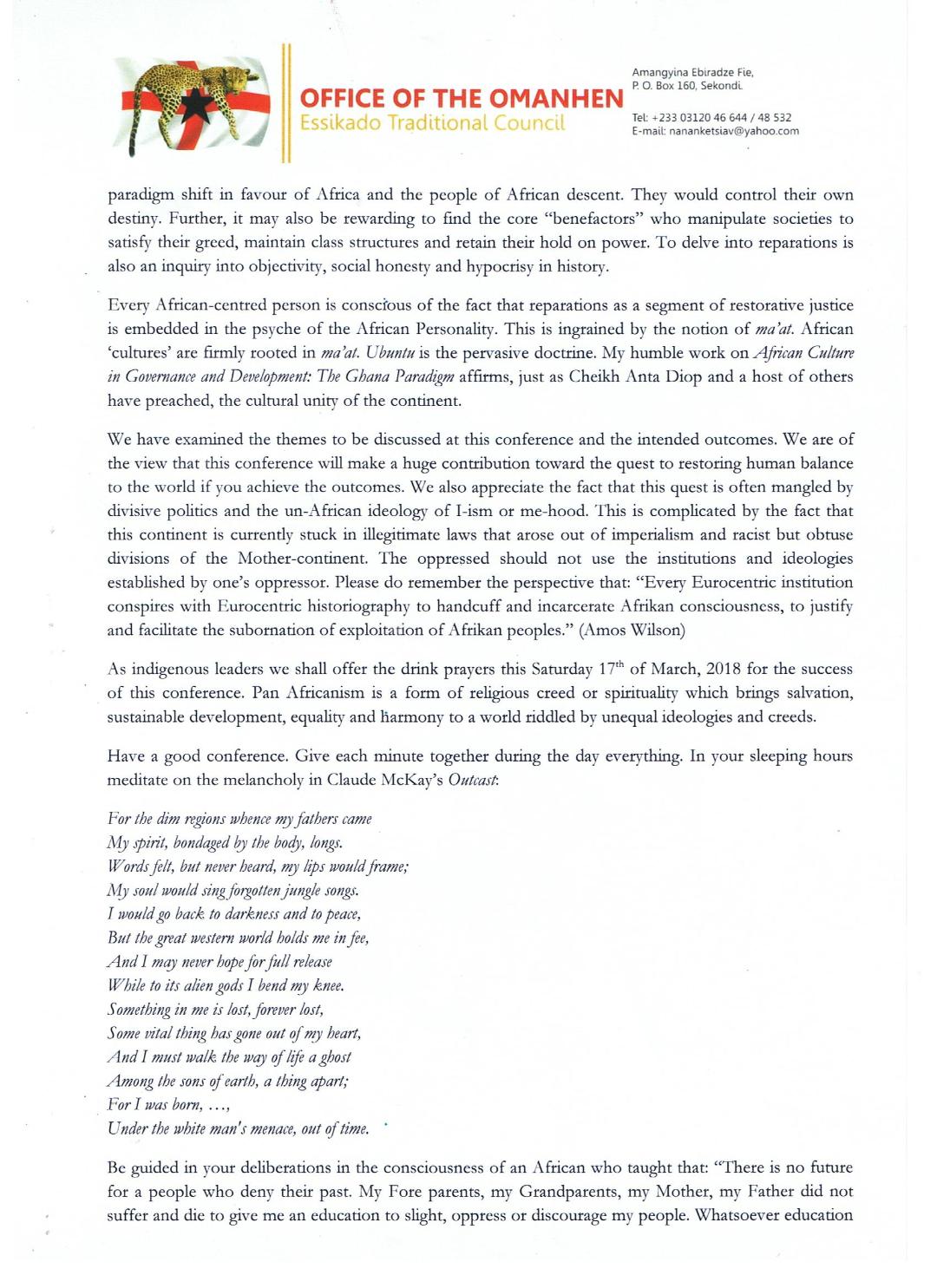
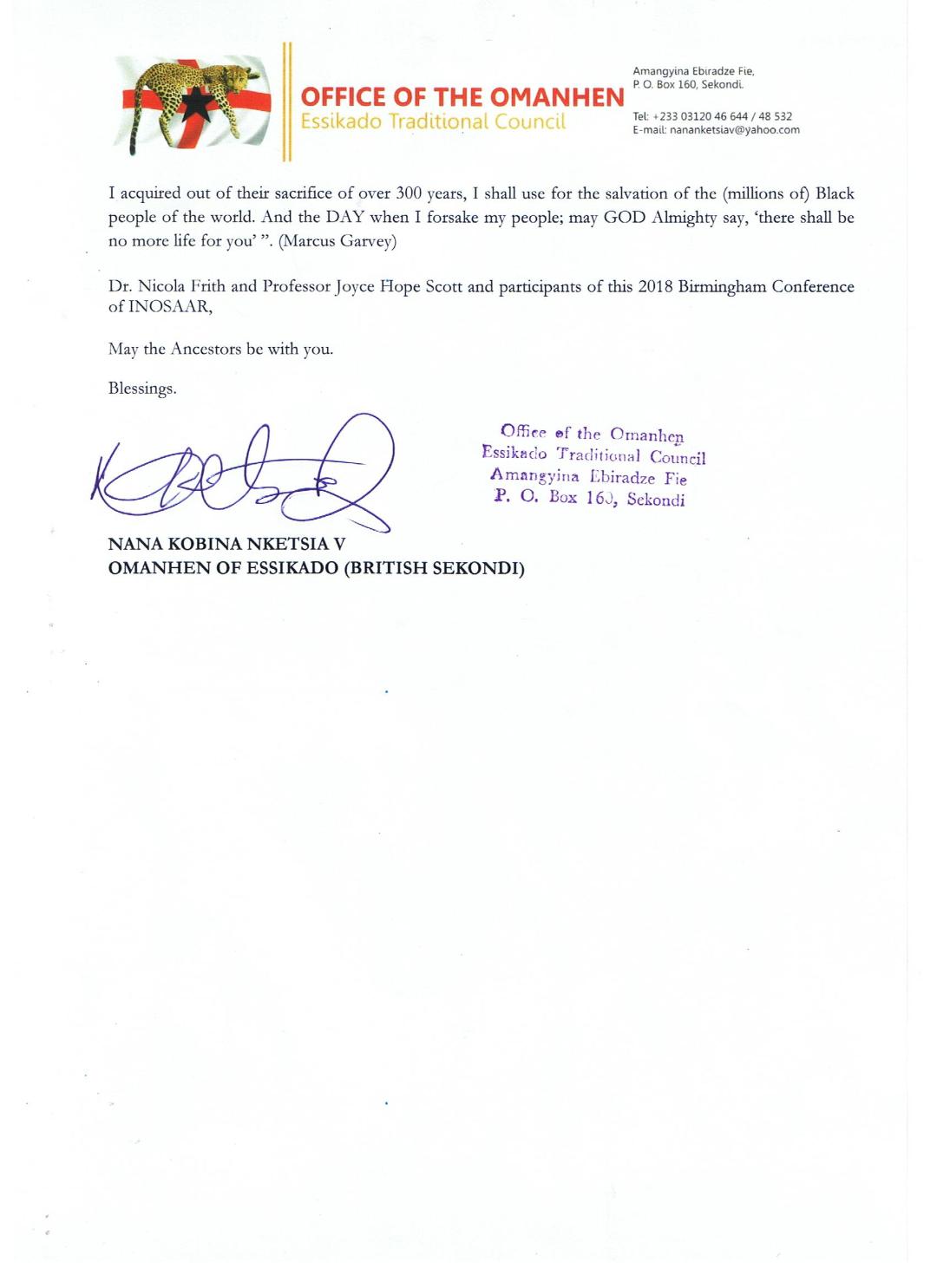
“To love Afrika, to seek the cultural freedom of Afrika and to serve the cultural truth of Afrika is to ask for death”
Nana Kobina Nketsia V
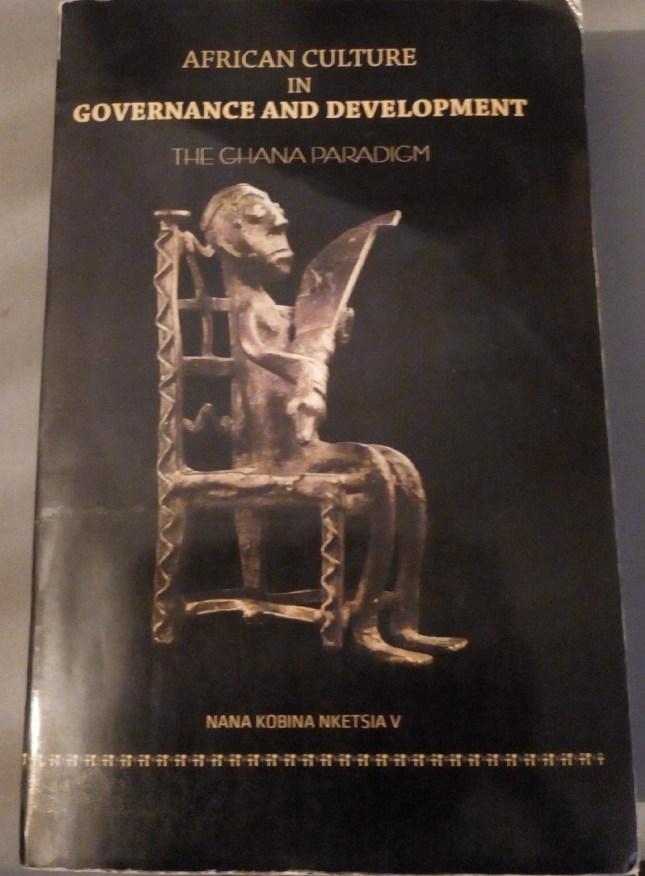
Recommended reading, ‘African Culture in Governance and Development: The Ghana Paradigm’ by Nana Kobina Nketsia V, with an introduction by Professor James Small.
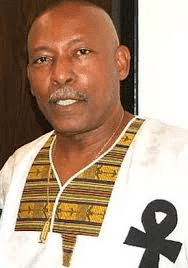
“When we look at Afrika and see whose culture we are practising, we realise how vulnerable we are to genocide because we are practising the culture of our enemies and not the culture of our ancestors. Nana Nketsia is making a case that I don’t think any opposing legal framework can defeat; a case for us to return to the ways of our Ancestors and abandon and turn our backs on the ways of the rapists, the plunderers and the murderers who have imposed on us, their culture, their history, their notion of reality and their religion; and we must make this u-turn to continue our journey, we want to go back to the womb of Mother Afrika and compose again, as her child, her dreams, her aspirations, her hopes and her future. This will allow us to have full control of the economics, politics and culture that affects lives on a daily basis. This process must include at its core, the restoration of complete confidence in us and a belief system that is based on the reality of our own experience and that of our Ancestors, which is a challenge that Nana’s work clearly identifies.
Nana is re-membering the Afrikan continent. Its members are scattered and Nana’s book is bringing them back together. That is the essence of the word ‘remember’; reconnecting the scattered members of a once collective whole to make it whole again. Nana is reminding us to bring back our Ancestors’ way of thinking that will allow us to reconstruct a dynamic path for the future.”
Taken from the introduction by Professor James Small
 stopthemaangamizi.com