stopthemaangamizi.com

Stop the harm as the first step to repairing the damage!

Menu

Skip to content
  • Home
  • CONTACTS
  • GLOBAL MAJORITY VS
  • I AM WITNESS
  • MAANGAMIZI DESECRATORS & DENIERS
  • MAANGAMIZI EDUCATIONAL TRUST (M.E.T)
  • SMWeCGEC PETITION
  • TAKE ACTION
  • PAN-AFRIKAN REPARATIONS REBELLION GROUNDINGS

Tag Archives: Afrika

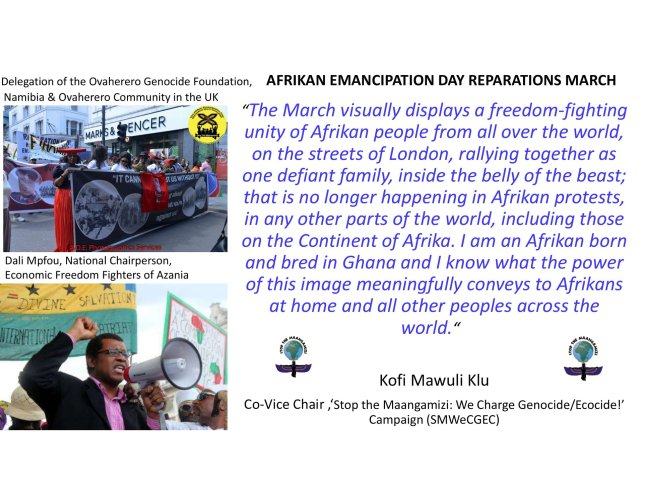
HELP TO BETTER TELL A PEOPLE’S ‘OURSTORY’ OF THE AFRIKAN EMANCIPATION DAY REPARATIONS MARCH!

Posted on July 20, 2018 by STOP THE MAANGAMIZI

Reparations March Creativity in Action:

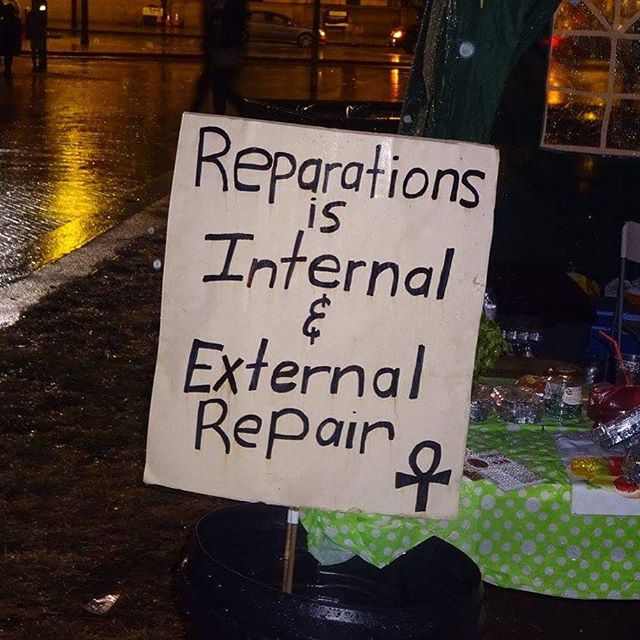
Suggested slogans for protest, signs, banners and placards


“The role of protest art on a March is to make the struggle for reparations irresistible!”


You can use your creative skills and talents in supporting the Afrikan Emancipation Day Reparations March. Banners and placards are tangible records of the opinions, perspectives, voices and messages of the protestors/marchers. Part of Maangamizi (Afrikan Hellacaust) resistance is to resist with words, ideas and symbolism. Creative acts, such as the construction of banners or placards are non-violent methods of defiance. They are an important part of protest aesthetics and art forms.

Your banners and placards on the March are individual or collective ways of communicating relevant Maangamizi related or reparatory justice messages to local and global audiences. This is important in terms of helping to highlight the cause that people are marching for and protesting about. Banners and placards are used as a medium for expressing grievances and dissatisfaction, identifying manifestations and legacies of the Maangamizi, making claims and/or offering solutions. They can also provide an insight into counter-thinking, ideas, policies or programmes that you, your group, organisation or community of interest support, advocate for or believe in.

Know that no matter what your personal, organisational, community, political or ideological stance, the March is of historical significance. In years to come, even your banners will be considered an important part of Afrikan heritage communities political and cultural protest history within and beyond the UK.

Of course, you can also choose your own slogans, the key points to remember are that banners and placards should:

• Be readable, clear and eye-catching;

• Educate and inform as to why you are on the March;

• Convey a particular message about Maangamizi resistance or reparatory justice demands, goals, solutions, programmes or initiatives you want to highlight to the public;

• Express such views in creative ways;

• Use text and imagery (photos, pictures, art work etc.) to make your banner or placard visually stand-out.

In case you want some inspiration, we also have come up with some slogans that we also encourage you to use. There is great value in utilising slogans that others will also use as a mark of solidarity; a way of aligning yourself with others.


You can download some of the template banners that have been developed here and add your own imagery.


1. Nothing About Us Without Us: Reparations by Our Own Peoples Power!

2. We run tings, State’s no run We – We the People will Win Reparations!

3. We organise, speak and act for ourselves! Reparations = Self-Determination!

4. We will never forget Britain’s [or Europe’s] role in the enslavement and colonisation of our people!

5. The wealth which smothers Europe was stolen from us!

6. Stolen from Afrika!

7. We demand a Reparations Commission of Inquiry now!

8. We say No to a Slavery Educational Trust! We want an Afrikan Antislavery Resistance   Education Trust (ASRET)!

9. Reparations ARE the ANSWER!

10. RepairNation is Reparations! Reparations for RepairNation!

11. Reparations is internal and external repair!

12. We March with our Ancestors!

13. Afriphobia Kills – Reparations = Guarantees of Non-Repetition!

14. Our people migrate here because you are still occupying there!

15. We Must End Ecocide if We are to Survive!

16. You Stole Us, You Sold Us, You Owe Us!

17. Reparations for Gentrification! (or some other issue)

18. We have a Right to Afrika!

19. We must have every inch of Our lands, every one of Our mines and industries! [Kwame Nkrumah]

(You can also use other relevant quotes from other leaders, past and present, include a picture too).

20. Land expropriation without compensation is Reparations!

21. We will not give up a continent for an island identity- Rematriation Now!

22. No Voluntary Repatriation without Rematriation!

23. Our identity is greater than our passport nationality!

24. We have a right to recognition of our Afrikan identity!

25. Windrush was and still is a Maangamizi crime!

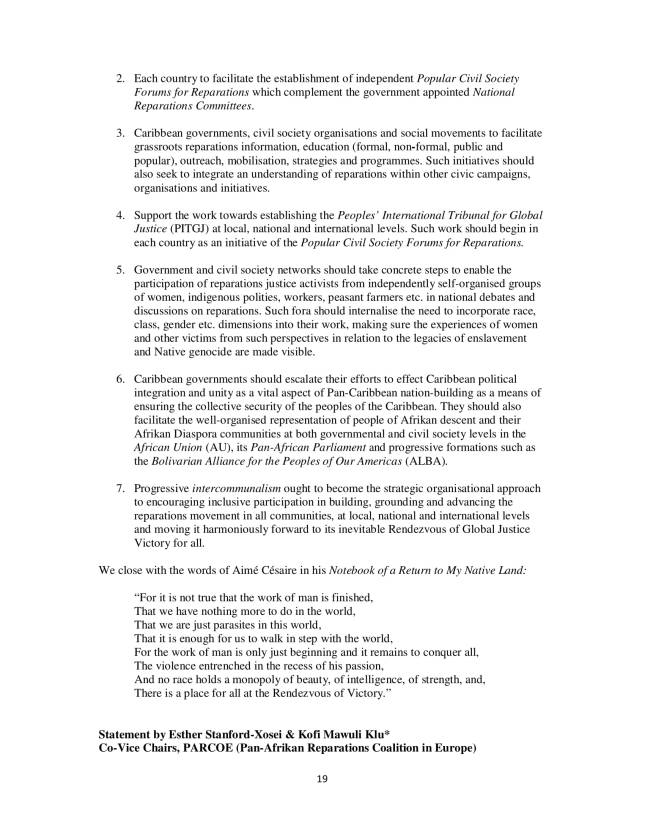
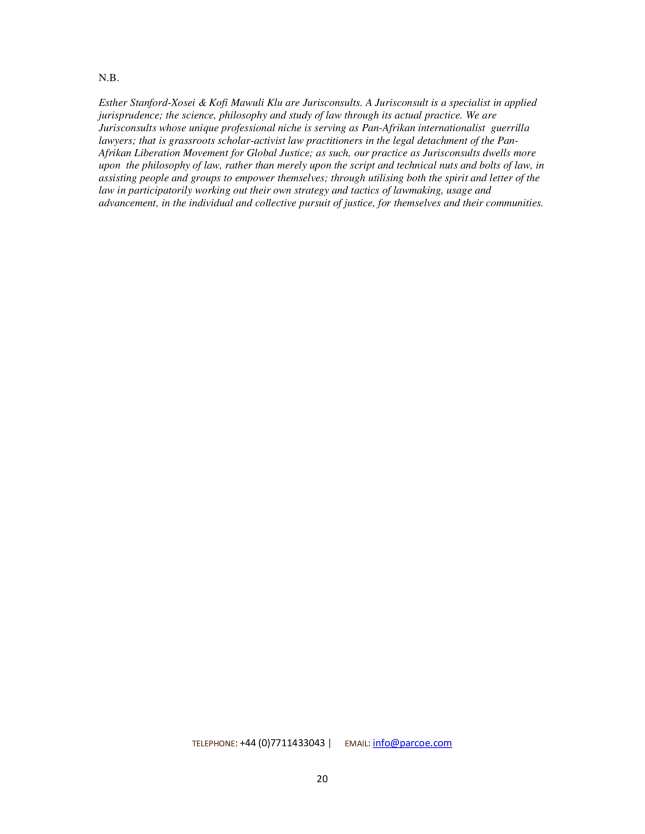
26. West Indies Must Fall – Self-Repair Now!

27. Community Self-Repairs Now!

28. Reparations for Afrikans at Home & Abroad!

29. Reparations for [name of group, community etc.]

30. Afrika and Afrikans worldwide must be free!

31. We support our Freedom Fighters at home and abroad!

32. Free our Political Prisoners – Reparations Now!

33. This System is killing Us: Stop the Maangamizi!

34. Stop the Maangamizi! We Charge Genocide/Ecocide!

35. Stop the Maangamizi! – Build Maatubuntuman!

36. [Name] is a Maangamizi Denier!

37. [Name] is a Maangamizi Resister!

38. [Name] is a Maangamizi Crime Scene!

39. [Name] is a Maangamizi Criminal!

40. [Name] blood is on your hands!

41. We will not be complicit in your Maangamizi Crimes!

42. We honour our Maangamizi Resisters!

43. Shut down Maangamizi Crime Scenes Now!

44. Western promotion of corruption in Afrika & the Caribbean is a Maangamizi crime!

45. It’s Time for Us to Take Reparations!

46. Reparatory Justice by Any Means Necessary!

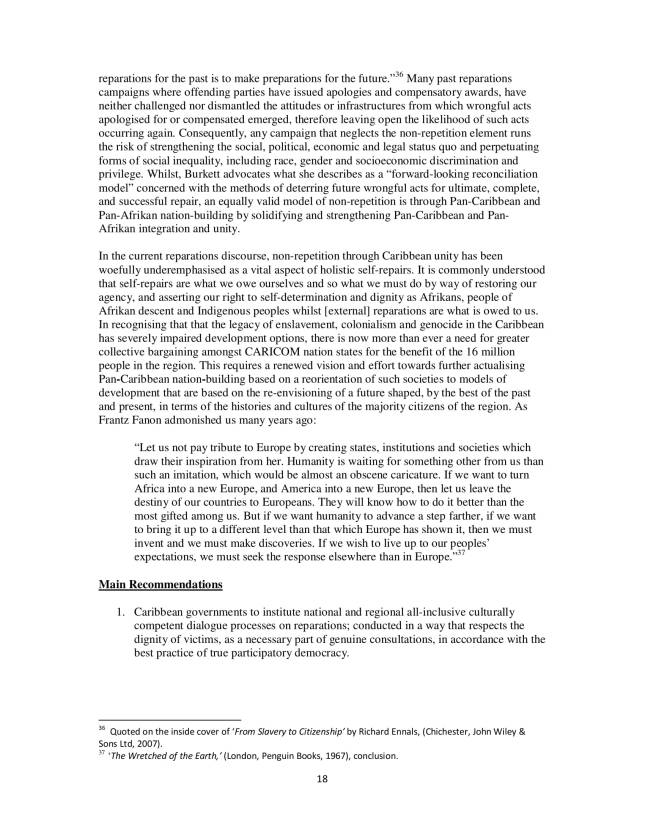
47. The best approach to reparations for the past is to make preparations for the future.

48. “Our task is to make ourselves architects of the future” [Jomo Kenyatta]

49. None but Ourselves can heal Our kind!

50. None but Ourselves can free Our minds!

Last thing, we encourage you to take pictures of your banners and placards. Please also share them to the various Reparations March and ‘Stop the Maangamizi!’ Campaign social media sites and accounts.

Web:
https://stopthemaangamizi.com/
http://www.reparationsmarch.org/

Facebook:
https://www.facebook.com/stopthemaangamizi/
https://www.facebook.com/ReparationsmarchUK/
TheMarch August FB Profile

Email:
media@reparationsmarch.org
stopthemaangamizi.@gmail.com

Twitter:
@Stopmaangamizi
@uk_march


This slideshow requires JavaScript.

Posted in AEDRMC, AFRIKAN HELLACAUST, AFRIKAN RESISTANCE, ALL PARTY PARLIAMENTARY COMMISSION OF INQUIRY (APPCITARJ), INTERNATIONAL SOCIAL MOVEMENT FOR AFRIKAN REPARATIONS, ISMAR, MAANGAMIZI RESISTANCE, MAANGAMIZI RESISTORS, REPARATIONS, SMWeCGEC, STOP THE MAANGAMIZI CAMPAIGN, STOP THE MAANGAMIZI PETITION, THE 2018 AFRIKAN EMANCIPATION DAY REPARATIONS MARCH, Uncategorized | Tagged Afrika, Apartheid, Creative Activism, Creativity in Protest, Genocide, Marching, Ourstory, People Power, Protest history, Reparations Protest, Reparations Slogans, Social Movement | Leave a comment

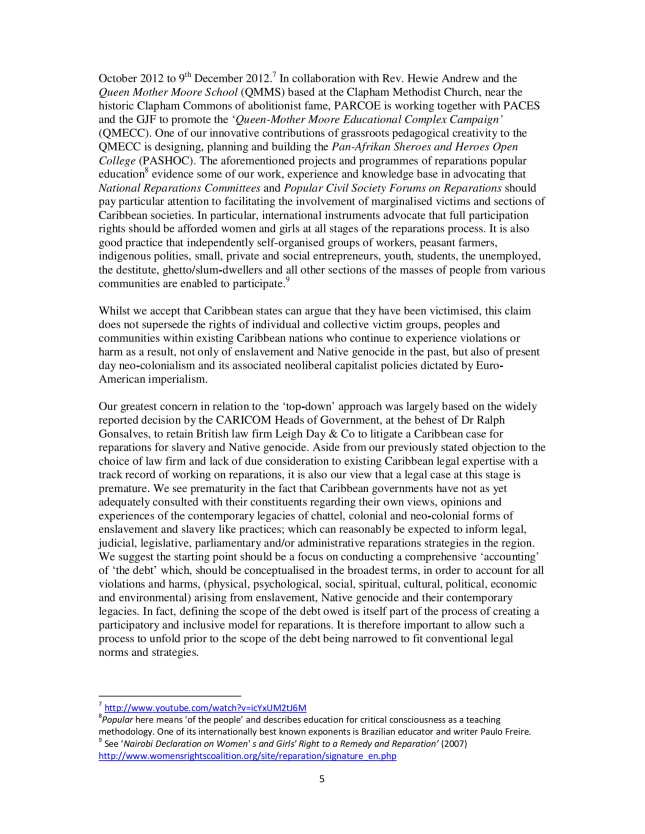
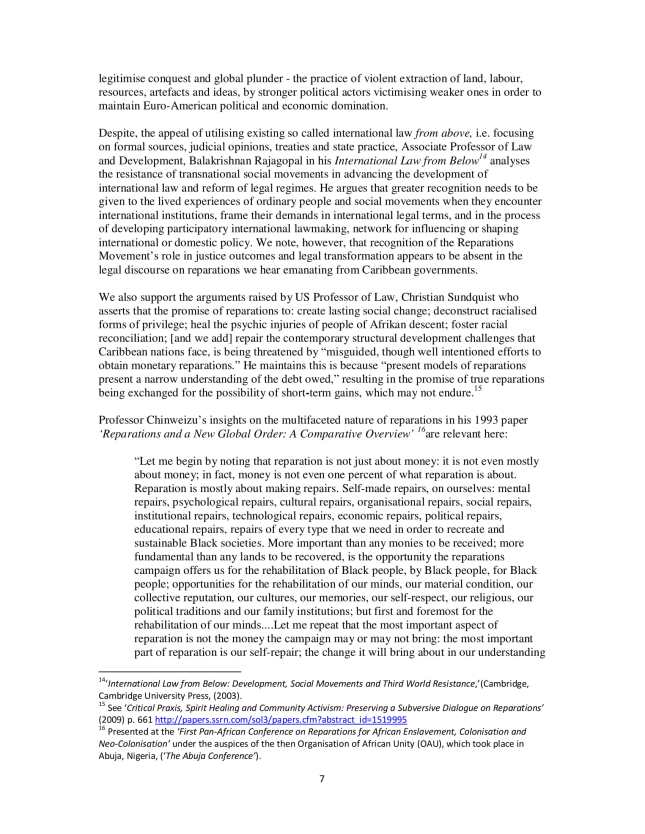
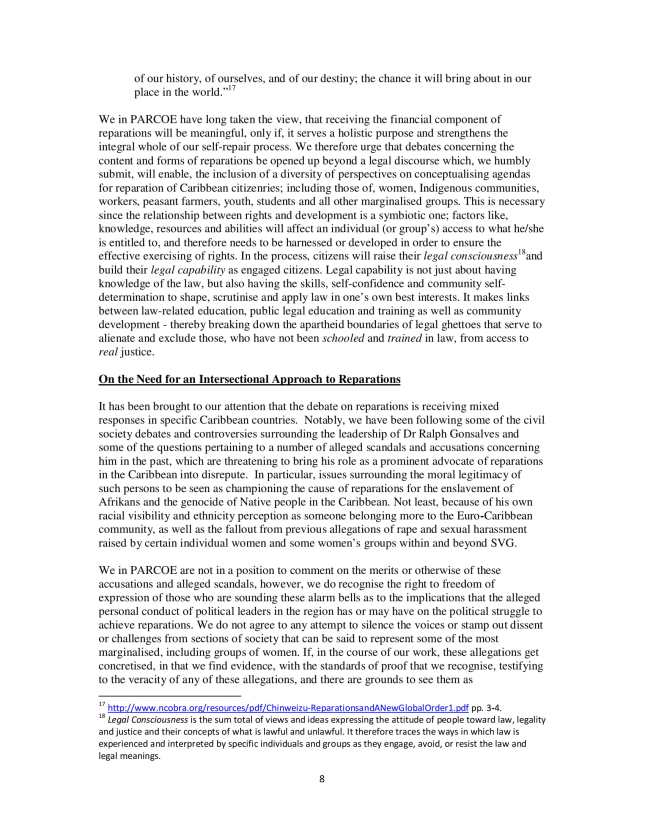
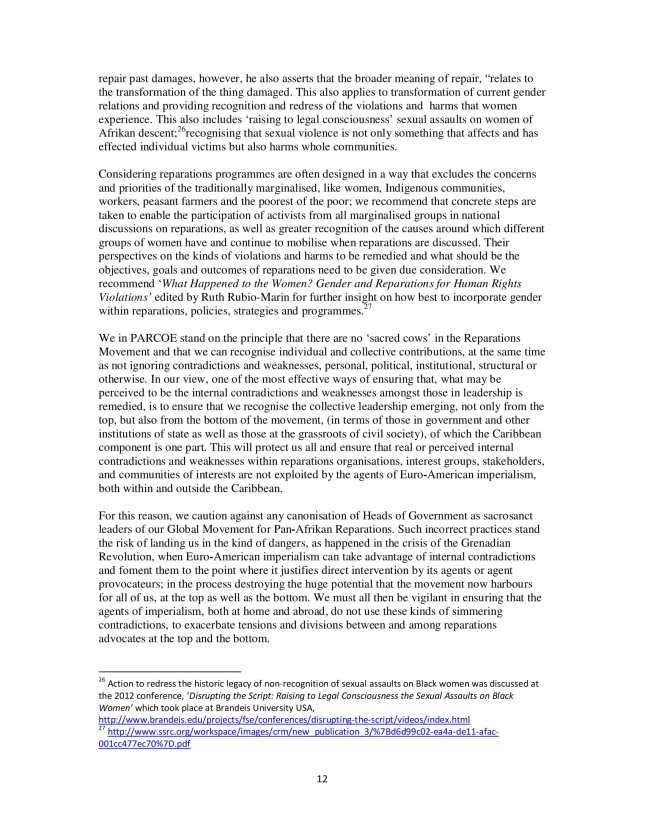
SOME UK ISMAR POSITION PAPERS ON CARICOM REPARATIONS

Posted on July 16, 2018 by STOP THE MAANGAMIZI

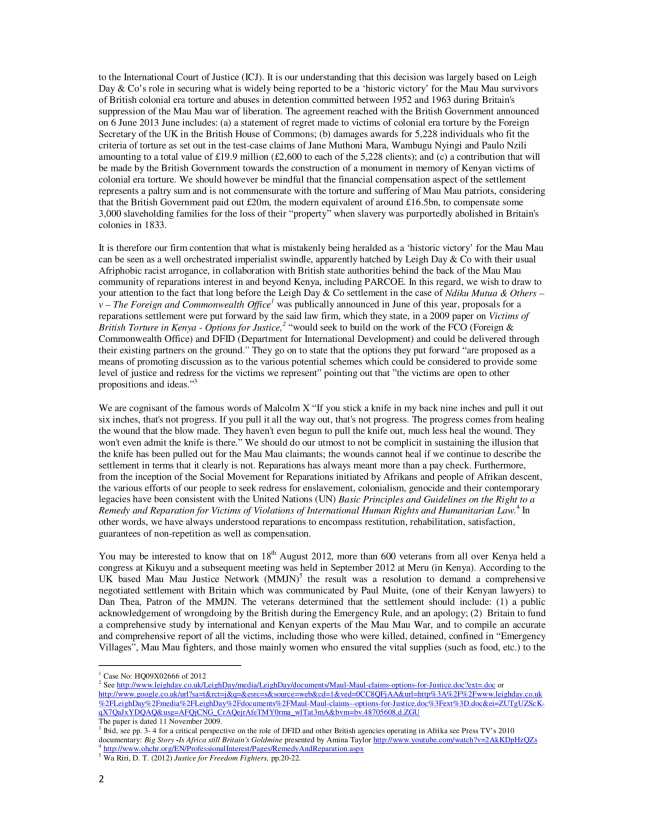
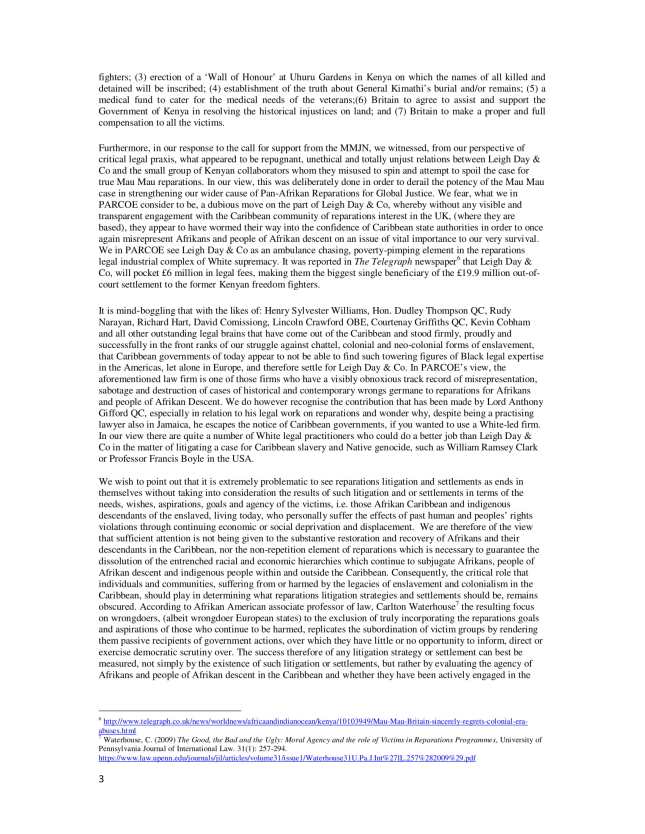
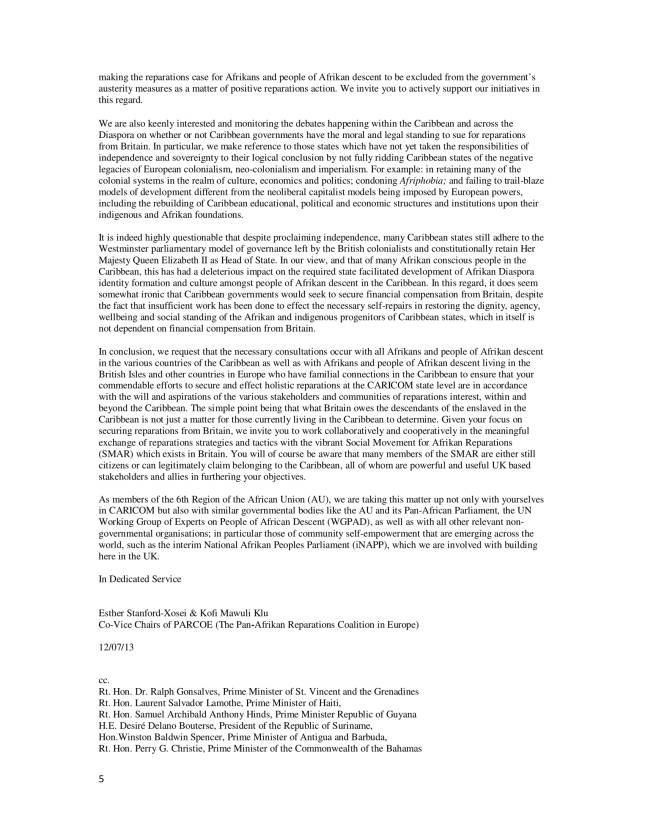
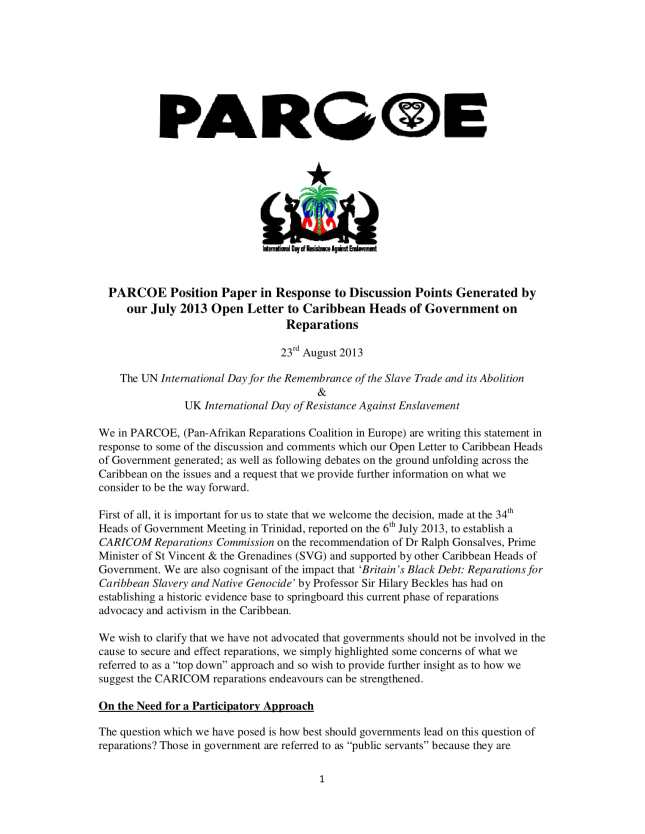
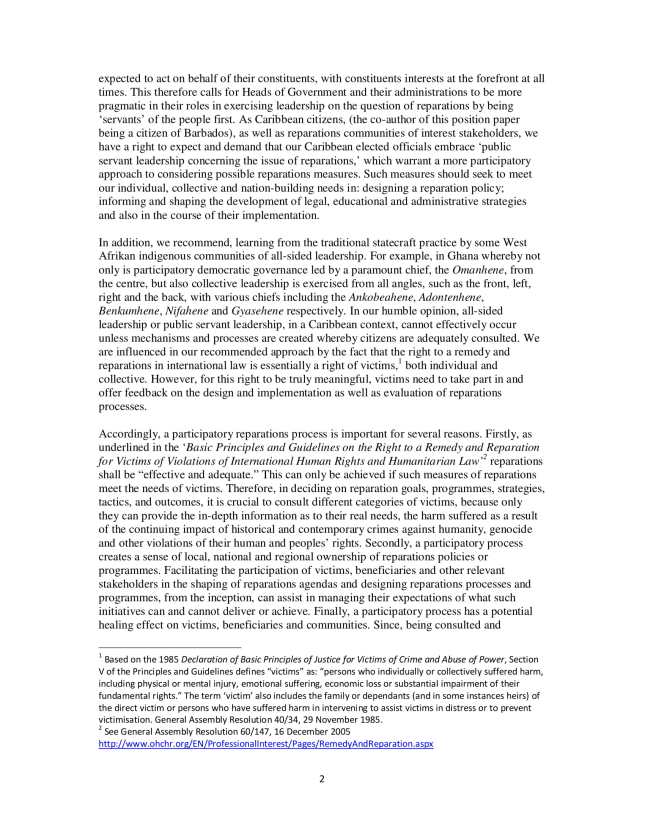
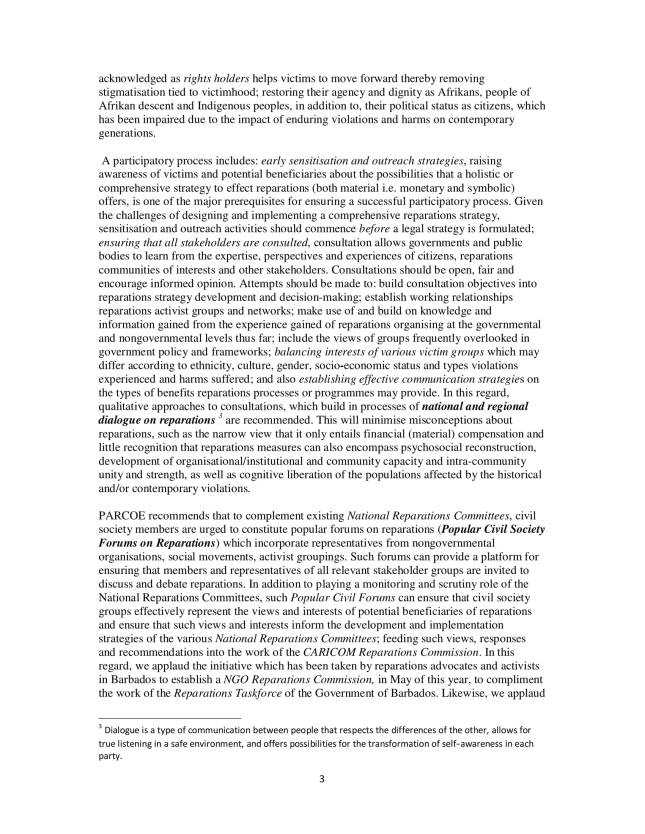
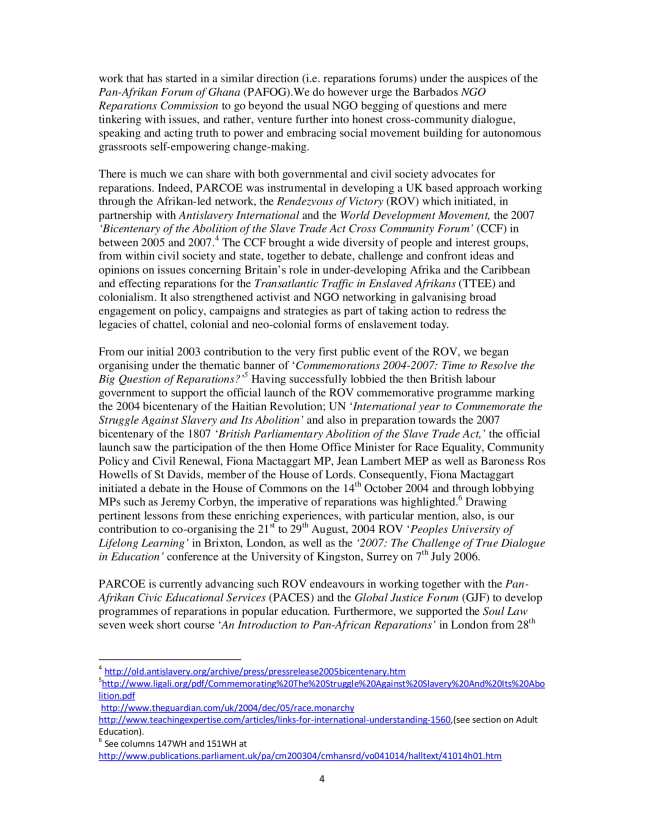
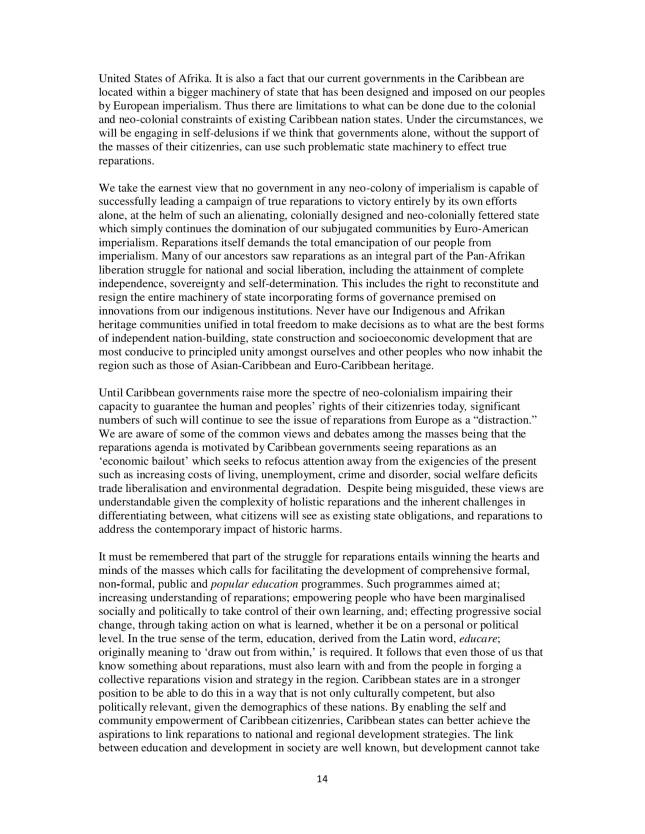
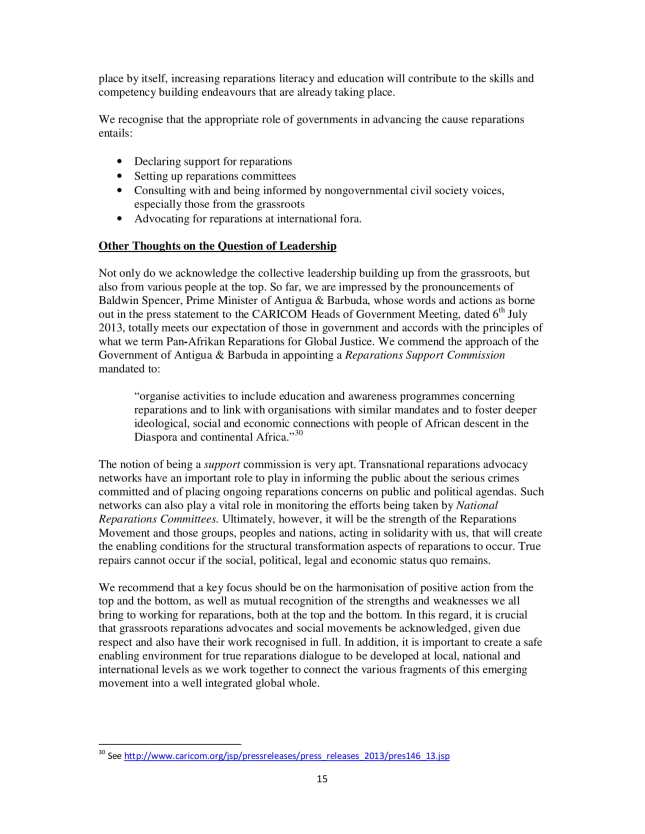
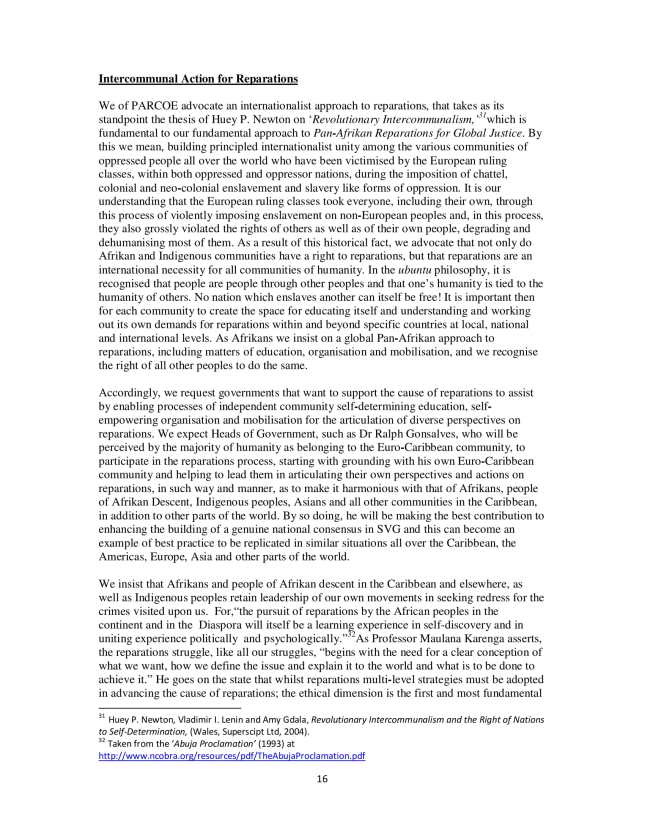
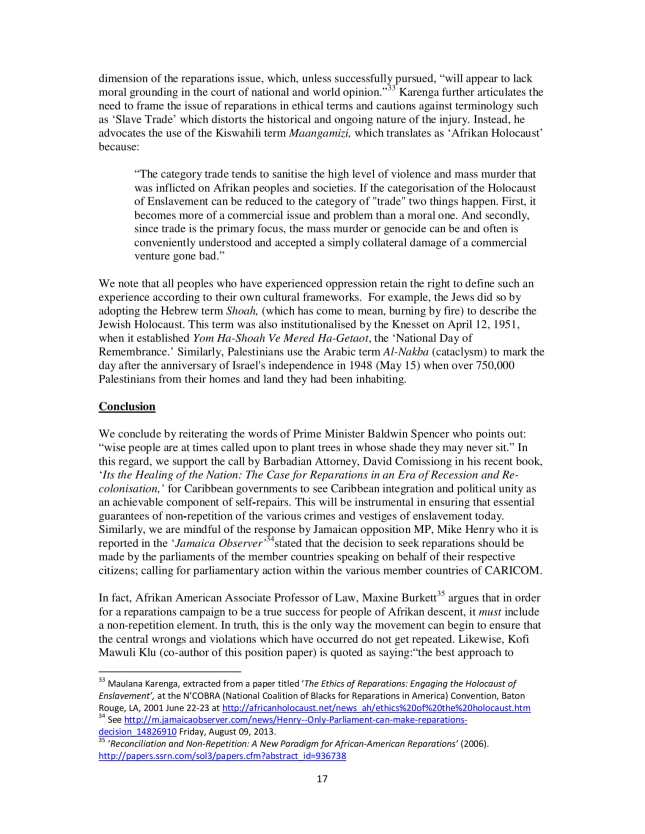
PARCOE Open Letter to CARICOM Heads of Government corrected version-1PARCOE Open Letter to CARICOM Heads of Government corrected version-2PARCOE Open Letter to CARICOM Heads of Government corrected version-3PARCOE Open Letter to CARICOM Heads of Government corrected version-4PARCOE Open Letter to CARICOM Heads of Government corrected version-5


PARCOE Open Letter to CARICOM Heads of Government corrected version-6


PARCOE CARICOM REPARATIONS POSITION PAPER-01PARCOE CARICOM REPARATIONS POSITION PAPER-02PARCOE CARICOM REPARATIONS POSITION PAPER-03PARCOE CARICOM REPARATIONS POSITION PAPER-04PARCOE CARICOM REPARATIONS POSITION PAPER-05PARCOE CARICOM REPARATIONS POSITION PAPER-06PARCOE CARICOM REPARATIONS POSITION PAPER-07PARCOE CARICOM REPARATIONS POSITION PAPER-08PARCOE CARICOM REPARATIONS POSITION PAPER-09PARCOE CARICOM REPARATIONS POSITION PAPER-10PARCOE CARICOM REPARATIONS POSITION PAPER-11PARCOE CARICOM REPARATIONS POSITION PAPER-12PARCOE CARICOM REPARATIONS POSITION PAPER-13PARCOE CARICOM REPARATIONS POSITION PAPER-14PARCOE CARICOM REPARATIONS POSITION PAPER-15PARCOE CARICOM REPARATIONS POSITION PAPER-16PARCOE CARICOM REPARATIONS POSITION PAPER-17PARCOE CARICOM REPARATIONS POSITION PAPER-18PARCOE CARICOM REPARATIONS POSITION PAPER-19PARCOE CARICOM REPARATIONS POSITION PAPER-20

This is a link to a further Position Paper on CARICOM Reparations adopted by the Global Afrikan People’s Parliament (GAPP) in 2015.

Posted in AFRIKAN RESISTANCE, INTERNATIONAL SOCIAL MOVEMENT FOR AFRIKAN REPARATIONS, ISMAR, PREFIGURATIVE POLITICS, REPARATIONS, Uncategorized | Tagged Activist Knowledge-Production, Afrika, Afrikan Caribbean, Afrikan Diaspora, Afrikan Heritage, Afrikan National Question, Afrikan Reparations, Afrikan Vote, Afriphobia, Black Radical Imagination, BlackVotingCanonFodderNoMore!, British Colonialism, British Government, CARICOM, CARICOM Ten-Point Plan, Cause Lawyering, Cognitive Justice, Critical Dialogue, Epistemic Justice, Establishment Academia, Extra-Legal Activism, GAPP, Global Afrikan People's Parliament, Global Apartheid, Global Justice, Grassroots Academia, Grassroots Leadership, Ground-Up Stuggles, International Law, Lobbying, Maangamizi Denier, Movement Intellectuals, Movement Lawyering, Movement-Building, Neocolonilaism, NothingAboutUsWithoutUs!, Pan-Afrikan Reaparations Coalition in Europe, Pan-Afrikan Reparations 4 Global Justice, Pan-Afrikan Reparations for Global Justice, PARCOE, Pempamsie Plan, People Power, Peoples Law, Reparations debate, Reparations Ethics, Repatriation, Self-Repairs, Social Justice Lawyering, Social Movement, Speaking Truth to Establishment Power, Stop the Maangamizi, UK Reparations Activism | Leave a comment

IN GHANA ON 1ST AUGUST? YOU ARE INVITED TO THE SANKOFAAPAE PAN-AFRIKAN REPARATORY JUSTICE LIBATION CEREMONY

Posted on July 16, 2018 by STOP THE MAANGAMIZI


This slideshow requires JavaScript.


“The great tide of history flows and as it flows it carries to the shores of reality the stubborn facts of life and [hu]man’s relations one with another. One cardinal fact of our time is the momentous impact of Afrika’s awakening upon  the modern world. The flowing tide of Afrikan nationalism  sweeps everything before it and constitutes a challenge to the colonial powers  to make a just Restitution for the years of injustice and crimes committed against our continent.“

Osagyefo Kwame Nkrumah, from his Friday 23rd September 1960 address to the General Assembly of the United Nations in New York, USA.


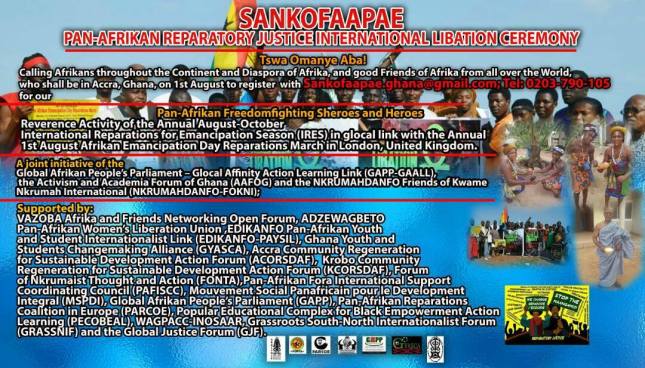
We in the ‘Stop the Maangamizi: We Charge Genocide/Ecocide!’ Campaign (SMWeCGEC), in association with the Afrikan Emancipation Day Reparations March Committee (AEDRMC) are working in partnership with VAZOBA Afrika  & Friends Networking Open Forum who organise the annual SANKOFAAPAE Pan-Afrikan Reparatory Justice International Libation Ceremony (SANKOFAAPAE-PARJILC), every year in solidarity with the annual Afrikan Emancipation Day Reparations March which takes place on the 1st August.

VAZOBA are calling Afrikans throughout the Continent and Diaspora of Afrika, and good Friends of Afrika from all over the world to join them on Wednesday, 1st August 2018. The 3rd SANKOFAAPAE-PARJILC will take place in Accra, Ghana as part of the International Reparations for Emancipation Season in glocal link with the Reparations March in London, UK.

Venue: Osekan Rock Oceanic Retreat, Accra, Ghana

Time: 11am

Contact Details: +233 (0) 574619258 or +233 (0) 203790105

Email: sankofaapae.ghana@gmail.com or mawuse.yao@gmail.com.


“We must have every inch of our lands, every one of our mines and industries…”

Osagyefo Kwame Nkrumah


The SANKOFAAPAE-PARJILC is a strictly non-party political activity of various grassroots progressive forces of Pan-Afrikan civil society which are independently mobilizing for the ground-up popular education, reparatory justice civic conscientization and its relevant human, peoples’ and Mother Earth rights awareness raising among ordinary masses of peoples throughout the World to achieve our interconnected vision of Pan-Afrikan Reparations for Global Justice.

We in the SMWeCGEC and the AEDRMC highly appreciate what is being done in Ghana and encourage all those interested in the Reparations March living in Ghana or West Afrika to help build and strengthen this satellite process in Ghana and extend it into the countries in which you live, even if you are not resident in Ghana. We recognise the SANKOFAAPAE as a unity promotional endeavour, of global dimensions, for connecting into the International Social Movement for Afrikan Reparations (ISMAR). In addition to the efforts being made by various indigenous Afrikan communities in Afrika to assert their rights to self-determination and reconstruction of nationhood including overcoming the divisions imposed by the artificially created European borders and other manifestations of the Maangamizi which continue into the present to the detriment of their Afrikan personality, humanity and sovereignty.

Examples of such national self-determinist endeavours with reparatory justice bearings which seek to overcome the divisive colonial 1884-1885 boundaries of the Congress of Berlin and counter the ensuing Euro-centric economic and geopolitical interests which have been inimical to the aspirations of Afrikans include, but are not restricted to:

• Ablodeduko Movement for Gbetowo Pan-Afrikan Reparatory Justice Self
• Determination, Unification and Sovereignty
• Edo People’s Movement for the Restoration of Benin
• Igbo National Self-Determination Movement
• Movement For the Survival of the Ogoni People
• Niger Delta Sovereignty Movement
• O’odua Liberation Movement/Yoruba Self-Determination Movement
• Bunyoro-Kitara Kingdom Movement
• Global Afrikan Family Reunion International Council
• Sahrawi National Liberation Movement
• Kgeikani Kweni Movement (First People of the Kalahari)
• Nubian Katala Movement
• OvaHerero & Nama Genocide Redress Movement
• Marikana Massacre Redress Movement
• Nyasaland Massacre Redress Movement
• Ethiopian Genocide Redress Movement
• Bamileke Genocide Redress Movement
• Oromo Liberation Movement
• Tigrayan Liberation Movement
• Muhimu Kenya, Land & Freedom Army Movement
• Maasai Autonomy Movement
• Landless Peoples Movement of Azania/Namibia
• Abahlali base Mjondolo Shackdwellers Movement
• Affirmative Repositioning Movement
• Naija Resitance Movement
• People’s Union of Cameroon
• Economic Freedom Fighters of Azania
• Peoples Land Organisation
• Pan-Afrikan Congress of Azania
• Togo Resistance Movement

The SANKOFAAPAE is also relevant to providing global visibility for such self-determination battles and the communities waging them in order to facilitate Pan-Afrikan internationalist solidarity. In addition to reinvigorating our Pan-Afrikan Liberation Struggle for the Reparatory Justice regeneration of our Communities of Resistance to the MAANGAMIZI everywhere; in order not only to stop its devastating crimes of Genocide/Ecocide but also to speed up our walking the talk of principled unity in rebuilding our interconnecting Afrikan Communities of Reparations Interest at home and abroad as the cornerstones of our future MAATUBUNTUMAN Pan-Afrikan Union of Communities. MAATUBUNTUMAN is an organic integration of our autonomous Afrikan Heritage Communities for National Self-Determination (AHC-NSDs) in the Diaspora into the Sankofahomes Liberated and Contested Zones on our Mothercontinent of Afrika! All this being done in accordance with the ‘Right to Afrika’ being championed by ENGOCCAR as the most vital aspect of the UN ‘International Decade for People of African Descent’.

See this link for videos of activities which took place in Namibia and Ghana last year in solidarity with the Afrikan Emancipation Day Reparations March.

*The Indigenous concept of Rematriation refers to restoring a living material culture to its rightful place on Mother Earth; restoring a people to a spiritual way of life, in sacred relationship with their ancestral lands; and reclaiming ancestral remains, spirituality, culture, knowledge and resources. 


“Convinced that the pursuit of reparations by the Afrikan peoples in the continent and in the Diaspora will itself be a learning experience in self-discovery and in uniting experience politically and psychologically.”

A Declaration of the first Abuja Pan-Afrikan Conference on Reparations for Afrikan Enslavement, Colonisation and Neo-Colonisation, sponsored by the Organisation of African Unity and its Reparations Commission April 27-29, 1993, Abuja, Nigeria


GHANA DETAILS


“Afrika is a paradox which illustrates and highlights neo-colonialism. Her earth is rich, yet the products that come from above and below the soil continue to enrich, not Afrikans predominantly, but groups and individuals who operate to Afrika’s impoverishment.”

Osagyefo Kwame Nkrumah, ‘Neo-colonialism: The Last Stage of Imperialism’ (1965).


You Can Still Participate If You are in Another Country Outside of the UK

We invite you to also organise a solidarity march or event in your locality or country on the 1st August 2018.

If you are not able to organise a march, we encourage you to organise some other type of solidarity reparations action, activity or event such as: a libation ceremony (as occurs annually in Accra, (Ghana), rally, reparations radiothon e.g. #Conversation Reparations (as occurs in the USA) or reparatory justice ‘occupations’ of specific places with connections to the Maangamizi, in the past or the present. For example, companies, university campuses or historic building sites.

Even if your community were not enslaved or colonised by the British Empire, you can still connect with what we are doing in the UK by highlighting and educating people about the British Establishment’s complicity in the Maangamizi as it affects and impacts on your personhood, family and/or community.

Examples of such impacts may include, land grabs, extractive industries, environmental degradation, GMOs, tax-dodging and other forms of corporate looting, debt-bondage, various forms of externally reinforced reactionary violence such as USA-AFRICOM presence and proxy wars in addition to fratricidal inter and intra-community violence in self-destructive subservience to the global system of white supremacist racism, including its gendered forms.

At a minimum, please consider sending a solidarity statement to pr@reparationsmarch.org. or stopthemaangamizi@gmail.com.

AFRIKA MARCH

Posted in AFRIKAN HELLACAUST, AFRIKAN RESISTANCE, EVENTS/TRAINING, INTERNATIONAL SOCIAL MOVEMENT FOR AFRIKAN REPARATIONS, ISMAR, REPARATIONS, SMWeCGEC, STOP THE MAANGAMIZI CAMPAIGN, STOP THE MAANGAMIZI PETITION, THE 2018 AFRIKAN EMANCIPATION DAY REPARATIONS MARCH, Uncategorized | Tagged Afrika, Afrikan Emancipation Day Reparations March, AHC-NSD, Emancipation Day, ENGOGGAR, GAFRIC, Genocide, Geopolitics, Ghana, Glocalism, IDPAD, Labour Party, Maatubuntujamaas, MAATUBUNTUMAN, Pan-Afrikanism, Rematriation, Repatriation, Right to Afrika, SANKOFAAPAE, Sankofahomes, Social Movement, VAZOBA | Leave a comment

2018 POPSAR @PARLIAMENT SQUARE

Posted on July 1, 2018 by STOP THE MAANGAMIZI


PQ SISTER
CALUM 23
SIETR PQ
ED POPSAR 10
ED POPSAR 6
MARCHhereo-js-ojf
LEO PAQ
alex ps
ED POPSAR 13
ED CLARE SHEPHERD JJ
ED POPSAR 7
ED POPSAR 9
CALUM 23 (2)
ED CLARE SHEPHERD 77
ED POPSAR 5
ED POPSAR 8


“Debate is combat, but your weapons are words”

Melvin B. Tolson (Denzil Washington) in the ‘Great Debaters’


What is the POPSAR?

The People’s Open Parliamentary Session on Afrikan Reparations (POPSAR) at Parliament Square is a mass consciousness-raising forum for public debate and discourse on manifestations of the Maangamizi necessitating Afrikan Reparations which takes place as part of the programme of the annual 1st August, Afrikan Emancipation Day Reparations March. It is a public forum where we rehearse our arguments in pursuit of the ‘battle of Ideas’ on obstacles to the realisation of holistic Reparatory Justice. The purpose of the POPSAR is to engage audiences in action-learning on participatory democratic parliamentary debate and the ‘battle of ideas’ on critical issues such as how to stop various manifestations of the Maangamizi as part of the process of effecting and securing Afrikan Reparatory Justice.

The POPSAR enables the constructive channelling of the ‘battle of ideas’ as an important ideological tool for ascertaining greater clarity as to strategy and tactics for effecting, securing and taking reparations. Within a space where a number of ideological positions struggle for supremacy – reflective of national, ethnic, class and gendered tensions within society – the ISMAR as a revolutionary international social movement cannot neglect the importance of winning hearts and minds and mobilising society around a common reparatory justice vision. Indeed this being one which succeeds in presenting a credible political, social and economic narrative around which the movement seeks to transform hearts and minds to support; which is in itself an alternative to that of the dominant white supremacy racist, capitalist class.


Motion to be debated:

BE IT RESOLVED THAT THE REPARATIONS MARCH, AS A FORM OF REPARATORY JUSTICE STREET PROTEST, IS BEING MADE INADEQUATE DUE TO INACTIVITY BY THE MAJORITY OF ITS PARTICIPANTS IN TAKING STEPS TO ADVANCE THE CAMPAIGN FOR REPARATIONS BETWEEN THE ANNUAL MARCHES.

(The topic is deliberately framed in this way to elicit strong responses to rebut this proposition)

Invited guests will speak for 3 mins for/against.

This POPSAR topic should encourage and inspire intense debate, discussion and dialogue in the lead up to the 2018 March.


Rationale for this topic

Each year guidance as part of the mobilisation for and between the annual marches guidance is provided by the Afrikan Emancipation Day Reparations March Committee (AEDRMC) and its partner the ‘Stop the Maangamzi: We Charge Genocide/Ecocide’ Campaign (SMWeCGEC) on how the campaign for reparations can be advanced, the movement strengthened and suggestions are offered on how to take action. This ranges from ‘shutting down’ Maangamizi crime scenes to organising to bring about the reparatory justice changes one desires, to creatively using the ‘Stop the Maangamizi!’ Petition to galvanise action to address various manifestations of the Maangamizi as the first step to repairing and redressing the harm (reparations) to lobbying elected officials to take specific actions towards the establishment of an All-Party Parliamentary Commission of Inquiry for Reparatory Justice (APPCITARJ).

It cannot be said that the organisers of the March in partnership with the SMWeCGEC have not in various ways outlined a plan for the types of action that people can be taking between the annual Marches. Even the flyers that were put out for the 2017 and 2018 Marches have indicated what steps people can be making. It is also recognised that these are not the only suggestions which have been made.

Nevertheless, the March as the most visible form of protest action in the annual calendar of events, activities and programmes of the UK contingent of the International Social Movement for Afrikan Reparations (ISMAR), is under incredible scrutiny and critique from those who are opposed to marching. For example, from those who feel it is an inadequate tactic or futile endeavour, those who advocate that there are more effective tactics, those who feel that the March and its partner campaign, the SMWeCGEC lacks a ‘meet our demands or else component’ as well as various detractors and naysayers.

It has been argued that whilst a significant number of people attend the Afrikan Emancipation Day Reparations March, these crowds are actually achieving very little in terms of furthering the campaign for reparations. The fervent political and cultural energy experienced by attendees on the ground is hugely disproportionate to the practical results of the March. The main critique of marching seems to be what happens after and between the Marches, the hodgepodge groups and individuals that participate do not necessarily have a commitment to engage in suggested follow-up action which is designed to help build the infrastructure for decision-making and for sustaining  momentum between the Marches. Likewise, little is being offered by way of alternatives which people are advocating will yield better results.

This year are throwing the challenge back to you the people to state your case as to what we can and should be doing to improve the March, or what we should be doing instead, hence the topic for the 2018 POPSAR.


What is debating?

Debating involves examining ideas and policies with the aim of persuading people of the validity or futility of the ideas, policies being debated. It allows debaters to: consider and counter different arguments on the nature of the problem or solution being debated; engage with opposing views and to speak strategically.


How do we debate?

In every POPSAR session there is a motion: a statement (the truth or falsehood of which is examined in the debate), idea or policy that is framed and debated with the prefix, ‘This Gathering…’.

There are two sides to the debate, the proposition which supports the motion and the opposition which opposes or challenges it.


How is the POPSAR debate structured?

# of people in the POPSAR: 6
# of people in a team: 3
# of teams in the debate: 2
Duration of the speeches: 3 mins

All each person has to do is stand up and deliver a short speech – perhaps two to four key points they think will convince people to agree with their side of the argument. The speakers will take it in turns – first a speaker from the proposing team (the people who agree with the motion), then the opposing team (the people who disagree with the motion). Each team will have two contributors and the third will do a summary – conclusion.

The first speaker – proposing

The first speaker of the first team will probably introduce what they are going to say, introduce what their team member is going to say, make their own arguments (including answering any questions) and sum up.

If you were proposing (agreeing with) the motion above, as the first speaker you might:

1. Introduce what you are going to say
I am going to discuss …

2. Introduce what your colleague is going to say
My colleague will talk about …

3. Make your own arguments
The speaker will then go on to make these arguments. During this period, the other side will also have a chance to ask up to 2 questions:

Asking a question

At this point, someone from the other side might try to ask a question (we call this offering a ‘point of information’).

If the Speaker allows them to the debater might get to offer a reply

4. Summing up
After the debaters have presented all their arguments and allowed any questions, the next step is to sum up their proposing case – during this bit, the other side aren’t allowed to ask questions:

“So, in conclusion – While my colleague will continue the case by emphasising …., the points I have already made clearly illustrate why this Gathering should vote in favour of the motion…”

The first speaker – opposing

The first speaker against the motion will now start their speech, perhaps by going through the following process:

1. Introduce what they are going to say
“I am going to set out the case against the motion, with my key arguments being:..”

2. Introduce what your colleague is going to say
“My colleague will say…”

3. Respond to first speaker’s arguments
“However, before progressing to my main arguments I would like to take issue with some of the comments made by the first speaker for the proposition. They said that…”

4. Summing up
The first speaker for the opposition then needs to sum up their case.

Second/third speakers

The second/third speaker of the proposition team will now introduce what they are going to say, reflect on what their team member has said, make their own arguments (including answering any questions and responding to what the other team has said) and sum up. Again, the opposition team will do the same.

Although a debate is about making good arguments, it is also about showing you have listened to the other side, understood their arguments, and are willing to challenge them directly.

Floor debate

Once all three speakers for both teams have delivered their speeches, there is a debate from ‘the Gathering’ – this means anyone in the audience can ask a question or make a short speech in favour of one of the sides of the motion.

This part of the debate will last no longer than ten minutes.

Reply speeches

After the floor debate, one speaker from each team gets three minutes to sum up their overall position at the end of the debate. This will include their own arguments and counters to the argument of the other side – and should leave the audience in no doubt as to who is offering the winning side of the case.
After the debate the public gathering decides who was most convincing. Allow for 2-4 points of information from the audience.

What makes a good POPSAR debater?

The audience are invited to judge the debaters on the basis of:

Content: What debaters say and the arguments and examples they use.

Style: How debaters express themselves and the language and voice they use.

Strategy: How well debaters engage with the topic, speak to the motion, respond to other people’s arguments and structure what they say.
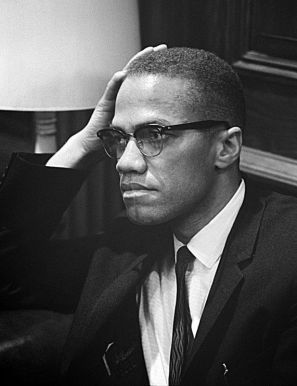
 

malcolm


Our people have made the mistake of confusing the methods with the objectives. As long as we agree on objectives, we should never fall out with each other just because we believe in different methods, or tactics, or strategy.

Malcolm X


Questions to consider

1. Is the Afrikan Emancipation Day Reparations March (‘The Reparations March’) nothing more than a group of attention seeking people with vague and conflicting messages and objectives on reparations parading through the streets of London begging and complaining?

2. Is the March achieving it’s aims?

3. Is the March succeeding in getting people politically mobilised to hold the British state accountable for its role in the Maangamizi?

4. What factors can increase success in implementation of the aims of the March?

5. What can we as stakeholders do to increase the numbers, diversity of constituencies of Afrikan heritage communities involved in planning, mobilising towards and participating in the March.

6. What work are you doing to help steer the energy galvanised by the March in the direction of political and policy change towards reparatory justice?

7. What role can and should allies play in mobilising for and between the Marches?

8. For those that still say that marching and petitioning, which actually cost us very little risk or harm in Britain today, achieve are a waste of time; what else is it you are prepared to do which you feel will bring about a more favourable response from the British state to our Afrikan Reparatory Justice demands?

9. What other initiatives or activities or protest actions are taking place that will be far more effective in holding the British state and other perpetrators of the Maangamizi to account?

10. What will make the International Social Movement for Afrikan Reparations actually move?

11. What are the methods that will effectively secure and win people of Afrikan heritage reparatory justice?

12. What have you been doing to promote the March or indeed what you may see as more effective alternatives to it?


Guidance on taking action previously put out

Call to Participate in the 2016 Afrikan Emancipation Day Reparations March 2016
https://www.youtube.com/watch?v=wR4ObeZ2QiE

Reparations March 2017: invitation to participate
https://www.youtube.com/watch?v=6U6qzMmtvO8

Reparations March 2017: call to action
https://www.youtube.com/watch?v=as8OjyFrh44

Reparations March 2017: call to mobilise
https://www.youtube.com/watch?v=pubRIzHplnk

SMWeCGEC Petition Update featuring video of AEDRMC Co-Chair Jendayi Serwah ‘Power is only going to respond to power’

https://www.change.org/p/stop-the-maangamizi-we-charge-genocide-ecocide/u/20457629

https://www.change.org/p/stop-the-maangamizi-we-charge-genocide-ecocide/u/21147298

https://stopthemaangamizi.com/2017/08/23/response-from-the-foreign-commonwealth-office-to-the-2017-smwecgec-petition/

Requoting from the 24th August SMWeCGEC Petition Update dated 24th August 2017

Increasingly it is becoming clearer that the British Government will only begin to listen to our Afrikan Reparatory Justice demands, including the demands of the SMWeCGEC when the advocacy, encouragement and support by our Afrikan Heritage Communities in Europe is given to the efforts of our Afrikan Communities of Resistance in Afrika, the Caribbean, other parts of Abya Yala, (the so-called Americas), as well as in Europe to shutting down extractive industries and other foreign corporate crime scenes of the Maangamizi. This is something we stated in the letter to the Prime Minister accompanying the 2017 hand-in of the ‘Stop the Maangamizi!’ Petition. It follows that the plunder of our community resources is still continuing to enrich white power in Britain and European domains of global apartheid across the world. We therefore need to seriously revisit some of the strategies and tactics with which our revered Ancestors fought successful liberation struggles; gaining some concessions that resulted in the official discontinuation of the British Empire, even from inside the brains and belly of the beast of the said Empire!

In fact, it is by pursuing strategies and tactics in Britain that advocated for, encouraged and supported actions of Afrikan people to make the British and other European Empires in Afrika, the Caribbean, Abya Yala as well as Asia ungovernable, which compelled changes in the British Empire, resulting in the proclamations of independence of our current nations states in Afrika and the Caribbean. A similar outcome and impact can be brought about again in our lifetime with the shutting down of Maangamizi crimes scenes in Afrika, the Caribbean, other parts of Abya Yala and Europe.

For those that still say they are not for petitioning or Marching, which actually cost us very little risk or harm in Britain today, what else is it you are prepared to do which you feel will bring about a more favourable response from the British state to our Afrikan Reparatory Justice demands?

The honestly critical discussion and reasoning that should flow from these perspectives of ours in the SMWeCGEC is something that we urge is carried out in Afrikan Heritage Communities not only in the UK, but throughout Europe, Afrika, Abya Yala and other parts of the world. We further urge that this is also done against the background of the historical legacies and the contemporary manifestations of the still ongoing Maangamizi as outlined in the ‘Stop the Maangamizi!’ Petition.


‘Take Action’ tab on the ‘Stop the Maangamizi!’ website
https://stopthemaangamizi.com/take-action/

After 4 years of marching what has been achieved?
https://stopthemaangamizi.com/2017/08/07/after-4-years-of-marching-what-has-been-achieved/

After the 2017 Reparations March: what next?
https://stopthemaangamizi.com/2017/08/05/after-the-reparations-march-what-next/


2017 POPSAR Topic

‘Black on Black Violence’: Why are we not doing enough to stop this manifestation of the Maangamizi?

Debating the motion: This gathering believes that we as Afrikan Heritage Communities are not doing what is necessary to stop this manifestation of the Maangamizi.

Please note: The topic was deliberately framed in this way to elicit strong responses to rebut this proposition.

Rationale for this topic

Micro-sites inter-personal violence between persons of Afrikan heritage communities, are not isolated manifestations. Instead, they are extensions of macro-state processes of violence. In other words, we must read inter-personal violence against men, women, children and young people of Afrikan heritage as part of the continuum of the state’s racialized, gendered, sexualized violence against Afrikan heritage communities. This is about showing the state’s complicity in ongoing intra-community violence which is in itself a ground for reparatory justice for those living today.


For further info about the 2018 Reparations March see here.
 

Posted in AEDRMC, AFRIKAN HELLACAUST, AFRIKAN RESISTANCE, EVENTS/TRAINING, INTERNATIONAL SOCIAL MOVEMENT FOR AFRIKAN REPARATIONS, ISMAR, REPARATIONS, SMWeCGEC, STOP THE MAANGAMIZI CAMPAIGN, STOP THE MAANGAMIZI PETITION, THE 2018 AFRIKAN EMANCIPATION DAY REPARATIONS MARCH, Uncategorized | Tagged Afrika, British Empire, Debate, Debating, Genocide, Geopolitics, Lobbying, People Power, POPSAR, Social Movement | Leave a comment

IS LABOUR NOW LISTENING TO AFRIKAN VOICES?

Posted on April 13, 2018 by STOP THE MAANGAMIZI

bernie grant collage 2


Greetings Supporters of the ‘Stop the Maangamizi: We Charge Genocide/Ecocide! Campaign (SMWeCGEC)

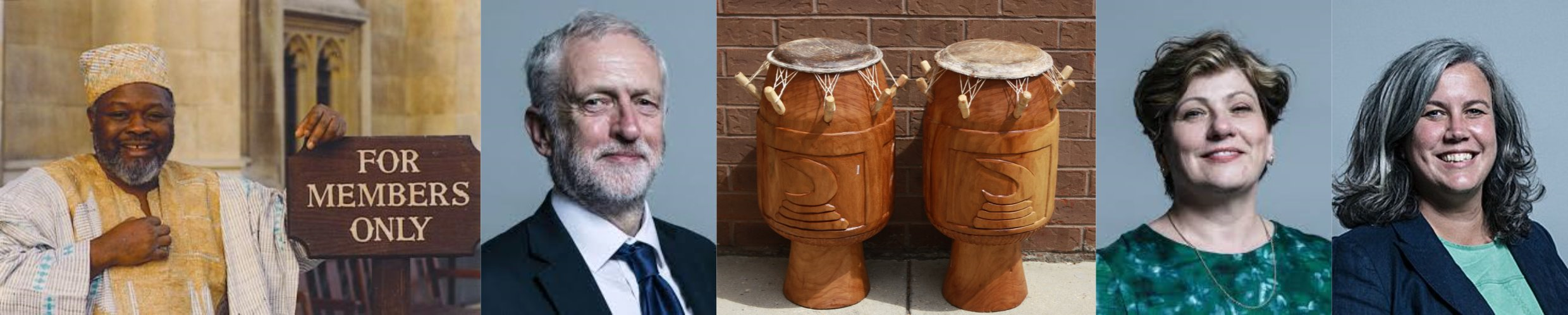
Following the 13th April 2018 news report on the front page of the Times Newspaper: ‘PM should apologise to ex-colonies says Labour’, it would appear as if the Labour Party is now taking steps towards listening to Afrikan voices for reparatory justice. It is only now since the passing of the late Bernie Grant MP that Labour is thinking of hearing Afrikan voices like his on our intergenerational struggle for reparatory justice.

Within 24 hours of the 11 April 2018 letter from Esther Stanford-Xosei being sent to Heidi Alexander MP and also made available to the office of the Rt Hon Jeremy Corbyn MP, leader of the Labour Party, the Shadow Foreign Secretary, Emily Thornberry, advocates in the House Magazine that Prime Minister Theresa May should use the forthcoming Commonwealth Heads of Government Meeting to apologise for the UK’s historic wrongs. Emily Thornberry also states that, if Labour form the next government in Britain, they will ensure that promoting and engaging with the Commonwealth is one of their top foreign policy priorities. In Esther Stanford-Xosei’s letter to Heidi Alexander she states:

“The fact that BREXIT is making it necessary for the UK Government to seek to strengthen its Commonwealth links in the aftermath of the BREXIT vote raises questions pertinent to Afrikan Reparatory Justice. Among such questions, for example, is the one about what type of relationship is Britain seeking to strengthen with Afrikan and Caribbean countries of the Commonwealth when the existing relationship is not only a product of the crimes of the past, but also fortifies present wrongs of the Maangamizi? So much is this the reality, that in the opinion of the constituencies of the ISMAR to which I belong, this relationship can only be transformed to ensure justice for all, by measures of reparations that will enable Afrikans and people of Afrikan heritage to equitably participate in re-ordering the war-begotten, unequal and unfair system of international relations that continues to be imposed, with manly Euro-American imperial might, upon the globe today.”

It would appear that Emily Thornberry is in her article also providing an answer to the above question that has been posed, in various arenas, by SMWeCGEC and some other formations of the International Social Movement for Afrikan Reparations (ISMAR) when she states:

“…we see our Commonwealth cousins [not] just as potential trading partners, but [because] we see them as full and equal partners in all of the challenges faced by the world and by each of our nations, from climate change and terrorism to the fight for gender equality.”

We in the SMWeCGEC are of the view that the above comment on behalf of the Labour Party demonstrates that they can be influenced to advance steps towards better listening to the case being made for holistic reparations by authentic Afrikan Heritage Community voices in and beyond the UK who are involved in building the ISMAR. However, this realisation should, under no circumstances. make campaigners for Afrikan reparations lower our guard about critically engaging with the Labour Party and the wider Labour Movement on what repairs ought to mean, so as to enable us make gains of true reparatory justice.

That is why we should be mindful and seek to ensure that the Labour Party is not made, by ‘BAME’ gate-keeping apparatchiks and other sections still clinging to its old ways of misusing the bureaucratic party machinery, to distort the legitimate measures of redress that oppressed communities influence it to address by revising them, sometimes even to the point of outright deformation; so that at the stages of policy-formulation and implementation, they become mere white-washing tokenistic gimmicks which tinker Afriphobically with vital concerns of particularly Afrikan Heritage Communities; thereby robbing us of the agency that is vitally necessary for us to do for ourselves the true reparatory justice we are seeking.

So let us keep knocking at the door of publicly elected officials as those seeking such offices will come knocking on our doors in the coming weeks soliciting our votes. We must ensure that we use our votes wisely to make candidates we may be inclined to vote for support our Afrikan Heritage Communities strategic interests and concerns; top-most on the agenda should be their support for Afrikan Reparatory Justice and their concrete action on the ‘Stop the Maangamizi!’ Postcard demands.


In Service

‘Stop the Maangamizi: We Charge Genocide/Ecocide!’ Campaign International Steering Committee Spearhead Team (ISC-SMWeCGEC)


Posted in AFRIKAN HELLACAUST, AFRIKAN RESISTANCE, ALL PARTY PARLIAMENTARY COMMISSION OF INQUIRY (APPCITARJ), INTERNATIONAL SOCIAL MOVEMENT FOR AFRIKAN REPARATIONS, ISMAR, MAANGAMIZI RESISTANCE, MAANGAMIZI RESISTORS, REPARATIONS, Reparatory Justice, SMWeCGEC, STOP THE MAANGAMIZI PETITION, THE 2018 AFRIKAN EMANCIPATION DAY REPARATIONS MARCH, Uncategorized | Tagged Afrika, Afrikan Heritage Communities, Afrikan Vote, Afriphobia, AHC-NSD, Apartheid, Apology of Substance, BAME, BAME Labour, Bernie Grant, BlackVotingCanonFodderNoMore!, British Colonialism, British Empire, British Government, CHOGM 2018, Commonwealth, Ecocide, Genocide, Geopolitics, Grassroots lobbying, Houses of Parliament, ISMAR, ISMAR-Building, Labour Movement, Labour Party, Lobbying, Nothing About Us Without Us!, People Power, PRIM, REPARATIONS, Social Movement, Tax Fraud | Leave a comment

UBUNTUKGOTLA – PEOPLES INTERNATIONAL TRIBUNAL FOR GLOBAL JUSTICE (Ubuntukgotla-PITGJ)

Posted on January 31, 2016 by STOP THE MAANGAMIZI

This article was revised on 29/06/18

Kofi Mawuli Klu 2222 (2)

vintage-calligraphic-elements-1nyoWZ-clipart

“The use of law as one of the most important instruments of our Afrikan struggle for reparations, indeed the need to locate our claim to restitution for the damages caused by gross violations of Afrikan sovereignty must raise immediately for us the essential questions of whose Framework, whose Law and whose Justice“

Kofi Mawuli Klu ‘Charting an Afrikan self-Determined Path of Legal Struggle for Reparations’, A draft paper for presentation to the 11th December 1993 Birmingham Working Conference of the Africa Reparations Movement, UK, 1993

vintage-calligraphic-elements-1nyoWZ-clipart

In the above paper, presented at the African Reparations Movement conference launch in the early 1990’s as a contribution to reparations-movement-building and movement-lawyering, jurisconsult Kofi Mawuli Klu advocates the need for Afrikan people to chart our own self-determined path of legal struggle to enforce and secure reparations. However, this requires decolonisation and repair of the law, legal system and processes. Ahead of his time, Klu asserted the self-rehabilitation and healing in a Fanonian sense that comes about through Afrikans exercising agency in the shaping, making and implementation of international law. This model has subsequently been referred to as international law from below by various legal scholars. Klu affirms seven principles which should be followed in charting an Afrikan self-determined path of legal struggle for reparations. These include:

  1. Demystification of the law.
  2. Developing legal creativity and creativity in applying what has been referred to as the ‘legal imagination‘.
  3. Afrikan popular democratic involvement in the law-making process.
  4. Recognition of the criminal injustice of enslavement, colonisation and neo-colonisation from the perspective of the legal consciousness of Afrikan people.*
  5. Judging the crimes and wrongs of enslavement in accordance with Afrikan law.
  6. Promoting mass adjudication of the Afrikan and other indigenous peoples cases for reparations through grassroots benches of an International Peoples Tribunal on Crimes Against Humanity.
  7. Developing international legal strategies on the formulation and prosecution of the Afrikan case for reparations.

vintage-calligraphic-elements-1nyoWZ-clipart

*Legal Consciousness is the sum of views and ideas expressing the attitude of a group or people toward law, legality, and justice and their concept of what is lawful and unlawful. Legal Consciousness therefore traces the ways in which law is experienced and interpreted by specific individuals and groups as they engage, avoid, or resist the law and legal meanings. Legal consciousness also entails the process by which a group or people concretize their political goals and demands and the means by which they try to give them universal force in the form of laws and policy. It follows that legal consciousness is a form of social consciousness and closely related to political consciousness.

vintage-calligraphic-elements-1nyoWZ-clipart

Building on this unrivaled foresight, the ‘Stop the Maangamizi: We Charge Genocide/Ecocide‘ Petition concludes by stating that it “will also galvanise grassroots work towards establishing glocal sittings of the Ubuntukgotla -Peoples International Tribunal for Global Justice (Ubuntukgotla-PITGJ) as part of a series of actions which will put a full stop, by way of holistic and transformative reparations, to all acts of Genocide/Ecocide against Afrikan people.”

What is an International Peoples’ Tribunal?

An international peoples tribunal is a process initiated by communities and/or civil society groupings which seeks to establish whether a state, international organisation, corporation, or less frequently specified individuals have committed breaches of international law or of another body of law or norms, (such as national law, Afrikan law, indigenous law of peoples’ law); which involves the presentation of evidence and arguments to a body of  people deemed competent to adjudicate on relevant issues in the best interests of the communities themselves, nations or humanity as whole. In light of documentary  and other forms of evidence presented to  tribunal members in formal proceedings, it presents a reasoned set of findings based on an evaluation of such evidence and they can also pass judgements. There is however considerable variation in  in the emphasis and practice of such tribunals which are also described in various terms such as a people’s tribunal, people’s hearing, or  tribunal of conscience.

Seizing back Afrikan people’s power to define, make, shape and advocate for legal strategies and processes in our own best interests and in accordance with Afrikan forms of law and jurisprudence, the term Ubuntukgotla has been chosen to give culturally competent expression to the increasingly popular notion of an international people’s tribunal.

The Ubuntukgotla–PITGJ is a court of peoples humanity interconnectedness. The term is comprised of the Afrikan terms ubuntu and kgotla. A Kgotla is a Tswana traditional institution of participatory democracy, i.e. peoples assembly or court in Botswana which has a number of functions including:

(1) enabling public debate and consultation on policy and legislation;

(2) being a judicial institution in which cases are heard providing access to justice;

(3) soliciting views from the community on government actions and decisions or those of any other interest group; and

(4) facilitating the means to come to an agreement or key issues pertaining to the health and well-being of the community.

The term ubuntu which translates as: “I am because of who we are” is a concept from the Southern Afrikan region which means literally “human-ness”, and is often understood to mean”humanity towards others”. It is also considered, in a more philosophical sense, to mean “the belief in a universal bond of sharing that connects all humanity. In Southern Afrika, ubuntu has come to be used as a term for a kind of humanist philosophy, ethic or ideology, also known as Ubuntuism or Hunhuism propagated in the re-Afrikanisation process of these countries during the 1980s and 1990s.

The Ubuntukgotla–PITGJ is being developed as a site of an activist ‘doing of law’ which also includes knowledge-production and praxis on making, enforcing and implementing just law. Although like other peoples tribunals, it may be perceived as a deviant or even illegitimate ‘institution’ within the institutional landscape of dominant forms of law.

UBUNTUKGOTLA

Civil society (peoples’) tribunals initiated by citizens of conscience and oppressed groups have emerged to fill the normative vacuum created by the gap between the ideals, of justice and access to justice.  In this regard, people’s tribunals are seen as more effectively responding to the failures, exclusions and mendacity of existing domestic and international state and state sponsored institutions apparatuses to provide effective redress for human, peoples and Mother Earth right violations and atrocities committed, despite having formal power and jurisdiction to do so. They do so by: asserting the rights of peoples (and people) to articulate law that is not dependent on endorsements by states for its legitimacy; as well as utilising, interpreting and developing international and other forms of law.

People’s tribunals can critique the content of existing international law where such law perpetuates oppressive power relations. Oftentimes, peoples’ tribunals have resulted in a greater democratisation of international law-making from below and provided additional accountability mechanisms for the exercise of and abuses/misuse of power by states and international organisations. They have been used by many different peoples and special interest groups.

For example, in 1993 the indigenous people of Hawaii developed the Ka Ho‘okolokolonui Kānaka Maoli-Peoples’ International Tribunal Hawai‘i in which the United States and the state of Hawai‘i were put on trial for crimes against the original people of Hawai‘i, the Kānaka Maoli. A video has been made of this tribunal which we recommend you view. It can be found here.

The Ka Ho‘okolokolonui Kānaka Maoli Tribunal features a panel of international judges that was convened to hear the charges, which included genocide, ethnocide, the taking of their sovereign government and the destruction of their environment. The Tribunal judges and prosecutor/advocates came from Japan, Aotearoa (New Zealand), Jordan, Korea, Afrika, the U.S., Puerto Rico and the Cree, Cherokee, Shawnee and Creek nations. It traveled to five islands to see and hear firsthand the words and personal experiences of witnesses, many of whom faced arrest and eviction from native lands. At the end of ten days, the Tribunal called upon the United States and the world to recognise the fact that Hawaian sovereignty has never been extinguished. It also called for the restoration and return of all lands to which Kānaka Maoli have a claim.

Peoples’ tribunals are formed to take up a variety of cases that may fall under the following, sometimes overlapping, categories:

  • Violations by the state of the rights of citizens or residents of that state, including violations of the rights of peoples within that state;
  • Claims of the denial of the right to self-determination;
  • The treatment by regions or groups of states of particular groups of people;
  • Historical injustices such as conquest, enslavement, colonisation and other thematic issues;
  • The role of international organisations, especially international financial institutions, in the regulation of the international and national economic and social systems;
  • The interaction between state law and the violations of the rights of persons by ‘private’ individuals (including corporations) and the responsibility of business, especially transnational corporations, in the violations of human rights.

In most cases, peoples’ tribunals arraign individual states, international organisations, corporations or  combination of these. In some cases peoples’ tribunals ‘put on trial’ named individuals.

See ‘Peoples International Tribunals and International Law‘, edited by Andrew Byrnes, and Gabrielle Simm, Cambridge University Press, (2018) pp. 16-17 for more info.

How will the Ubuntukgotla-PITGJ operate?

As a people’s tribunal, the Ubuntukgotla-PITGJ derives its power from the voices of Afrikan heritage community victims and survivors, and also those of national and international civil societies with relevant knowledge and expertise to establishing and providing evidence on the concrete manifestations of the Maangamizi including the genocide of Afrikan heritage communities. The Ubuntukgotla-PITGJ will have the format of a formal human rights court,however, it is not a criminal court in the sense that individual persons are indicted. In the first instance, the prosecutors will indict the state and institutions of the UK, based on the proofs presented of responsibility for the widespread and systematic crimes against humanity committed in the current phase of the Maangamizi. It is expected that, as support for and the influence of the U-PITGJ grows, it will be also be able to build the capacity to address other instances of genocidal crimes that have been perpetrated on other peoples who have experienced European settler colonialism, conquest and invasion. This is why it is important to recognise the interconnections between the International Social Movement for Afrikan Reparations (ISMAR) and the Peoples Reparations International Movement (PRIM).

The proof presented will consist of documents, audiovisual materials, statements of witnesses and other recognised legal means. The power of the Ubuntukgotla-PITGJ will be to examine the evidence, develop an accurate historical and scientific record and apply principles of international law to the facts as found. It is expected that the chosen judges will produce a verdict based on the material presented and call upon the Government of the UK to realise that so far they have failed to take legal and moral responsibility for the victims. This verdict can also be used as a basis for an United Nations resolution and other actions on these crimes.

How can the Ubuntukgotla-PITGJ contribute to Afrikan people’s empowerment and healing?

  1. By taking as its primary source the voices, experiences, aspirations, demands and visions for reparatory social change of the peoples’ and communities of the violated themselves, from which all other specialist support groups – lawyers, the media, politicians, institutionalised academics, economists, and others – may build upon by utilising their specialist languages for resistance in diverse sites of public judgement.
  2. Through establishing informal but public and ‘judicial’ processes to deal with atrocities committed by States resulting in the moral power and authority of informal quasi judicial processes.
  3. Through giving effect to Afrikan peoples’ voices of judgement, developing and disseminating the often silenced articulations of Afrikan people’s legality as part of a legal strategy of resistance whose contribution is to advance, through the specific language of law, the broader struggles against the violence of the Maangamizi today.

Volunteer researchers required to contribute to a people’s history-making process of securing reparatory justice!

black-female-lawyer-pf-378x334

If you are a law or politics student or have other relevant skills and experience and you are interested in using your knowledge and skills to support Afrikan people’s struggle for holistic redress and secure Afrikan Reparatory Justice, you can become a volunteer researcher. We are looking for volunteer researchers who would like to join the SMWeCGEC research team in preparations for establishing the APPCITARJ and the Ubuntukgotla-PITGJ.

If you would like to get involved, please contact: Afrikan Reparations Transnational Community of Practice (ARTCoP) on artcop.edu@gmail.com or PARCOE on info@parcoe.com or 07751143043.

Support from movement lawyers is also welcome!

If you are a social justice advocate, legal practitioner or cause lawyer and would like to offer pro-bono advice or support to this community-led initiative; are willing to build equitable relationships with people and organisations challenging historical and contemporary injustice; and are prepared to respect the approach of social justice/community lawyering,*please also get in touch as above.

*Community lawyering has many variants: collaborative lawyering, community, lay lawyering, cause lawyering, social justice lawyering, political lawyering, critical lawyering, rebellious lawyering, movement-lawyering etc. The common thread among them is that the clients, not the lawyers, play a central role in resolving the issues that have an impact on their opportunities to succeed. It is: lawyering that is community-located, community-collaborative, community-directed and based on the collaboration of lawyers, clients and communities in which they live; and transforming law and lawyering to address the inequalities experienced by subordinated and underserved groups. The legal system in the UK and other Westernised countries is very individualistic. It tends to atomise and depoliticise disputes, which work against a community organising model. Furthermore, the facilitation of individual rights has not benefited the long-term needs of communities, especially impoverished communities, especially where such impoverishment is as a result of intergenerational injustice. The Sargent Shriver National Centre on Poverty Law (USA) defines “community lawyering” as a “process through which advocates contribute their legal knowledge and skills to support initiatives that are identified by the community and enhance the community’s power.”

Similar to the different schools of thought in community organising, community lawyering has many different strains. However, what sets lawyers who adopt community lawyering apart from each other boils down to their answers to the following three questions: Who do you work with? What do you do for them? And how do you work together? Similar to community organising, the answers to these questions vary depending on the political orientation of the lawyer and the theory of social change they ascribe to. By combining legal recourse and community organising, it is possible to utilise “community lawyering” as a social change strategy.” This approach engages lawyers who are prepared to de-emphasise litigation as the primary tool for advancing social justice. Instead, community lawyering encourages such lawyers, in collaboration with communities, their groups, activists and organisers, to critically and creatively examine non-traditional forms of advocacy such as facilitative leadership, institution-building, community organising, collective action and other grassroots actions including strategic litigation, media events, community education workshops and public demonstrations. This is done as a way of addressing the legal and non-legal problems of their clients.

Community lawyering can also be described as a more participatory process that fosters collaboration between lawyers and their community (group) clients, rather than fostering—if not perpetuating—the dependency that most clients have on their lawyers to solve their legal problems in a conventional lawyer-client relationship. 
The role of a “community lawyer” entails working in partnership with one’s community clients and utilises multiple forms of advocacy, to address their individual as well as systemic problems. Community lawyering practitioners recognise that their clients are partners—not just in name—but in leadership, control and decision-making. Through collaboration, lawyers can support Afrikan Heritage Community groups in building their own resources and community capacities to advance their own interests in effecting and securing reparatory justice in a self-determined and self-directed manner.

Another critical component of community lawyering is creating race-conscious cultural competence—a set of beliefs, values, and skills built into a structure that enables one to negotiate cross-cultural situations in a manner that does not force one to assimilate to the other. The goal of race-conscious community lawyering is to support lasting structural and systemic changes that will bring about holistic reparatory justice for racialised groups.

Movement-lawyering is a specific form of community lawyering but the lawyers work in collaboration with grassroots movements. This lawyering recognises that community members and organisers have expertise that should be valued. In fact, movement lawyers should also be engaged in a process of political study and growth collectively with movement-organisers that are aligned with particular community struggles. Here are some tips for lawyers that are aligned with movements and are particularly relevant to how lawyers can best support communities, their activists and organisers who are engaged in reparatory justice struggles as part of the ISMAR.

Posted in AFRIKAN HELLACAUST, INTERNATIONAL SOCIAL MOVEMENT FOR AFRIKAN REPARATIONS, ISMAR, MAANGAMIZI RESISTANCE, PREFIGURATIVE POLITICS, PRIM, REPARATIONS, STOP THE MAANGAMIZI CAMPAIGN, STOP THE MAANGAMIZI PETITION, THE 2018 AFRIKAN EMANCIPATION DAY REPARATIONS MARCH, UBUNTUKGOTLA/PITGJ | Tagged Afrika, Afrikan law, Apartheid, British Empire, Cause Lawyering, Ecocide, Epistemic Justice, Extra-Legal Activism, Genocide, Geopolitics, Global Justice, Ho‘okolokolonui Kānaka Maoli, International Law, International Law From Below, ISMAR, Kgotla, Law & Power, Law From Below, Legal Consciousness, Legal Imagination, Modern Day Slavery, Movement Intellectuals, Movement Lawyering, Neocolonialism, Pan-Afrikan Reparations 4 Global Justice, People Power, Peoples Law, Peoples Tribunal, Repairing the Law, REPARATIONS, Reparatory Justice, Resisting Unjust Law, Social Justice Lawyering | Leave a comment

Post navigation

Newer posts →

Recent Posts

  • SMWeCGEC MP Letter Template Guidance
  • MET brokers partnerships in Belize to advance reparations education & campaigning initiatives
  • Statement Issued by the Afrikan Emancipation Day Reparations March Committee & The Stop The Maangamizi: We Charge Genocide/Ecocide Campaign regarding Co-Organising the 1st Mosiah 2024
  • Theme for the PARRG 2023
  • SMWeCGEC & AEDRMC Key Achievements in ISMAR & PRIM-building

Recent Comments

Kitchen Kara's avatarKitchen Kara on METRO NEWSPAPER ADVERT 21, 25…
Enita Barrett's avatarEnita Barrett on MET brokers partnerships in Be…
Adé Olaiya, M.A.'s avatarAdé Olaiya, M.A. on Ourstory continues to be made:…
Morgan Moss, JR's avatarMorgan Moss, JR on Ourstory continues to be made:…
Morgan Moss, JR's avatarMorgan Moss, JR on Response to 2nd written questi…

Archives

  • March 2025
  • August 2024
  • June 2024
  • July 2023
  • June 2022
  • February 2022
  • December 2021
  • November 2021
  • October 2021
  • September 2021
  • June 2021
  • May 2021
  • March 2021
  • February 2021
  • January 2021
  • December 2020
  • November 2020
  • October 2020
  • September 2020
  • August 2020
  • July 2020
  • June 2020
  • December 2019
  • November 2019
  • August 2019
  • June 2019
  • May 2019
  • March 2019
  • February 2019
  • January 2019
  • December 2018
  • November 2018
  • October 2018
  • August 2018
  • July 2018
  • April 2018
  • March 2018
  • February 2018
  • December 2017
  • November 2017
  • October 2017
  • September 2017
  • August 2017
  • July 2017
  • June 2017
  • May 2017
  • March 2017
  • February 2017
  • December 2016
  • November 2016
  • September 2016
  • August 2016
  • July 2016
  • May 2016
  • April 2016
  • March 2016
  • January 2016
  • October 2015

Categories

  • 2019 AFRIKAN EMANCIPATION DAY REPARATIONS MARCH
  • AEDRMC
  • AFRIKAN HELLACAUST
  • AFRIKAN RESISTANCE
  • ALL PARTY PARLIAMENTARY COMMISSION OF INQUIRY (APPCITARJ)
  • APPGAR
  • Ecocide
  • EVENTS/TRAINING
  • Extinction Rebellion
  • I AM WITNESS
  • INTERNATIONAL SOCIAL MOVEMENT FOR AFRIKAN REPARATIONS
  • ISMAR
  • Jerry Amokwandoh
  • MAANGAMIZI RESISTANCE
  • MAANGAMIZI RESISTERS
  • MAANGAMIZI RESISTORS
  • PALM
  • Pan-Afrikan Liberation Movement
  • PARRG 2022
  • PARRG 2023
  • POPSAR
  • PREFIGURATIVE POLITICS
  • PRIM
  • REPARATIONS
  • Reparations Rebellion
  • REPARATIONS REBELLION 2020
  • REPARATIONS REBELLION GROUNDINGS
  • Reparatory Justice
  • SMWeCGEC
  • SMWeCGEC CAMPAIGNING TOOLS
  • STOP ECOCIDE
  • STOP THE MAANGAMIZI CAMPAIGN
  • STOP THE MAANGAMIZI PETITION
  • THE 2016 1ST AUGUST AFRIKAN EMANCIPATION DAY REPARATIONS MARCH
  • THE 2017 AFRIKAN EMANCIPATION DAY REPARATIONS MARCH
  • THE 2018 AFRIKAN EMANCIPATION DAY REPARATIONS MARCH
  • UBUNTUKGOTLA/PITGJ
  • Uncategorized
  • YOUNG PEOPLE/ GLOBAL MAJORITY V UK GOV

Meta

  • Create account
  • Log in
  • Entries feed
  • Comments feed
  • WordPress.com
Blog at WordPress.com.
  • Subscribe Subscribed
    • stopthemaangamizi.com
    • Join 49 other subscribers
    • Already have a WordPress.com account? Log in now.
    • stopthemaangamizi.com
    • Subscribe Subscribed
    • Sign up
    • Log in
    • Report this content
    • View site in Reader
    • Manage subscriptions
    • Collapse this bar
 

Loading Comments...