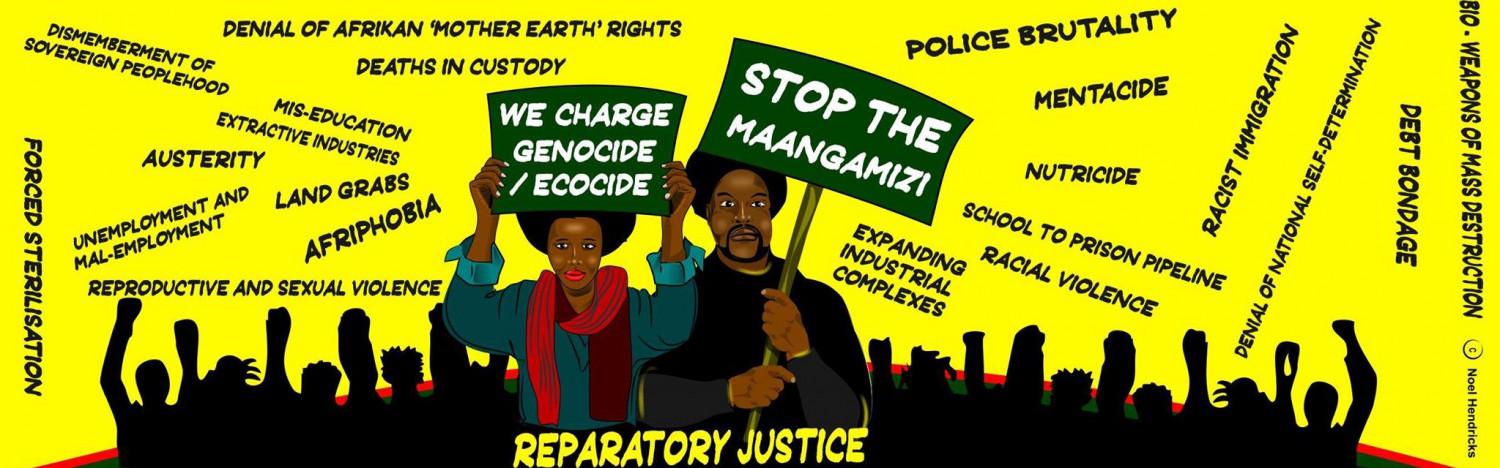
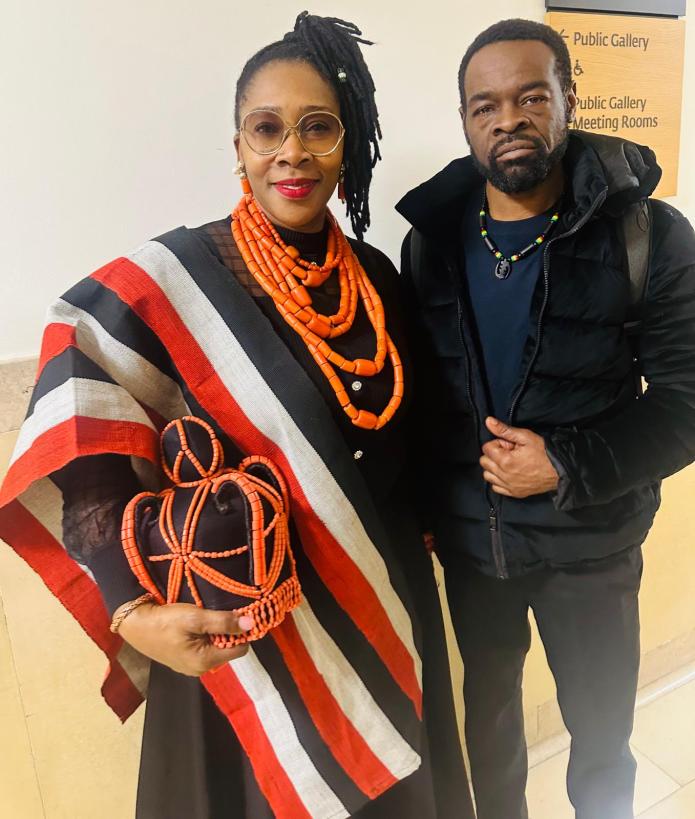
On Wednesday 25 November 2026, Manchester City Council passed a motion supporting the establishment of a Commission of Inquiry for Truth and Reparatory Justice (CITARJ). In the city that hosted the 5th Pan-African Congress in 1945, the Council has put on record its support for a demand that formations of the International Social Movement for Afrikan Reparations (ISMAR) have pursued across generations, and that Afrikan heritage communities within and beyond Britain take forward today. Together, we did it!
▶ Watch the debate: https://www.youtube.com/watch?v=5OH6zJWXToI
How we got here
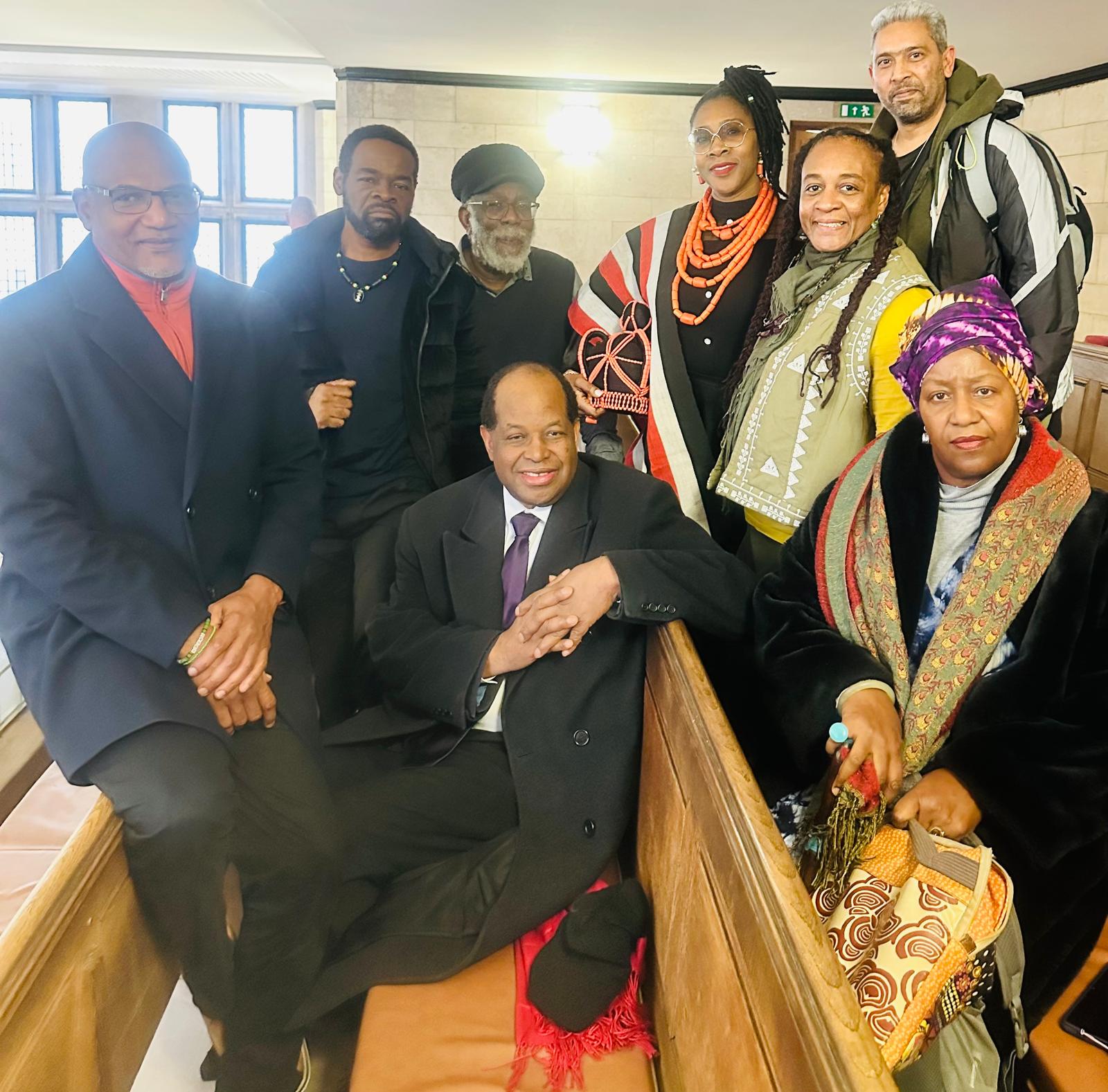
This motion began with the people. Brother Daniel Kofi Davidson, who represents the Stop the Maangamizi Campaign in Manchester and chairs the Manchester Reparatory Justice Forum, made the introductions, brokering the first conversation with Councillor Thirza Amina Asanga-Rae, and went on to communicate the Stop the Maangamizi Campaign’s perspectives and positions as the work developed. Councillor Thirza, Green Party councillor for Moss Side, took up the call for the CITARJ. Councillor Amna Abdullatif, who represents Ardwick and is Co-Deputy Leader of the Green Party Group, seconded the motion, with the support of Green Party Councillors Asma Alam, Astrid Johnson, Grace Tudor-Worrall and Sarah Wakefield[1]. Councillor Thirza and Councillor Amna shaped the motion with the Coordinator-General of the Stop the Maangamizi Campaign, Esther Xosei. In moving it, Councillor Thirza brought that long-standing demand of the ISMAR before the Council. Brother Charles Crichlow supported the work throughout. On the day of the debate, members of Afrikan and Afrikan Caribbean heritage communities living in Manchester came to the Town Hall and stayed until the vote. The Labour group, which holds the majority on the Council, moved amendments, which Councillor Thirza accepted, and the Council passed the amended motion[2].
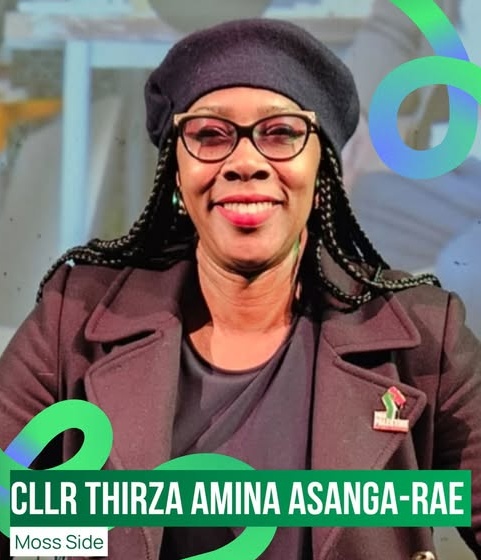
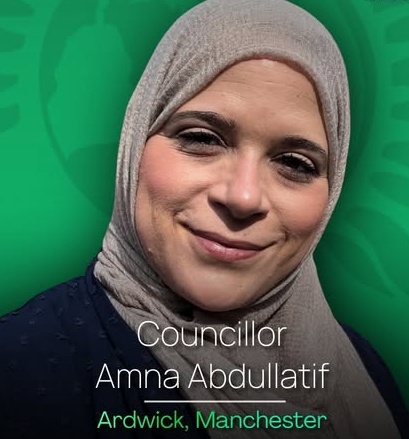
▶ Before the debate, Councillor Thirza and the Stop the Maangamizi Campaign made a video to promote the motion. Watch it here: https://stopthemaangamizi.com/wp-content/uploads/2026/11/whatsapp-video-2026-11-22-at-16.42.45-1.mp4
What the motion commits the Council to
The motion, ‘Atonement, Reparatory Justice and Climate Justice for Africans and People of African Descent’ (Item 10), as passed, commits Manchester City Council:
-
to support the establishment of an All-Party Parliamentary Commission of Inquiry for Truth and Reparatory Justice through the All-Party Parliamentary Group (APPG) for Afrikan Reparations, and to call on the UK Government to support it “as the mechanism through which it can meet its obligation to provide a remedy and reparation”;
-
to ask the relevant Executive Member to explore establishing a Manchester Reparatory Justice Working Group, with “African and Caribbean community representatives”, reparations campaign formations such as the Stop the Maangamizi Campaign, historians, academics and cultural organisations;
-
to recommend that the Executive recognise Afriphobia, the specific form of racism directed at Afrikans, people of Afrikan heritage and all things Afrikan, in the Council’s equality work, and to work with Afrikan heritage communities on how it is defined, recorded and addressed;
-
to recognise the 5th Pan-African Congress in future educational and commemorative work, and to document Manchester’s connections to enslavement and colonialism in the Town Hall visitor experience when it reopens.
In the motion as passed, the Council also notes that Afrikan heritage communities in Manchester hold the right to a remedy and reparation under international law, and believes that repair is to be defined by those who were harmed and that reparatory justice and climate justice are bound together. Belief 5 of the motion as passed also names Planet Repairs, the nexus of reparatory, environmental and cognitive justice.
In the chamber
Moving the motion, Councillor Thirza told the Council that “Manchester has led before and can lead again”. This city of sanctuary, she said, had stood with Afrikan struggles before: in 1788, when “a fifth of Manchester signed against the trafficking of enslaved Africans”, through the cotton workers of 1862, and in hosting the 5th Pan-African Congress in 1945. “African resistance and resilience drove the end of enslavement.” She reminded members that Manchester is a city of many histories, “each to be told in its own right”, and that “listening is the heart of representing a community”[3].
At the heart of her speech was love. “At a time of rising anti-Black racism and Afrophobia and hostility to migrants, love is the answer, not hate,” she said. “Love draws people together.” Quoting Professor Cornel West, she told the Council: “Justice is what love looks like in public. Passing this motion is a public act of love.” Supporting the motion, she said, shows people of African descent in Manchester “that their city stands with them”. She closed with the city’s motto, Concilio et Labore, “by wisdom and effort”, which she also gave in Hausa, her native tongue, as Da hikima da ƙoƙari. The motion, she said, asks for both: “wisdom to acknowledge the history, and effort to act together”[3].
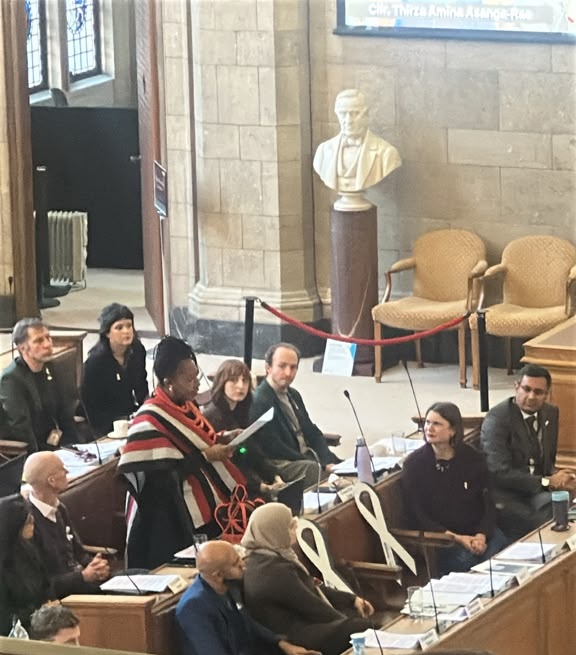
In her right of reply, speaking as “a Nigerian-born daughter and a child of the ancestors”, Councillor Thirza said she hoped the voices of the Afrikan community and of campaign groups such as the Stop the Maangamizi Campaign would be heard, and that silencing those voices “does not stop the work on reparations”. She closed with Maya Angelou: “still we rise”[4].
Seconding the motion, Councillor Amna spoke from conviction and from her own heritage. Libya, she told the Council, is part of her heritage story, a country she spent years living in. She recalled being taught the “Scramble for Africa” at school, and told the Council that when European leaders divided the continent in Berlin in 1884, “not a single African was in the room”. “What followed wasn’t a scramble,” she said. “It was an invasion.” In Libya, she said, Italian occupation forces drove more than 100,000 people into concentration camps and hanged the resistance leader Omar al-Mukhtar. The idea that “the civilised had a right, or even the duty, to rule over the rest”, she said, justified the killing, the enslavement and the theft, and “is still with us today”[5].
Councillor Amna reminded members that in March, 123 countries at the UN General Assembly recognised the trafficking and enslavement of Africans as the gravest crime against humanity, and that “our government abstained”. In August, she said, the UN Committee on the Elimination of Racial Discrimination (CERD) “set out what reparatory justice means and called for independent commissions with people of African descent at their heart”. Sorrow, and even an apology, she said, are “just the beginning and not an end”: repair means telling the truth, education, returning what was taken, and asking the communities who were harmed what repair looks like. “A history we can only love by refusing to look at it properly is not a history that we actually really understand.” She thanked the members of Afrikan heritage communities who had come to the Town Hall[5].
For the Labour group, Councillor Annette Wright moved the amendments. She opened by saying the Labour group proposed its amendments to the motion “not to dilute it”; what the amendments removed is set out below. She said their focus was what “we as Manchester City Council can do”, and pointed to work she said was already under way in the city’s museums, cathedral and Town Hall. She thanked Brother Daniel Kofi for a conversation with her at Hulme High Street Library, and told the story of her own ancestors, the Simister family, Manchester mill workers who went hungry and lost children during the cotton famine, and who attended meetings in support of President Lincoln, among them the meeting at the Free Trade Hall in 1862. Unlike our Afrikan ancestors held captive by enslavers, she said, “they had their liberty”, and “they wanted that freedom for other people”; her own history, she said, is “intertwined in generational memory with people whose families suffered wrongs much greater than mine ever did”. She told the Council that the Labour group would be “happy to put in place” the Working Group[6].
Seconding the amendments, Councillor Leslie Bell said that those who worked the fields “got absolutely nothing”, while enslavers were compensated, and that what followed was racism and a disadvantage “which continues to this day”. Councillor Bell said the motion “should bring some healing” and “should bring education”, and also said the motion as written had left out the Caribbean[7]. For the record, the motion as submitted by Councillor Thirza named the Caribbean throughout: it named the trafficking of Afrikans to the Caribbean and the Americas and the climate harm facing Caribbean countries, among them Jamaica, Haiti and Cuba, and it cited the Caribbean Community (CARICOM) Ten-Point Plan for Reparatory Justice[1].
Councillor Mahadi Hussein Sharif Mahamed, Labour councillor for Moss Side, opened by saying he was born in Somalia and is proud of his Afrikan heritage. He spoke of the impact of climate change he has seen on Afrikan communities on his visits to the continent, linking it to the history of colonialism and economic exploitation, and told the Council that historical accountability, reparatory justice and tackling present-day inequalities “are fundamentally connected”[8]. All three Labour speakers backed the amendments. Councillor Steven Hodgkiss of Reform UK spoke against the motion, arguing that the link between reparatory justice and climate justice is “a contested political argument”, and that support for a parliamentary commission is a matter for Parliament and not the City Council[9]. The Council decided otherwise: belief 5 of the motion as passed holds that reparatory justice and climate justice are bound together, and resolution 2 commits the Council to support the CITARJ.
Why this matters
The CITARJ would hear from those who were harmed, uncover what remains hidden as well as record what is already known, identify the harms that continue so that they can be stopped, and recommend the redress and repair each requires. Afrikan heritage communities have long been engaged in our own self-repair. Truth-seeking and truth-telling are necessary for justice, and the CITARJ is where the British state, nationally and locally, including councils such as Manchester City Council, begins to meet its obligation of repair.
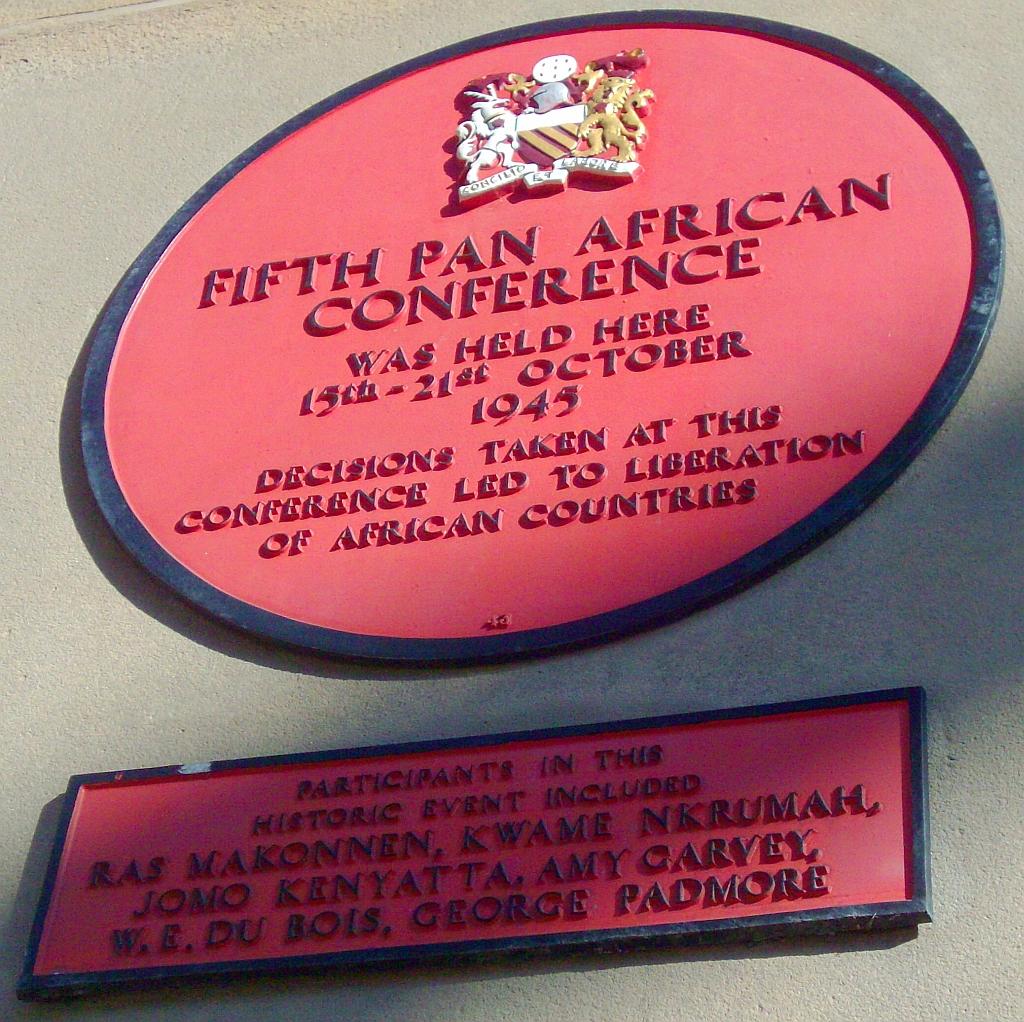
Manchester now joins Islington and Lambeth (2020) and Bristol (2021), whose atonement and reparations motions supported the call for the CITARJ. It does so as the city where, in October 1945, the 5th Pan-African Congress demanded an end to colonial rule and economic exploitation. The African Reparations Movement (ARM UK) took those demands forward in its Birmingham Declaration of 1994, which committed to ensuring ‘that Africa is restored to its rightful place at the centre of world politics’, and called on ‘all people of African origin in the Caribbean, Africa, Europe, the Americas and elsewhere to support the movement for reparations and join forces with a view to forming a strong united front capable of exposing, confronting and overcoming the psychological, economic and cultural harm inflicted upon us by peoples of European origin’[10].
▶ Read the Birmingham Declaration: https://stopthemaangamizi.com/wp-content/uploads/2026/11/1994_birmingham_declaration-2.pdf
The Maangamizi is named from the Kiswahili verb angamiza, to cause destruction, to utterly destroy. Professor Maulana Karenga asserted and promoted the term as the name for the Holocaust of Enslavement[11], the Stop the Maangamizi Campaign took it up, and the Maangamizi Educational Trust (MET) has developed it into the definition we use today: the ongoing system of deliberate and systematic destruction that states, corporations, institutions and families have perpetrated against Afrikan people through racialised chattel enslavement, wars of extermination and conquest, colonialism, neo-colonialism and present-day Afriphobia, encompassing genocide, ethnocide and ecocide against our personhood and peoplehood, our nationhood and culture, and our environments and ecosystems.
The call itself is long-standing. The ISMAR is the name we give today to a movement our ancestors began in their resistance to the Maangamizi, and within it the call for a commission of inquiry begins with Quobna Ottobah Cugoano’s demand in 1787[12]. In Britain, the Pan-Afrikan Reparations Coalition in Europe (PARCOE) originated the demand for the CITARJ in 2003, and the Stop the Maangamizi Campaign has championed it since. More than 25,000 people have signed the Stop the Maangamizi: We Charge Genocide/Ecocide petition, which recognises genocide and ecocide by the British state against Afrikan people worldwide. Its name follows the historic ‘We Charge Genocide’ petition presented to the United Nations in December 1951 by the Civil Rights Congress[13]. The call has since been taken up by the APPG for Afrikan Reparations, chaired by Bell Ribeiro-Addy MP, for which the Stop the Maangamizi Campaign/MET serves as co-secretariat, and the 2026 UK Reparations Conference called on the APPG to take the steps needed to establish the CITARJ[1].
What the amendments changed
The motion as passed differs from the motion as submitted. The Labour group’s amendments removed the invitation for the CITARJ, once established, to hold hearings in Manchester; the invitation to the Stop the Maangamizi Campaign and other Afrikan and Afrikan Caribbean heritage organisations to contribute to the work; and the commitment to report back to the Council within twelve months. They removed the motion’s references to the UN General Assembly resolution of March 2026 declaring the trafficking and racialised chattel enslavement of Afrikans the gravest crime against humanity, and to General Recommendation No. 40 of the UN Committee on the Elimination of Racial Discrimination. They cut the motion’s explanation of Planet Repairs as the need to repair holistically humanity’s relationship with, and inseparability from, the earth, environment and the pluriverse, beginning by stopping the extraction that continues today, and its recommendation that the Council take account of reparatory justice and Planet Repairs in its climate action and procurement. The letter the motion asks the Leader of the Council to send to the Prime Minister now asks about the dialogue on an apology and leaves out the CITARJ[2].
▶ Read the motion as submitted: https://stopthemaangamizi.com/wp-content/uploads/2026/11/1_original_motion_as_submitted.pdf
▶ Read the motion as passed: https://stopthemaangamizi.com/wp-content/uploads/2026/11/3_motion_as_passed_clean.pdf
Our thanks
We give thanks first to the Most High and to our ancestors, for this is an ancestral cause, begun in their resistance to the Maangamizi and taken forward by us today. We in the Stop the Maangamizi Campaign thank the Green Party group, Councillor Thirza and Councillor Amna, supported by Brother Charles, for working with us in a true spirit of partnership: warm, open and encouraging. From the first conversation to the final vote, we met, discussed, strategised, conferred and debriefed together. They listened, took our suggestions on board and recognised the knowledge we brought. They walked their talk on the right of Afrikan heritage communities to participate in, and to shape, reparations processes. We worked together in the way of Afrikan heritage communities, each recognising the other’s role and positionality. This way of working was an example of the good practice set out in the Principles of Participation of the International Network of Scholars and Activists for Afrikan Reparations (INOSAAR)[14] and in The Hague RootsSynergy Declaration on Participatory Reparatory Justice: no reparations decisions without authentic community participation[15]. The love Councillor Thirza spoke of in the chamber is what this process built among us: community, camaraderie and familyhood, what Mwalimu Julius Nyerere called Ujamaa[16]. We are proud of both councillors for their contribution to our people’s storymaking, to Ourstory. We also thank Councillors Asma, Astrid, Grace and Sarah, who supported the motion, and the Afrikan heritage communities in Manchester and beyond whose organising made this vote possible.
▶ Read the INOSAAR Principles of Participation: https://www.inosaar.llc.ed.ac.uk/en/principles-participation
▶ Read The Hague RootsSynergy Declaration on Participatory Reparatory Justice: https://stopthemaangamizi.com/wp-content/uploads/2026/11/the-hague-final-declaration.pdf
What comes next: this is about each and every one of us
The CITARJ is an obligation on the British state, and the Stop the Maangamizi Campaign continues to press for it. Many of the measures that would have ensured the Council recognised and acted on the rights of Afrikan heritage communities were stripped from the motion: the invitation to the CITARJ to hold hearings in Manchester, the invitation to the Stop the Maangamizi Campaign and Afrikan and Afrikan Caribbean heritage organisations to contribute to the work, the commitment to report back within twelve months, and the recommendation to take account of reparatory justice and Planet Repairs in the Council’s climate action and procurement. Securing them now depends on organising.
In moving the amendments, Councillor Wright told the Council that the Labour group would be “happy to put in place” the Manchester Reparatory Justice Working Group[6], the group the motion asks the Council to explore, bringing together “African and Caribbean community representatives”, reparations campaign formations such as the Stop the Maangamizi Campaign, historians, academics and cultural organisations. The campaigning, lobbying and organising will come from Afrikan heritage communities in Manchester, with the Stop the Maangamizi Campaign, represented in Manchester by Brother Daniel Kofi, alongside them, so that the Labour-led Council discharges that commitment and puts in place the measures the amendments removed. We will work in partnership with the Green Party councillors to hold the Labour group to account.
In 1993, the first Abuja Pan-African Conference on Reparations declared in the Abuja Proclamation:
“Convinced that the pursuit of reparations by the African peoples in the continent and in the Diaspora will itself be a learning experience in self-discovery and in uniting experience politically and psychologically.”[17]
Each of us can take that pursuit forward now: contact your councillors and your MP about the CITARJ, ask your own council to pass a motion, and share the video of the debate.
There is a Haitian saying from our Caribbean heritage: “Piti piti zwazo fè nich li”, “Little by little, the bird builds its nest”[18]. On 25 November 2026, together, we added another twig to that nest in Manchester.
To support the call for the CITARJ, sign the Stop the Maangamizi petition and find out more at stopthemaangamizi.com/citarj.
References
[1] Manchester City Council, Notice of Motion, ‘Atonement, Reparatory Justice and Climate Justice for Africans and People of African Descent’, Council, 25 November 2026, Item 10. https://democracy.manchester.gov.uk/mgAi.aspx?ID=20936
[2] Labour group amendment to Item 10, proposed by Councillor Annette Wright and seconded by Councillor Leslie Bell, circulated 24 November 2026.
[3] Councillor Thirza Amina Asanga-Rae, speech moving Item 10, 25 November 2026 (webcast of the debate, https://www.youtube.com/watch?v=5OH6zJWXToI). Professor Cornel West’s words appear in ‘Brother West: Living and Loving Out Loud’ (2009), p. 232.
[4] Councillor Thirza Amina Asanga-Rae, right of reply, 25 November 2026 (webcast of the debate, https://www.youtube.com/watch?v=5OH6zJWXToI). Maya Angelou, ‘Still I Rise’, in ‘And Still I Rise’ (1978).
[5] Councillor Amna Abdullatif, speech seconding Item 10, 25 November 2026 (webcast of the debate, https://www.youtube.com/watch?v=5OH6zJWXToI).
[6] Councillor Annette Wright, speech moving the Labour group’s amendment, 25 November 2026 (webcast of the debate, https://www.youtube.com/watch?v=5OH6zJWXToI).
[7] Councillor Leslie Bell, speech seconding the Labour group’s amendment, 25 November 2026 (webcast of the debate, https://www.youtube.com/watch?v=5OH6zJWXToI).
[8] Councillor Mahadi Hussein Sharif Mahamed, speech in the debate on Item 10, 25 November 2026 (webcast of the debate, https://www.youtube.com/watch?v=5OH6zJWXToI).
[9] Councillor Steven Hodgkiss, speech in the debate on Item 10, 25 November 2026 (webcast of the debate, https://www.youtube.com/watch?v=5OH6zJWXToI).
[10] African Reparations Movement (UK), ‘The Birmingham Declaration’, 1994. https://stopthemaangamizi.com/wp-content/uploads/2026/11/1994_birmingham_declaration-2.pdf
[11] Maulana Karenga, ‘The Ethics of Reparations: Engaging the Holocaust of Enslavement’, paper presented at the National Coalition of Blacks for Reparations in America (N’COBRA) Convention, Baton Rouge, Louisiana, 22–23 June 2001. https://us-organization.org/position/erehe.html
[12] Quobna Ottobah Cugoano, ‘Thoughts and Sentiments on the Evil and Wicked Traffic of the Slavery and Commerce of the Human Species’, London, 1787; reissued by Cambridge University Press, 2013. https://cambridge.org/core/books/thoughts-and-sentiments-on-the-evil-and-wicked-traffic-of-the-slavery-and-commerce-of-the-human-species/D33DDDF76566E1FFE2D5CF1C9E0D1392
[13] Civil Rights Congress, ‘We Charge Genocide: The Crime of Government Against the Negro People’, petition to the United Nations, December 1951; see Radical Americas, UCL Press. https://journals.uclpress.co.uk/ra/article/pubid/RA-3-9
[14] International Network of Scholars and Activists for Afrikan Reparations (INOSAAR), ‘Principles of Participation’, 2021. https://www.inosaar.llc.ed.ac.uk/en/principles-participation
[15] ‘RootsSynergy Declaration on Participatory Reparatory Justice’, adopted at The Hague, Netherlands, 3 September 2025, following ‘Building Power For Reparatory Justice: a Pan African Civil Society Organisations and CARICOM Reparations Commission Dialogue’. https://stopthemaangamizi.com/wp-content/uploads/2026/11/the-hague-final-declaration.pdf
[16] Julius K. Nyerere, ‘Ujamaa: The Basis of African Socialism’ (1962), in ‘Ujamaa: Essays on Socialism’, Oxford University Press, 1968. https://mail.jpanafrican.org/edocs/e-DocUjamma3.5.pdf
[17] ‘The Abuja Proclamation: A declaration of the first Abuja Pan-African Conference on Reparations for African Enslavement, Colonization and Neo-Colonization, sponsored by the Organization of African Unity and its Reparations Commission’, Abuja, Nigeria, 27–29 April 1993. https://au.int/sites/default/files/newsevents/workingdocuments/44462-wd-TheAbujaProclamation.pdf
[18] Atlas of Pidgin and Creole Language Structures Online, Haitian Creole, example 49-82 (Fattier 1998). https://apics-online.info/sentences/49-82

